
The Kemetic Fa Argument
In ancient Kemetic royal imagery, the Uraeus and the vulture often appear together on the king's crown. Their iconic meanings include Wadjet and Nebet, the protective Ladies of the Two Lands, divine authority, terrestrial power, celestial power, active defense, royal authority, and divine motherhood.
The Ancestral Egbe doctrine reads this pairing in two registers at once. The symbolic register carries the larger metaphysical meaning. The phonetic register reads the horned viper as f and the Egyptian vulture as ꜣ, conventionally vocalized as fa. The doctrine argues that this phonetic reading is a compact or spoken key to the deeper symbolic structure.
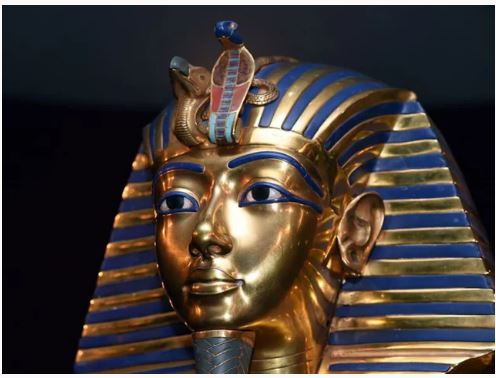
Fa as a Phonetic and Symbolic Reading
In the conventional sign reading, the horned viper supplies f and the Egyptian vulture supplies ꜣ; together, 𓆑𓄿 gives fꜣ, conventionally rendered fa. Sign order, determinatives, and context matter. The sound sequence is therefore not the entire meaning by itself; it is the entry point into a wider structure of meaning.
The supplied Fa notes associate fꜣ / fꜣỉ with carrying, bearing, supporting, conveying, and transporting. Two emphases guide this article: to lift or raise, and to bear a responsibility or raise something into manifestation. In the doctrine reading, these are not merely dictionary actions. They describe how divine order is carried from principle into protected, manifested life.
Divine Mathematics: The Framework
Divine mathematics is the understanding of the relationship between the physical world of numbers, patterns, and structures and the divine world of archetypes, patterns, and structures. It is founded in astrotheology and provides the base for numerology, astronomy, astrology, and divination. Its work is to read how physical and metaphysical order answer one another.
In this framework, Ifá is understood as a union of these worlds: a way of reading how number, pattern, destiny, archetype, and material consequence meet. Astronomy concerns the observation and ordering of celestial bodies; astrology and astrotheology concern the symbolic, ritual, and theological readings made from that order; numerology and divination give additional languages for reading sequence, correspondence, and lawful change.
The rest of this article applies that framework to crown symbolism, sacred sound, spiritual practice, and African cultural memory. It also belongs in the Cultural Unity of Black Africa study path, where Kemet, Kongo, Yoruba, Sahelian architecture, and Pan-African cosmology are read as distinct but connected expressions of African civilizational memory.
Directional Map: Fa, Atef, Ifá, and Afa
This doctrine uses related terms with distinct roles. Fa names the Kemetic crown reading: divine law carried through terrestrial and celestial responsibility. The downward movement from spiritual principle toward physical manifestation is read as the Aft direction, whose core crown and structural principle is Atef. Within Ancestral Egbe doctrine, Fa, Ifá, and Afa are read as the same cognate carried through regional modification. In modern practice, Ifá and Afa are understood more broadly as divine law and the use of divine law, often working in both directions rather than retaining a single directional emphasis.
One complementary direction begins with earthly elements and their intrinsic spiritual aspects. In the broad occultic or magical frame, a practitioner may work with a physical component such as fire, plants, water, powders, colors, or crafted objects, then direct its energetic correspondence toward an intended condition such as love, luck, protection, or change. The movement is from a material element toward a subtle or energetic effect, and then toward lived conditions in the physical world.
The Babaláwo practice begins more strongly with the subtle side: Odù, chant, sound, word, divinatory pattern, and conceptual spiritual order are read or worked so that they may become established in material reality. Traditions use both material works and spoken or chanted works. The distinction here is about direction and principal orientation, not an absolute separation between traditions.
The Atef Crown: The Fifth Crown and Manifestation
The Atef crown has a central axis of established divine authority and paired plumes that extend that power into a balanced totality. Depending on theological context, that totality can encompass heaven and earth, the Two Lands, visible and invisible existence, or complementary divine forces. Wesir's Atef incorporates the White Crown of Upper Egypt and emphasizes legitimate kingship transformed through death and renewed through resurrection.
In the Ancestral Egbe five-crown framework, the Atef crown is the fifth crown and sits over the concept of Fa/F-A. It is not simply heaven and it is not simply earth. It is the fundamental and transcendent structural-memorial layer through which divine law, sequence, and responsibility are held. This extends the five-layer model introduced in Spiritual Jurisdiction and the Crowns of Kemet.
The doctrine reads this crown as the divine becoming manifest and establishing itself in physical reality. In this directional reading, Fa moves from earth toward heaven, while Aft moves from spiritual principle toward physical form. The Five Jurisdictions include the Earth jurisdiction as the terrestrial sphere of responsibility; the Atef crown names the ordering structure that can bring spiritual law into established form.
The final t in Atef is read within this doctrine as feminine, so that the crown also carries a birthing and rebirthing current. Atef, Ifá, and Afa are therefore not treated as flat equivalents: Atef provides the core downward structural principle, while Ifá and Afa are regional forms of the Fa cognate used in living divinatory practice.
Amun Crown and Atef Crown: Two Directions of Power
Amun crown is the preferred name used in this article. Amun's crown is also known as the Shuti crown: an ancient Kemetic double-feather headdress featuring two tall, upright plumes and often a solar disk. Its double plumes echo celestial and hidden divine power held in balance. In this doctrine, the Amun crown symbolizes divine authority, creation, and cosmic order.
Historically, the forms are distinct. Wesir's Atef incorporates the White Crown, while the Amun Shuti is identified by its two tall feathers, often joined by a sun disk. In the Ancestral Egbe doctrine, their shared paired-plume structure creates a bridge between renewed kingship, hidden divinity, celestial authority, and the work of manifesting divine law.
The Atef crown's two lateral feathers, commonly curved outward, are understood in this doctrine as circling back into physical reality. Their movement outward, around, and downward pictures the cycle of incarnation and life: divine power does not remain above matter but returns into embodied experience. By contrast, the Amun crown's two tall, narrow, usually straight plumes point out of ordinary reality toward the power of the divine and the hidden. For object-based crown references, see the Metropolitan Museum of Art's double-feather crown of Amun and the British Museum's Amun-Ra figure.
The Serpent and Vulture: Analysis and Synthesis
Within this doctrine, the serpent represents logic, distinction, and the breaking-down movement. Venom is read as a force that pushes matter toward dissolution; the serpent therefore becomes an image for analysis, separation, warrior precision, and terrestrial power. The vulture represents the opposite but complementary movement: synthesis, digestion, and the capacity to gather what has been broken down into a larger whole. Its carrion-feeding role makes it an image of transformation rather than avoidance of what has decayed.
Together, the snake and bird form a complete operation. One separates and tests; the other receives, digests, and integrates. The pairing is not a claim that every serpent or vulture has one fixed meaning in every Kemetic context. It is the Ancestral Egbe reading of how their crown symbolism expresses a joined logic of terrestrial and celestial power.
Earth Powers and Heavenly Powers
The serpent–vulture pairing also echoes the distinction between earth powers and heavenly powers. In the Ancestral Egbe map, the earth-facing current concerns matter, boundaries, protection, roads, mountains, force, oath, and the practical conditions of embodied life. The heavenly current concerns priestly mediation, celestial order, divine culture, and the higher patterns by which life is organized.
This is why Kongo/Palo is placed primarily in the earth-power lane, while Orisha work is placed primarily in the heavenly and deity-order lane in the larger jurisdiction framework. In the western diaspora, people often hold Palo and Orisha relationships together; the doctrine reads that conjunction as an earth-and-heaven joining rather than as two unrelated systems. The Five Elemental Forces in Palo Mayombe and Kongo Spirituality article develops the earth and elemental side of that map.
Vodou offers a different diaspora arrangement. Rather than separating its spiritual work into distinct deity-group systems, Vodou holds multiple divine layers, lwa, and nations within one religious structure. In this comparative reading, red and hot deities carry an earth-facing, forceful current, while white and cool deities carry a heavenly, ordering current. The red-crown and white-crown polarity is therefore retained within a single system whose plurality of nations and divine forms keeps both currents in relationship.
Historically, the red-and-white Egyptian crown is the Pschent, or Double Crown. It combines the white Hedjet crown of Upper Egypt with the red Deshret crown of Lower Egypt. Pharaohs wore it as a sign of rule over both halves of a united Egypt.
The Deshret represents Lower Kemet, including the Nile Delta: one of ancient Kemet's most fertile regions because annual floods deposited rich black silt there. In the Ancestral Egbe reading, this landscape reinforces the Deshret's association with earth power and with Geb, the Kemetic earth deity.
The same pattern appears in the red and white crowns: the red crown names earth power, while the white crown names heavenly power. The Fa and Aft readings extend that crown logic into a directional structure: force rises from earth toward law, and spiritual order descends into established form. This is a doctrine of duality and complementarity, including right-to-left and left-to-right movement, rather than a claim that one current can exist without the other.
Layered Meaning in Kemetic and Yoruba Language
Kemetic signs can work phonetically, visually, symbolically, and through determinatives. A sign may point to an ordinary house in one setting and a divine place when a deity determinative changes its context. The doctrine compares this layered capacity to Yorùbá tonal meaning, where related consonant patterns can take distinct meanings through tone and context.
Yorùbá offers another useful sound example. When tones and under-dots are omitted, several distinct words may be written as fa. For example, fà may mean “to pull” or “to draw.” The doctrine does not treat that as proof of an identical word or origin. It treats the pull-and-draw action as a meaningful resonance with the older directional-flow reading: a movement by which force, law, or attention is drawn from one condition toward another.
The comparison is not meant to flatten the languages into each other. It shows why an African sacred language can preserve several registers at once: spoken sound, visual sign, ritual context, and metaphysical function. See Why Study Yoruba and Reclaim Yoruba as an Ancestral Language of Power for the language-recovery side of this work.
Fa, Ifá, Afa, and the Divine-Law Lineage
The Ancestral Egbe argument treats Fa / F-A, Ifá, and Afa as the same cognate carried through regional modification. In this reading, Fa is a principle of divine law that carries terrestrial and celestial responsibility together; the fuller linguistic pieces are preserved most visibly in the Kemetic symbolic-phonetic complex and travel in later forms as the overall sacred concept is carried across regions, trade, migration, and religious contact.
In the Kemetic interpretation developed here, A-Fa can also be read as the magnified form of Fa: the great divine principle or great law. The A carries the magnifying principle in this doctrinal reading. This provides a comparative echo to Dàfǎ, the Chinese expression for great law. The comparison concerns the way an intensifying element can frame law at a larger sacred scale; it is not offered as a settled linguistic equation.
This is a doctrine of continuity and transmission. It does not depend on treating every similar sound as automatically identical. Rather, it asks whether phonetics, ritual structure, divine-law functions, binary divination, astronomy, and cultural movement retain a connected memory. The companion article on Ìṣẹ̀ṣe, Islamic Ifa, and the Slave Trade develops the later Arabic and West African divination context, including the transmission question around Fa-like systems.
Afa in Anlo-Ewe Practice
Afa is the Anlo-Ewe regional form of the Fa/Ifá cognate: a living traditional divination, spiritual, and philosophical system practiced among Anlo-Ewe communities in southeastern Ghana and among related Ewe and Mina-speaking communities in Ghana and Togo. It is a sacred geomantic system of signs, stories, ritual, and guidance through which people interpret life, obligation, destiny, and relationship. The University of Ghana study of Afa in Anlo describes geomancy as the principal means through which Afa speaks to its adherents.
Afa belongs to the wider West African family of geomantic divination systems known as Ifá among Yoruba communities and Fá among Fon communities. These related systems work with sixteen principal signs and 256 derived combinations, while regional rituals, initiation ranks, stories, and sacrificial requirements differ. Research on Ewe Afa documents its shared geomantic structure with neighboring Fon and Yoruba traditions, including the sixteen-sign and 256-figure organization.
Within the Ancestral Egbe continuity argument, these shared structures are read as evidence of a connected West African esoteric and oracle tradition carried through Yorubaland, Togo, and Ewe communities in southeastern Ghana. That is a transmission argument within the doctrine, not a claim that every historical origin question is settled or that Afa and Ifá are identical in all regional practice. For the narrower linguistic and regional record, read Fa, Afa, and Ifá: A West African Divinatory Name Complex.
How This Site Organizes Evidence
These public articles are written for general readers. African spiritual and historical questions often require archaeological, linguistic, textual, material, scientific, ritual, and oral-tradition evidence; placing every layer of that record inside one introductory article would bury the teaching under apparatus.
Ancestral Egbe therefore works in layers: citations support particular factual claims; linked articles carry adjacent evidence; and longer studies or manuals hold the fuller multidisciplinary record. Where an interpretation is Ancestral Egbe doctrine, the article names it as doctrine rather than presenting it as settled academic consensus.
Asian Echoes: Pha, Fa, and Divine Law
The doctrine also reads an Asian echo in Pha / Fa: a sound and principle associated here with divine law, order, and the way by which an unseen pattern becomes lived conduct. In this comparative frame, the Fa of Taoist Asia and the Ifá of West Africa retain a related divine-law function: each names a lawful structure through which human life is oriented to a larger cosmic order. Pha is used here for the Asian comparison; it does not replace Fa as the Uraeus-and-vulture reading developed in this article.
Within the doctrine, this comparison also mirrors the modern Ifá development. As the more specific directional distinctions of Fa/Aft became less explicit in modern Ifá, the term came to be understood more broadly as divine law and the use of divine law. Likewise, Buddhist and other Asian uses of Fa are read here as preserving the broader sense of divine law without necessarily retaining the earlier directional emphasis.
Chinese usage requires a careful distinction. Fǎ (法) concerns law or principle, while fā (發/发) can mean to issue, release, develop, or emit; fā qì, for example, can mean to emit qi. These are not treated as the same Chinese word. In the Ancestral Egbe comparison, their separate law and manifestation meanings illustrate how a broader Fa understanding may come to be understood generally as divine law and manifestation even when its more specific subcategories are no longer explicit. This is a doctrinal comparison, not proof of a linguistic identity.
Fǎmén (法門) means a Dharma gate or a specific path of cultivation. In this doctrine's directional reading, it can illustrate movement from disciplined physical practice toward spiritual development. Fā qì illustrates the complementary movement: subtle qi directed outward toward a physical effect. Martial training may describe that movement through a bodily manifestation such as breaking a board; healing-oriented practice may describe it through the intention to direct qi toward well-being. These are examples of directional interpretation, not a claim that every cultivation tradition teaches the same method or produces guaranteed effects.
This is an Ancestral Egbe transmission argument, not a claim that similar sounds automatically prove a single origin or that distinct Asian and African traditions are identical. Its point is that cultural transmission can preserve a sacred function even where the full earlier linguistic pieces have shifted, been condensed, or become a loan-word-like ritual term. It belongs to the same comparative pattern explored in Amen, Amun, Amma, Olókun, and Aum/Om: Amen/Amun as a deity and sacred-name complex, Omu/Omun as related divine-name echoes in the doctrine, Amen in Christian practice, and A-U-M / Om as a sacred chant in Buddhist and other Asian religious traditions. Across those cases, the doctrine studies both continuity of meaning and transformation of sound.
Doctrine, Evidence, and Scope
Ancestral Egbe states these connections as doctrine. The doctrine recognizes further factual, linguistic, historical, material, and orally taught relations that support its wider map, but does not present every one of them as a settled academic conclusion in a short article. To establish such claims conclusively would require a far larger treatment of archaeological evidence, linguistic reconstruction, historical documentation, and oral-tradition knowledge—and those materials can still be debated.
This caution does not weaken the doctrine's position. The site reads ancient Asiatic, Indian, and African traditions as related within a larger civilizational history, including traditions developed within Africa and later carried outward into the world. Other relationships, including Buddha and Ptah, the Kemetic (Twa people Kongo) deity, as well as Ptah's son Nefertem—the lotus-blossom-born first light of dawn—belong to that larger inquiry but are outside this article's purpose.
The key point here is narrower: the doctrinal relationship among Fa, Ifá, and Afa, and the way sacred law can be carried, regionally modified, remembered, and put into practice. This article makes that relationship visible; a dedicated, evidence-heavy study can take up the wider comparisons in their proper scope.
Deep-Time Mathematical and Astronomical Horizon
The Ancestral Egbe doctrine sees this framework reflected in monumental structures and their celestial alignments: the pyramids, Kemetic temples, and the pre-dynastic, pre-Kemetic horizon of Adam's Calendar, which the Heine/Tellinger tradition and this doctrine place in a 70,000- to 78,000-year range. It also sees it in the numerical organization associated with the Ishango bone. These are not isolated objects in this reading; together they point toward an African capacity to study the structure of reality physically and metaphysically.
The Fa argument therefore belongs beside the long African time-and-sky discussion in Four Turns of the Great Wheel, and beside Birth Charts and Incarnation Objective Readings, which distinguishes symbolic chart work from priestly diagnosis. It also connects to the sacred-sound comparison in Amen, Amun, Amma, Olókun, and Aum/Om.
Electronic field theory provides a modern analogy: the invisible ordering of fields can be organized into visible technologies such as computers and television. The doctrine does not collapse spiritual practice into electronics. It uses the comparison to show the underlying question shared by both: how an unseen order can be understood well enough to produce an effect in the material world.
Conclusion: Law, Pattern, and Manifestation
The Fa argument begins with a crown pairing and ends with a way of reading reality. The Uraeus and vulture provide the symbolic and phonetic entry; the Atef crown provides the fifth-crown structure; and divine mathematics provides the method for relating pattern, law, spirit, and material form.
Within this doctrine, the question is not whether every tradition uses identical names or practices. It is how sacred law is carried, read, and brought into life: from material conditions toward subtle understanding, from subtle order toward manifestation, and through the continuing work of responsibility, balance, and return.
Selected Sources and Further Reading
- Metropolitan Museum of Art: Double Feather Crown of Amun, for the documented object form, date, and Theban provenance of the crown.
- British Museum: Amun-Ra Figure, for an object-based reference to Amun's double-feathered form.
- University of Ghana: Afa in Anlo and research on Ewe Afa, for regional Afa practice and the sixteen-sign/256-figure organization.
- Smithsonian Human Origins Program and the Royal Belgian Institute of Natural Sciences, for the Ishango bone's place, age range, physical form, and grouped notches.
The Fa / Ifá / Afa cognate argument, the directional Fa/Atef reading, and the wider transmission map are stated here as Ancestral Egbe doctrine. The listed sources support specific historical objects, regional practices, and archaeological facts; they do not by themselves establish the article's full doctrinal synthesis.