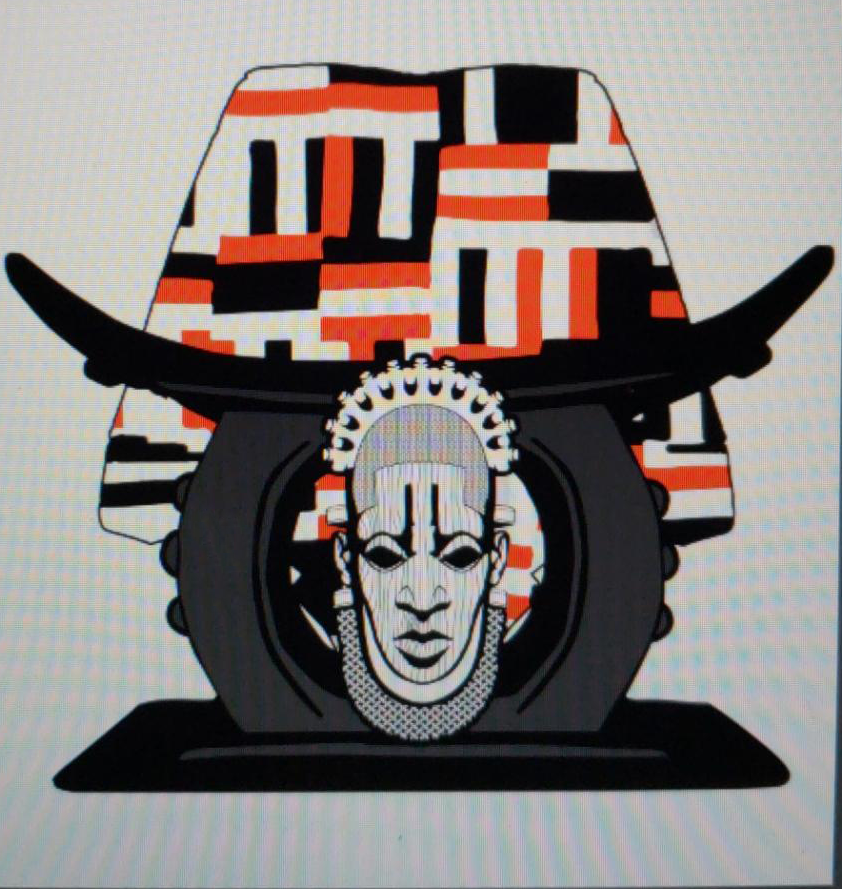
What Is African Spirituality?
African spirituality refers to the many indigenous spiritual traditions, cosmologies, religious systems, ancestral practices, and sacred philosophies developed by African peoples across the continent over thousands of years.
There is no single religion called African spirituality. Africa contains thousands of peoples, languages, cultures, and spiritual lineages. Ancient Kemetic religion is not Yoruba Ifa. Yoruba spirituality is not Kongo religion. Kongo spirituality is not Akan religion. Akan religion is not Maasai religion.
Yet these traditions did not develop in complete isolation. Across Africa we repeatedly encounter related principles: a Supreme Creator or ultimate source, divine powers or spiritual intermediaries, ancestors who remain connected to the living, sacred relationships with nature and land, ritual specialists, divination, healing, initiation, sacred community, and an understanding that the visible and invisible worlds interact.
A Family of Traditions, Not One Flattened Religion
The mature way to approach African spirituality is to hold unity and distinction at the same time. Unity does not require sameness. A family can share ancestry while each member remains distinct.
That means an Orisha is not automatically an Abosom. An Abosom is not automatically a Mpungo. A Kemetic Neter is not simply another name for every African divine power. Comparison is useful; equivalence has to be demonstrated, not assumed.
This is the foundation of the Ancestral Egbe approach: study the living traditions seriously, respect their jurisdictions, and still recognize that African civilizations have been in conversation with one another through migration, trade, language, ecology, and sacred culture for a very long time.
The ultimate source of life and existence, named differently across traditions.
Orisha, Abosom, Vodun, Mpungo, Neteru, nature powers, and other forces within creation.
The dead who remain part of lineage, memory, obligation, blessing, and continuity.
Land, water, forests, storms, animals, plants, fertility, and ecology as spiritually alive.
Discernment systems used to diagnose condition, timing, obligation, and proper action.
The person exists inside family, lineage, elders, land, ancestors, and descendants.
Common Beliefs in African Spirituality
Many African traditional religions begin with a Supreme Being or ultimate divine source. This matters because colonial stereotypes often presented African religion as if Africans had no concept of a higher divine order before Christianity or Islam. That is false.
Many traditions also recognize powers within creation. These may be understood through Yoruba Orisha, Akan Abosom, Fon and Ewe Vodun, Kongo Mpungo, Kemetic Neteru, nature spirits, territorial powers, river forces, thunder forces, fertility powers, guardian beings, and other sacred agencies.
The ancestors form another central layer. Ancestor veneration is not simply ancestor worship. The ancestor is not the Creator. The ancestor is family. Death changes the ancestor's condition, but it does not necessarily remove the ancestor from lineage, responsibility, memory, protection, dreams, ritual, or inheritance.
African Spiritual Practices
African spiritual practice may include prayer, libation, offerings, ancestor veneration, altar work, shrine work, song, drumming, dance, cleansing, herbal work, dream attention, initiation, ritual calendars, sacrifice, divination, ethical correction, and community obligations.
These practices are not all interchangeable. A home ancestor altar is not the same thing as an initiated shrine. A cleansing bath is not the same thing as initiation. A dream may matter, but a dream does not automatically give a person priestly authority. Divination helps determine which action belongs to which condition.
This is why Ancestral Egbe repeatedly teaches diagnosis before ritual escalation. The tool should fit the condition. The tradition, lineage, and jurisdiction matter.
Major Regional Currents
Kemet, Nubia, and the Nile-Sahara world preserved highly developed sacred systems involving creation, divine powers, the continued existence of the dead, sacred kingship, ritual, temple science, and Ma'at as truth, balance, justice, harmony, and proper order.
East African traditions, including Maasai examples, show relationships among Creator, land, cattle and livelihood, rain, fertility, age grades, initiation, ancestors, and community responsibility.
Kongo and Central African systems are foundational for understanding the African diaspora. Kongo cosmology, the world of the dead, nkisi technology, Mpungo, and the Dikenga help explain much of the spiritual architecture that traveled into the Americas.
Southern African traditions, including Nguni worlds, preserve deep ancestral structures, divination, healing callings, plant knowledge, dream experience, and the continuing relationship between the living and the ancestral current.
West African systems, including Yoruba, Fon, Ewe, Akan, Ga, Igbo, Edo, Serer, Wolof, Mande, and others, supplied many of the religious patterns that survived and transformed across the Atlantic diaspora.
Yoruba, Kongo, Akan, and Kemetic Examples
In Yoruba spirituality, Olodumare is commonly understood as the Supreme Creator, while the Orisha participate in creation, nature, civilization, character, destiny, and human life. Yoruba religion also places great importance on Ori, the inner head and personal destiny, and on Egungun, the ancestral collective.
In Kongo spirituality, the relationship between Creator, ancestors, spiritual powers, the living community, the land, and the world of the dead forms a powerful cosmological frame. This is why Kongo concepts became so important in Palo Mayombe and other Kongo-derived diaspora systems.
In Akan spirituality, a Supreme Creator such as Nyame or Nyankopon stands above a world containing Abosom, ancestors, community obligations, and sacred relationships with land and water. In Kemetic spirituality, Neteru, temple order, afterlife technology, and Ma'at reveal another highly developed African sacred civilization.
From Africa to the Diaspora
The Atlantic slave trade violently displaced millions of Africans from many nations and spiritual traditions. But Africans did not arrive in the Americas spiritually empty. They brought ancestors, cosmologies, sacred rhythms, healing knowledge, divination, ritual technologies, initiation systems, deities and spiritual powers, concepts of destiny, and ways of understanding a living world.
Under enslavement, these traditions adapted. Some went underground. Some merged. Some used Catholic saints as masks. Some incorporated Indigenous American knowledge. Some changed language while preserving ritual structure.
This produced traditions including Lucumi and Santeria, Haitian Vodou, Brazilian Candomble, Ifa in the diaspora, Palo and other Kongo-derived traditions, African American rootwork, and many other forms of African diaspora spirituality.
African Spirituality Before Christianity and Islam
African traditional religion did not begin with Europe. It did not begin with Christianity. It did not begin with Islam. African peoples possessed sophisticated religious systems, moral philosophies, priesthoods, healing traditions, and concepts of divinity long before either religion became dominant across large portions of the continent.
This does not require hatred of Africans who are Muslim or Christian. Christianity developed ancient African centers in Egypt, Nubia, and Ethiopia. Islam became embedded in many African civilizations over more than a millennium. But neither fact erases the indigenous systems that preceded them.
Recovering African spirituality means ending the assumption that African sacred history begins with foreign religious arrival. Africa already possessed a sacred center.
African Spirituality and Cultural Restoration
For the African diaspora, studying African spirituality can become more than religious curiosity. It can become cultural restoration.
The Atlantic slave trade broke known lineage. Colonial education rewrote African history. Missionary religions often classified African deities as demons, ancestors as dangerous spirits, divination as superstition, and indigenous ritual as primitive. Many descendants inherited not only cultural loss but fear of their own ancestral traditions.
Spiritual sovereignty means recovering the ability to understand the sacred from an African center. That does not require rejecting everything outside Africa. It requires having a center from which to engage everything else.
Where Should a Beginner Start?
The first step is not collecting deities. It is not immediately seeking initiation. It is not mixing five traditions together because all of them are African.
Begin with foundation. Learn African history. Learn what region a tradition comes from. Understand the difference between Creator, divinity, spirit, ancestor, Ori, lineage, and ritual authority. Build reverence before power. Build clarity before ceremony.
For Ancestral Egbe, the clean beginning is spiritual literacy, ancestor relationship, Ori alignment, respectful study, and diagnosis before deeper ritual. This is why this article links into the existing beginner path, African Spiritual Literacy hub, Cultural Unity reader journey, and practical ancestor resources.