
The Altar as a Point of Contact
An ancestral altar is not decoration. It is a meeting place between the living and the ancestral current. It gives memory a location, prayer a direction, and relationship a rhythm.
In African and diasporic traditions, the ancestors are not simply gone. They exist in another layer of reality and may still guide, warn, protect, correct, and support the living when relationship is approached with order.
The altar is the beginning. The deeper work is returning to it, speaking, listening, feeding, cleansing, and refining the relationship over time.
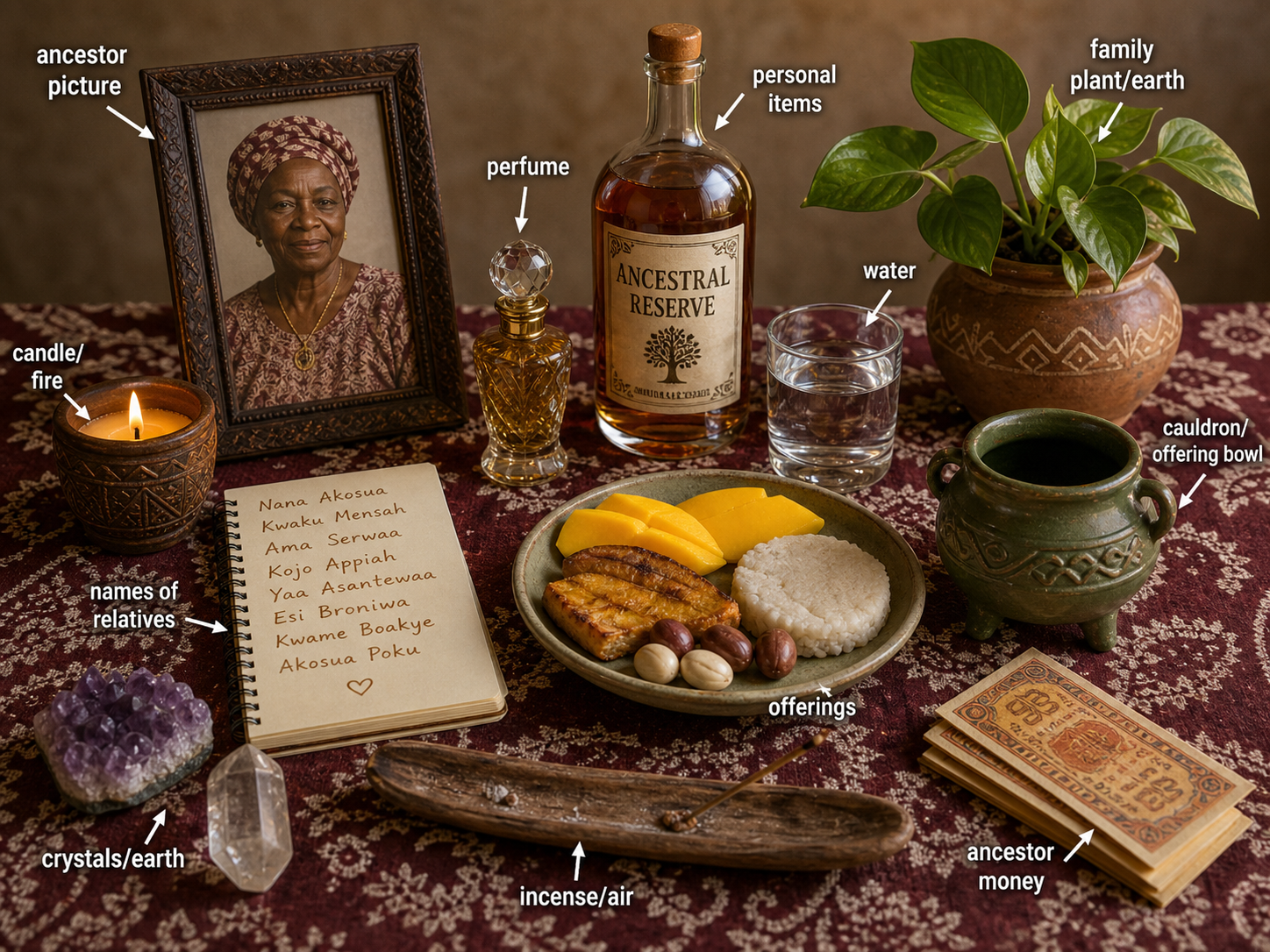
Step-by-Step Setup
Choose a Private Location
Select a place you can return to consistently: a bedroom corner, closet, basement space, quiet table, or protected section of the home. Privacy matters because sacred work needs containment.
Cleanse the House and the Altar Area
Prepare the house, or Ile, before setting anything down. Use smoke, perfume water, prayer, song, or chant. Pay special attention to the exact place where the altar will stand.
Lay the White Cloth
Place a white cloth on the table or floor. This creates a boundary between ordinary space and ancestral space. Keep it clean and intentional.
Separate the Maternal and Paternal Lines
Place the father line on the right and the mother line on the left. This helps the altar hold both sides of inheritance instead of unconsciously favoring one line.
Add the Core Elements
Add photos or names, candles, water, plant, incense, offerings, and personal objects. Keep the structure simple enough that you can maintain it.
Feed and Maintain the Relationship
Greet the ancestors, refresh water, offer food when meals are prepared, light a candle when offerings are presented, and return consistently. Relationship matters more than decoration.
What to Place on the Altar
Photos or Names
Identify the ancestors being honored. If photos are not available, write names clearly.
White Cloth
Marks the altar as a clean, separate, intentional space.
Water
Carries memory, clarity, cooling, and spiritual conductivity. Change it regularly.
Candle
Represents fire, presence, attention, and activation when offerings are made.
Plant in Soil
Anchors earth, continuity, family growth, and libation practice.
Incense
Represents air, prayer, atmosphere, and the lifting of words into the subtle body.
Food and Drink
Creates relationship through offerings, especially foods the ancestors enjoyed.
Personal Objects
Clothing, jewelry, awards, tools, or keepsakes can strengthen recognition and continuity.
Daily and Weekly Practice
Consistency matters more than complexity. A simple daily greeting and clean water may do more than a beautiful altar that is ignored. Weekly offerings can include food, coffee, tea, water, fruit, or other respectful items connected to the ancestors being honored.
When giving offerings, light the candle, speak clearly, and remember that this is relationship. Do not use the altar as a vending machine. Use it as a place of reverence, grounding, gratitude, correction, and listening.
What Most People Get Wrong
Many people build an altar with no structure, invite any spirit that answers, focus only on appearance, and never establish hierarchy. That can create confusion instead of clarity.
Not every spirit is an ancestor worth honoring. If the atmosphere feels heavy, noisy, unstable, or unsafe, study the Ancestral Hierarchy and consider a Basic Spiritual Cleaning before going deeper.
Continue the Path
Common Questions
Is an ancestral altar the same as an ancestral shrine?
No. An altar is a meeting place that the living person activates through attention, prayer, and offering. A shrine is consecrated and holds a more continuous spiritual current.
Can I set up an ancestral altar without knowing all my ancestors?
Yes. Begin with the known dead, family names, elder photographs, and respectful language for unknown but benevolent ancestors. Do not open the space to every spirit.
How often should I maintain the altar?
A simple rhythm works best: greet daily when possible, refresh water regularly, and give food or drink offerings weekly or when preparing meaningful meals.