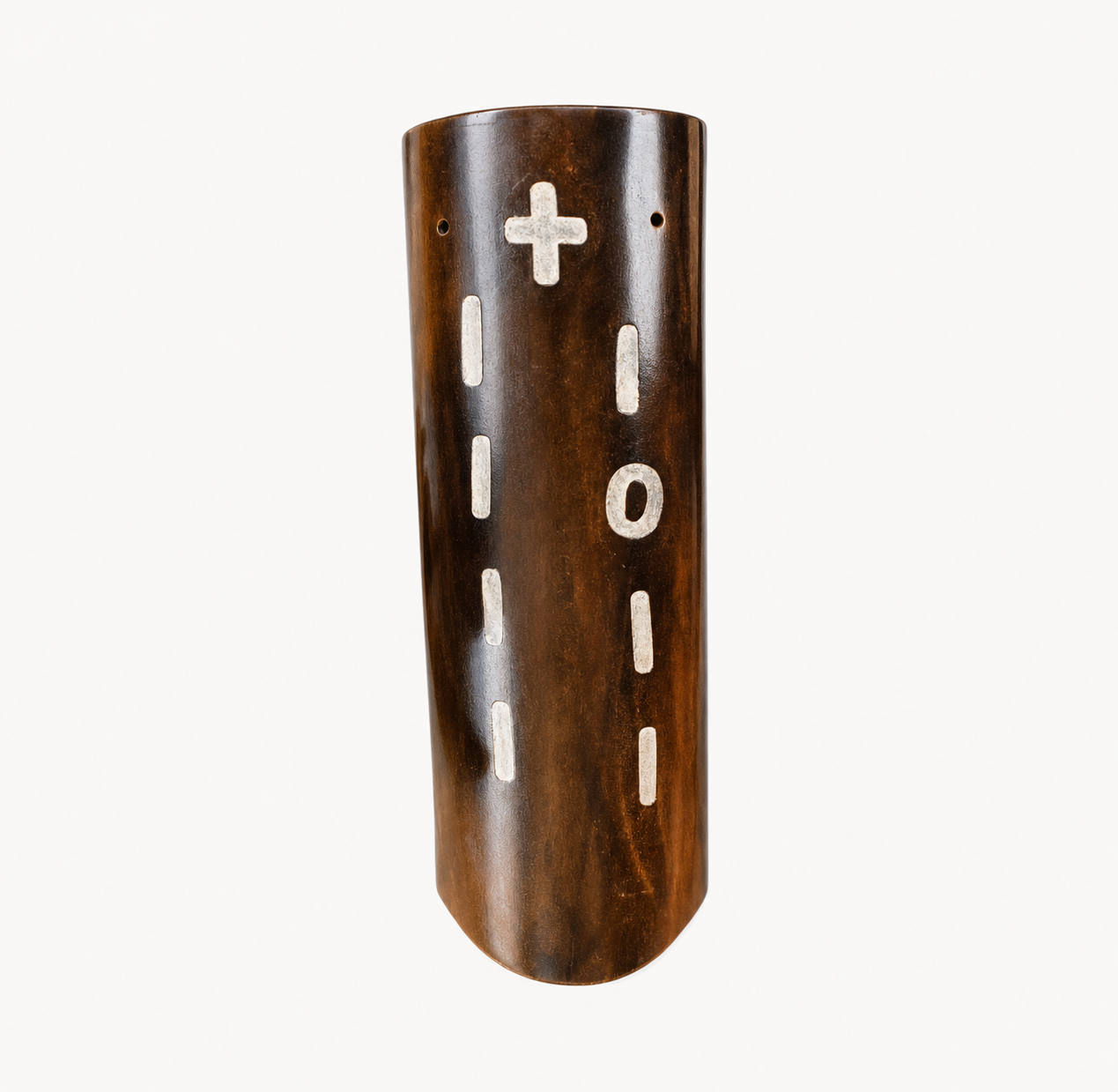
Tile of Egun / Teja de Eggun
The Tile of Egun, also called Teja de Eggun, belongs to a more specific priestly category than a basic ancestral altar or general ancestral pot.
An altar is a meeting place. A pot gathers and stabilizes ancestral current. The Tile of Egun is different. It is a consecrated ritual surface for feeding, cooling, acknowledging, and addressing Egun in a structured way.
In Lucumi, Osha-Ifa, and broader Yoruba-derived traditions of the Americas, the dead are not treated as an afterthought. The dead stand before the living, behind the living, and underneath the house. Before one speaks to Orisha, one must first acknowledge those who opened the road.
What the Tile of Egun Does
The Tile of Egun serves as a priestly feeding and contact surface for Egun. It may function as a spiritual receiving plate, boundary marker, and household coverage point for the dead connected to the house, the lineage, and the religious road.
This is not the same as the standard ancestral pot.
The pot gathers. The tile receives.
The pot stabilizes ancestral presence. The tile gives the dead a place to be fed, cooled, acknowledged, and ritually addressed.
Why This Is a Real Upgrade
A basic ancestral altar is activated by the living practitioner. A standard ancestral pot is more about the family unit, the ancestral current, and the continuity of the lineage.
The Tile of Egun is more specific. It can be required when the work is not only about remembering the family, but about addressing Egun as a ritual setting.
It is especially important when divination shows that the mother's side or father's side must be fed directly. A base ancestral pot does not automatically do that unless an additional male-female fetish structure has been created. The Tile of Egun gives the work a specific surface for that male/female ancestral acknowledgment, feeding, cooling, and coverage.
Tejas, or Tiles of Egun, are often integrated into a larger ancestral pot configuration for this reason. The pot may gather and stabilize the family current, while the Teja gives the work a precise ritual point for feeding a male ancestral line, a female ancestral line, or the specific side of the family identified by divination.
House Coverage and Physical Structure
The Tile of Egun can also be required when the reading indicates the house itself needs coverage.
This is an important distinction. The ancestral pot is primarily about the family unit and lineage relationship. The Tile of Egun can address the physical house, the ancestral space, the household boundary, and the Egun current connected to that structure.
Sometimes ancestors require it. Sometimes divination requires it. Sometimes the reading shows that protection, resolution, or ancestral coverage must be established in the home before other work can proceed cleanly.
Teja de Eggun vs. Standard Ancestral Pot
The standard ancestral pot is a vessel. It houses, gathers, and stabilizes ancestral current.
The Teja de Eggun is a consecrated feeding and contact surface. It supports Egun feeding, boundary, house coverage, communication, and male/female ancestral acknowledgment.
The ancestral pot is foundational. The Tile of Egun is more priestly and ritualized.
The ancestral pot serves personal ancestral veneration and long-term relationship building. The Tile of Egun serves house coverage, structured dead feeding, religious dead, family dead, house dead, and protective ancestral forces.
When a Household May Need This
This service is appropriate when the issue is not simply, "I want to honor my ancestors."
It may be needed when the house requires ancestral coverage, the dead need to be fed before other work proceeds, divination shows Egun are demanding attention, the household carries spiritual heaviness, ancestral forces are active but unstructured, male and female lines need cooling and balance, or priestly work requires Egun to be addressed before Orisha or other ritual work.
In Osha-Ifa sources, Egun are commonly honored before Orisha, and offerings to Egun are kept separate from offerings to Orisha. That separation matters. Egun are not simply another Orisha. They belong to the ancestral and dead current.
Placement in the Ancestral Student Journey
This service sits after basic altar and ancestral pot work, but before larger Egungun construction or priesthood-level responsibility.
Ancestral Altar: meeting place.
Ancestral Pot / Shrine: lineage vessel and stabilizing foundation.
Tile of Egun: consecrated feeding and household coverage surface.
Egungun Shrine or construction: larger ancestral embodiment and lineage force.
Ancestral Priesthood Initiation: jurisdiction and responsibility to work in the ancestral current for others.
Service Description
Tile of Egun / Teja de Eggun - $280
A priestly Egun service for household ancestral coverage, male and female ancestral acknowledgment, and structured feeding of the dead. This service provides a consecrated ritual surface for Egun work, distinct from the standard ancestral pot.
It is designed for clients who need deeper ancestral coverage for the home, the family line, the physical structure, the ancestral space, or ongoing spiritual work.
This is best for people already working with ancestral shrines, homes needing Egun coverage, clients with divination indicating ancestral feeding, those preparing for deeper Ifa or Orisha work, households with unresolved ancestral heaviness, and people who need a priestly step beyond a basic altar.
The Tile of Egun should not be marketed as casual altar work. It is an optional but serious priestly service for those who already understand that the dead must be honored before the road can open fully.