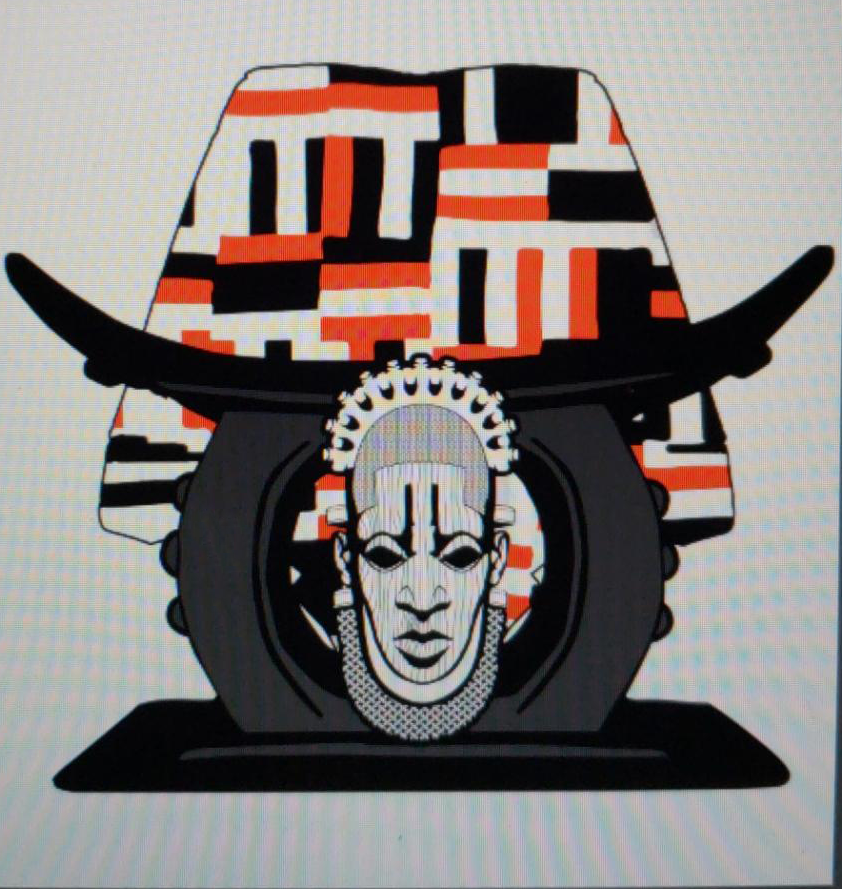
The White Table Is a Cool Table of Light
A white table in African Traditional Religion and African Diaspora spiritual practice is a cool, elevated ritual table used for ancestor veneration, spirit elevation, spiritual clarity, healing, and communication with the dead.
In some traditions, the white table is called a mesa blanca, especially in Caribbean Espiritismo. In other houses, it may be called a spiritual table, ancestral white table, ancestor elevation table, boveda espiritual, or simply a clean table of light for the dead.
But it is important to understand this clearly: a white table is not automatically Christian.
Some white tables include Christian prayers, saints, crosses, or Catholic imagery because of Espiritismo, colonial religion, and Caribbean syncretism. But in African-centered and Pan-African ancestral practice, a white table may contain no Christian iconography at all. It may instead be rooted in African cosmology, ancestor elevation, Egungun reverence, Egbe work, Kongo ancestral power, Akan ancestral veneration, Kemetic remembrance, and the greater spiritual restoration of African people.
At Ancestral Egbe, we understand the white table as a disciplined spiritual technology for cooling, elevating, clarifying, and organizing relationship with the dead.
Where This Fits in the Practice Path
Begin with the basic home foundation before adding complexity. Compare this article with How to Set Up an Ancestral Altar and Altars, Shrines & Ritual Spaces. Then continue into the Ancestral Manual, the Egbe Manual, and the larger Priest Services path when diagnosis, shrine work, or deeper elevation support is needed.
The Core Meaning of the White Table
The word white points to several spiritual principles:
A white table is not a war table. It is not a curse table. It is not a hot table for domination or coercive spirit work.
Its first function is to create a clean, cool, elevated place where the living may honor the dead and where the dead may receive light, prayer, remembrance, and proper attention.
Ancestor elevation
Spiritual communication
Ancestral healing
Dream development
Family-lineage repair
Spiritual diagnosis
Cooling inherited grief
Organizing the spiritual court
The White Table and the Ancestors
In African Traditional Religion, the dead are not simply gone. The ancestors remain part of the living community.
When the ancestors are honored, elevated, and properly remembered, they may become sources of wisdom, protection, correction, healing, and cultural continuity. When they are neglected, forgotten, confused, angry, or burdened by unresolved trauma, their condition may affect the living family line.
A white table helps restore proper relationship. It gives the dead a clean place to receive light, water, prayer, coolness, memory, respect, elevation, and spiritual attention.
This is why a white table is often connected to ancestor elevation. The work is not simply about getting messages. It is about helping the ancestral current become cleaner, cooler, more organized, and more beneficial to the living.
This work does not declare every deceased person elevated. Elevation may restore a dead person to stable ancestral placement; Transcendent Dead are a distinct realized category. Each tradition has its own process of transfiguration. In Kemet, Per-em-Heru, Coming Forth by Day or the Book of the Dead, is the cultural elevation process through which the deceased may become an Akh, a being of light.
The Pan-African Ancestral White Table
In some lineages, including ours, a white table may be developed as a Pan-African ancestral white table.
This form is not limited to one African ethnic tradition. It is not only Akan, only Yoruba, only Kongo, only Kemetic, or only Caribbean. It is built to honor the greater African ancestral current, especially the diasporic dead and the elevated spiritual forces of African restoration.
A Pan-African table may focus on the African dead of the diaspora, ancestors lost through slavery and displacement, elders who preserved culture, ancestors who resisted colonialism, ancestors who carried medicine, ancestors who protected the people, spiritual companions connected to destiny, and heroes of Pan-African unity and liberation.
This table is especially important for people of African descent whose family lines were broken, renamed, scattered, Christianized, colonized, or separated from specific ethnic memory. Where the bloodline record is incomplete, the Pan-African ancestral table helps restore spiritual orientation.
No Christian Iconography Is Required
The white table is not inherently Christian. Some white tables became Christianized through Spiritism, Catholicism, colonial religious pressure, and Caribbean survival strategies. That history should be understood, but it should not be mistaken for the essence of the practice.
A Pan-African ancestral white table may be completely African-centered. It may contain white cloth, clear water, white candles, flowers, ancestral names, African prayers, libation language, symbols of African cosmology, images of stable ancestral dead or Transcendent Dead, names of African Creator forces, and ritual links to Egungun, Egbe, Nsamanfo, Bakulu, and other ancestral powers.
It does not need crosses, saints, rosaries, Catholic prayers, or Christian formulas unless that is the actual lineage instruction of the house using it. For African-centered practitioners, the goal is not to imitate colonial religion. The goal is to restore right relationship with the ancestors through an African spiritual frame.
White Table, Egungun, and Egbe
In our lineage understanding, the Pan-African white table may operate in conjunction with the shrines and spiritual currents of Egungun and Egbe.
Iba Egungun
Egungun refers to the ancestral dead, especially within Yoruba understanding. Egungun is not merely ghost work. It is the organized reverence of the ancestral collective: the dead of the family, the lineage, the community, and the greater ancestral current.
A white table connected to Egungun may honor the dead, elevate troubled ancestral lines, cool family trauma, strengthen ancestral protection, restore cultural memory, and repair the relationship between living and dead.
Iba Egbe
Egbe refers to the spiritual companions, the heavenly society, or destiny companions connected to a person's life path. While Egungun concerns the ancestral dead, Egbe concerns the companion-spirit current connected to destiny, spiritual belonging, and the unseen society that walks with the person.
A white table may support Egbe work when the practitioner is seeking peace, alignment, dream guidance, or clarity around spiritual companionship. This should not be done randomly. Egbe work should be approached with discipline, respect, and proper diagnosis.
For the companion-current side of this path, study the Egbe Manual.
Nsamanfo and Bakulu
A Pan-African white table may honor the Akan ancestral current through the Nsamanfo: the venerated ancestors, old people, and elevated dead connected to family, land, morality, memory, and communal continuity.
It may also honor the Kongo ancestral current through the Bakulu: the ancient and elevated dead who stand behind the living community and carry the force of memory, medicine, and continuity.
This is especially important when a house works with Kongo cosmology, Kongo ancestral healing, Palo/Kongo-influenced practice, or the broader Kongo spiritual inheritance of the African Diaspora.
However, a white table should not be confused with a nganga or prenda. A white table is cool, elevated, clarifying, and devotional. A nganga is a consecrated Kongo spiritual vessel with a different function, different rules, and a different level of pact-based responsibility. They may coexist in a house, but they are not the same thing.
Invoking Multiple African Names of the Creator
One mark of a Pan-African ancestral white table is that it may invoke multiple African names and understandings of the Supreme Source. This is not confusion. It is Pan-African recognition.
A Pan-African table may honor Olodumare in Yoruba understanding, Nzambi in Kongo understanding, Amma in Dogon understanding, Amon as the Hidden One in Kemetic understanding, and other African doors into the Mystery of Source.
In this form, the white table becomes more than an ancestor altar. It becomes a Pan-African spiritual statement: the African dead are not lost, African Creator names are not dead, and the African soul does not need to pass through a foreign religious gate to reach its own ancestors.
Common Types of White Tables
Personal Ancestral White Table
The simplest home form: white cloth, clear water, candle, flowers, names, photos of elevated dead where appropriate, and steady prayer or libation.
Boveda Espiritual
A Caribbean Espiritismo form that may use one, three, seven, nine, or another number of water glasses depending on house rules and purpose.
Misa or Spirit Communication Table
A table used for guided prayer, song, messages, ancestral elevation, and clarification of who walks with a person spiritually.
House or Temple White Table
A collective table for a lineage, temple, priesthood, or community, used to cool the house and stabilize the ritual environment.
Healing White Table
A cooling table for grief, spiritual agitation, family trauma, emotional heaviness, and ancestral disturbance.
Ancestral Elevation Table
A serious table for lifting recently deceased, forgotten, unknown, violently dead, or burdened ancestors with patience and spiritual boundaries.
Pan-African Diasporic White Table
A table honoring the greater African dead: Middle Passage, plantation slavery, colonial violence, resistance, priesthood ancestors, cultural heroes, and unknown dead who need elevation.
What Belongs on a White Table?
- White cloth
- Clear glass of water
- White candle
- Fresh flowers
- Bowl or cup for libation
- Written ancestral names
- Clean spiritual symbols
- Prayers or invocations
- Photos of stable ancestral dead or Transcendent Dead, if appropriate
Some tables may also include Florida water or spiritual cologne, cascarilla, coffee, tobacco, rum, specific foods, cultural items, images of heroic ancestors, African Creator names, or ritual songs and chants.
But do not overload the table. A white table should remain clean, cool, focused, and spiritually ordered.
What Should Not Be Done?
- Randomly calling unknown spirits
- Mixing hot aggressive work into a cool table
- Demanding favors from the dead without service
- Placing every spirit and deity on the same table
- Confusing the white table with an Orisha shrine
- Confusing the white table with a Palo nganga
- Using the table for curses, domination, or coercion
- Opening mediumship without protection or training
- Placing unsettled dead on the table without proper elevation work
A white table opens a channel. A channel needs rules. The table should clarify the spiritual condition, not make it more confused.
White Table, Ancestor Altar, Orisha Shrine, and Nganga
A white table and an ancestor altar can overlap, but they are not always the same. An ancestor altar is usually a devotional place for honoring one's ancestors. A white table is often more specifically used for elevation, cooling, mediumship, spiritual communication, and organizing the ancestral or spiritual condition.
A white table is also not the same as an Orisha shrine. An Orisha shrine may contain consecrated items, sacred vessels, stones, tools, and specific ritual objects belonging to that Orisha. A white table is generally for ancestors, spirit guides, spiritual companions, and elevation of the dead.
A white table is also not the same as a Kongo nganga or Palo prenda. A white table is usually cool, clean, elevated, prayerful, ancestral, and clarifying. A nganga or prenda is consecrated, pact-based, vessel-centered, spiritually operative, and governed by Kongo/Palo rules.
For a fuller comparison, read Altars, Shrines & Ritual Spaces.
The Best Beginning Form
For most beginners, the safest form of a white table is simple: one small clean table, white cloth, one clear glass of water, one white candle when praying, fresh flowers when possible, names of stable ancestral dead or Transcendent Dead only, simple prayer or libation, no random spirit calling, no aggressive petitions, and no overcrowding.
Begin with discipline before complexity. The table should be tended regularly. Water should be refreshed. The space should be kept clean. Prayers should be consistent. Dreams, signs, and emotional changes should be observed carefully.
If the work becomes heavy, confusing, frightening, or unstable, seek proper diagnosis before adding more ritual.
Why the White Table Matters for the African Diaspora
For people of African descent, ancestor work is not a hobby. It is a path of cultural repair.
Many of us descend from people whose names were changed, whose languages were attacked, whose rituals were demonized, whose dead were not properly buried, whose family lines were scattered, and whose descendants were trained to fear their own spiritual inheritance.
The Pan-African white table answers that wound. It says the ancestors are not forgotten, the African dead still matter, the diaspora is not spiritually orphaned, African Creator names still carry power, and cultural restoration is part of spiritual healing.
This is why the white table belongs within the larger work of ancestral healing, cultural grounding, Ori alignment, Egbe development, and Pan-African spiritual restoration.
Final Teaching
A true white table brings coolness, order, remembrance, elevation, and right relationship between the living and the dead.
A white table does not have to be Christian. It does not have to be colonial. It does not have to be spiritually confused.
In its African-centered form, the white table is a disciplined technology of remembrance, cooling, elevation, and return.
We remember you. We cool you. We elevate you. We restore the line. We return to the African center.