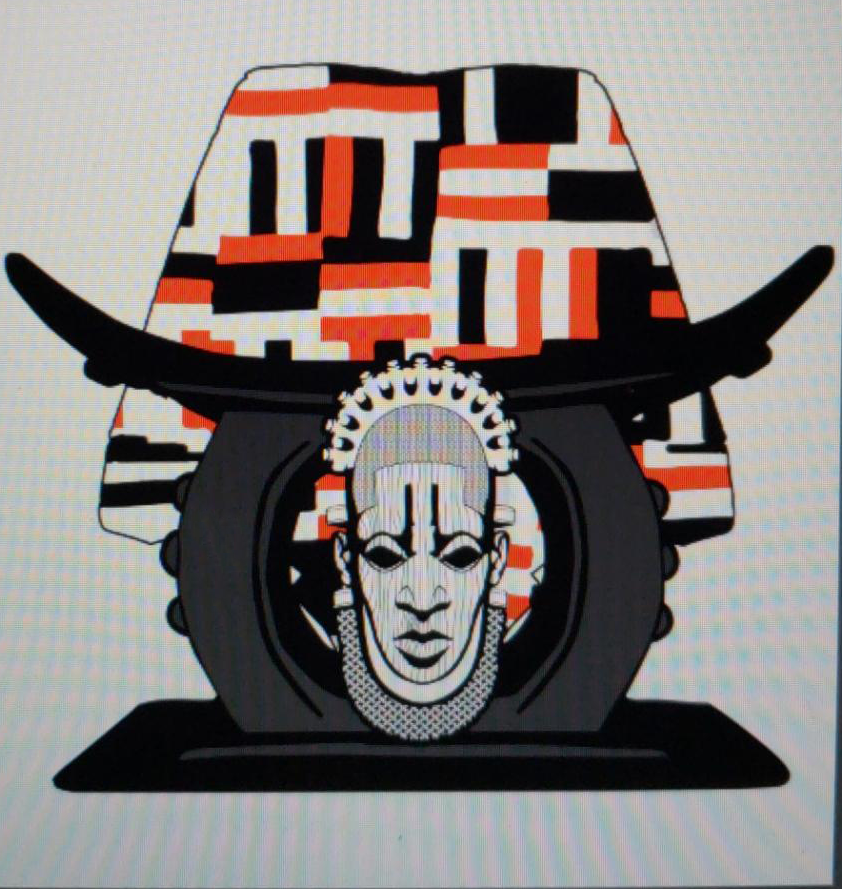
Body of Light in Plain Language
Building the Body of Light means deliberately developing a stable, organized spiritual vehicle through disciplined practice. It transforms a person from someone who occasionally experiences spiritual energy into someone whose consciousness, character, vitality, and subtle faculties have become integrated enough to remain functional under pressure.
That pressure may come through meditation, trance, dreams, out-of-body states, spirit contact, emotional strain, psychic pressure, ritual work, or the deeper transitions that different traditions associate with death and the after-death journey.
The Body of Light is not simply the aura, one chakra, the astral body, or a supernatural shell surrounding the physical body. It is the integrated spiritual vessel formed when body, mind, vital energy, consciousness, character, Ori, ancestral identity, spiritual relationships, elemental powers, and destiny are progressively brought into alignment.
Building does not mean manufacturing a completely new soul. It means purifying, strengthening, coordinating, illuminating, and stabilizing capacities that exist in potential.
Not One Universal Definition
The Body of Light does not have one universal definition. Depending on the tradition, it may mean a subtle vehicle used by consciousness, a purified energetic body, an imaginal or visionary form, a transformed mode of awareness, an immortal or resurrection body, or a perfected spiritual identity that survives death.
Indian and Tibetan tantric traditions speak of channels, centers, winds, vital forces, deity-body visualization, clear light mind, vajra body, illusory body, and, in Dzogchen, rainbow body. Western esoteric traditions speak of astral vehicles, celestial bodies, purified soul vehicles, alchemical transformation, and conscious ascent through spiritual worlds.
Modern "light body" language is often a blended vocabulary. It should be used carefully, not treated as if every tradition has always meant exactly the same thing.
The Egyptian Akh as an African Comparison
Ancient Egyptian religion gives an important African comparison, but it must be handled with precision. Egyptian accounts of the person included several distinguishable aspects rather than one simple soul. One important term is Akh: a transfigured, effective being of light produced through the Kemetic elevation process of Per-em-Heru, Coming Forth by Day, also known as the Book of the Dead.
An Akh can act effectively and reciprocally across the boundary between the living and the dead. That resembles Body of Light language in transformation, luminosity, ritual preparation, ethical order, mobility, agency, and celestial association. But the Akh is not simply another name for a Completed One, nor is it a generic label for every elevated ancestor. In the Ancestral Egbé Version 1 comparative hierarchy, it is a distinct Kemetic stable ancestral condition; completion and Transcendent Dead are higher categories.
The Egyptian Akh is also not simply the modern Body of Light. It belongs to a specific funerary, ritual, ancestral, and relational system. The responsible comparison is this: Kemetic transformation into Akh is one African cultural process of transfiguration; other traditions hold their own processes and forms. See Dark Deceased: Mwtw m Kkw for the public Kemetic distinctions, including Akhu Shepsu, Akh Iqer en Ra, and the Imperishable Stars.
What Is Being Built?
Vital Structure
The practitioner develops the capacity to hold and circulate spiritual force without becoming depleted, scattered, inflated, or overwhelmed.
Conscious Continuity
Awareness becomes more stable across waking life, meditation, dreams, trance, visionary states, spirit contact, and deeper transitions.
Imaginal Organization
Visualization, prayer, symbols, sacred geometry, deity forms, and ritual clothing give spiritual consciousness a coherent form rather than a vague fantasy.
Moral and Psychological Integration
Power must be purified through character, shadow work, emotional discipline, trauma repair, honesty, and self-command.
Spiritual Alignment
The developed vehicle must be governed by Ori, truth, good character, ancestral order, deity relationship, and ethical responsibility.
An African-Centered Translation
Body of Light is not a universal traditional African technical term, so Ancestral Egbe translates the idea into African religious logic instead of importing it wholesale.
Within a broad African framework, building the Body of Light means strengthening and integrating embodied vitality, consciousness, personal spiritual authority, ase, ancestral connection, destiny, spiritual protection, and the capacity to act responsibly between visible and invisible communities.
A developed spiritual body should be firmly seated in the physical body, aligned with destiny, recognized by the ancestors, protected against spiritual disruption, ethically disciplined, conscious in dreams and altered states, and capable of carrying ritual force without fragmentation.
Ancestral Egbe's Position and Pedagogy
Our method begins with a straightforward principle: a person should become whole before attempting to become powerful. Spiritual power does not automatically produce balance. It enlarges whatever structure is already present.
Ancestral Egbe does not train people to become selectively focused traditionalists locked inside one tradition. Our position is that spiritual development should build a whole, balanced practitioner and human being. The point is not to collect labels. The point is to become coherent.
That is why the work begins with foundational practices before moving into higher ritual intensity. We start with meditation, Kundalini meditation, chakra work, meridian work, aura energizing, and the sharpening and attunement of Ori. From that position, the person can clarify and advance their relationship with Egbe, ground the ancestral extended self, stabilize identity, and deepen ancestral connection.
Only then can the elemental constituents be properly activated, coordinated, and balanced. This creates the foundation for a spiritual being who can interact responsibly with higher and lower beings, ideational currents, sentient concept-flows, deities, and the fundamental constructs of reality and destiny, including Odu.
This is not eclectic confusion. It is ordered integration.
Meditation Begins the Vessel; the System Completes It
Meditation in this system is not practiced merely to relax, escape stress, or create occasional spiritual experiences. Its deeper purpose is to begin constructing a whole, balanced, conscious, and spiritually effective human being.
Through repeated practice, the practitioner learns to quiet surface thought, regulate the breath, stabilize attention, feel internal sensation, observe emotion without immediately obeying it, awaken the energy centers, strengthen the aura, create protective boundaries, and recognize the quieter direction of Ori.
The larger system then completes what meditation begins. Meditation builds the initial vessel. Ori governs the vessel. The ancestors root the vessel. Egbe surrounds and relates the vessel. Elemental and Kongo work activate and coordinate the vessel. Orisa relationships specialize divine powers. Ifa and Odu read, correct, and direct the complete vessel.
This is the bridge from meditation into the full architecture of the Ancestral Egbe path.
How Mystic Communion Builds the Body of Light
Mystic Communion of Self-Integration is the developmental model that organizes this work on the site. It treats the human being as a composite of physical body, mental-emotional self, ancestral self, elemental self, and Egbe/spirit self. Each layer must be recognized, cleaned, strengthened, and coordinated.
The physical body anchors the work in Aye. The mental-emotional self must become disciplined enough that power does not simply amplify confusion. Ori governs direction and identity. Egbe surrounds the person with spiritual society and reinforcement. The ancestors provide continuity, recognition, and lineage grounding. The elements give force, proportion, vitality, and interaction with the living structure of reality.
Mystic Communion is therefore not separate from Body of Light work. It is the Ancestral Egbe foundation for building it slowly, responsibly, and in balance.
Melanin Activation is one applied support service for this path. In that service frame, the Body of Light is treated as an energetic circuit and melanin as part of the receptive wiring that helps the circuit conduct, receive, and organize subtle force.
The Spiritual Jurisdiction Bridge
Spiritual Jurisdiction and the Crowns of Kemet gives the outer map of layered authority: inner force, ancestors, Earth and elemental power, deity-level order, and wisdom or destiny law. Building the Body of Light gives the inner vehicle that must be strong enough to move through those layers without confusion.
Begin the first-layer work with the Nemes Prayer for Solar Self-Mastery. The Nemes crown and Uraeus establish the public image-and-prayer doorway for clear attention, steady breath, disciplined light, and the rising force that Body of Light practice must learn to hold responsibly.
In simple language, jurisdiction tells you what sphere you are entering. The Body of Light determines whether you can enter that sphere with stability, character, protection, and discernment.
This is why Ancestral Egbe does not teach power as a random buffet. A person needs inner force before heavier contact, ancestral grounding before higher titles, Earth stability before dangerous elemental work, deity literacy before deity claims, and Ori-governed wisdom before approaching Odu as the architecture of destiny.
Ori, Egbe, Ancestors, Orisa, and Odu
Ori should command the Body of Light. Any energetic structure that becomes powerful while disconnected from Ori risks becoming an inflated artificial personality. Development must remain under destiny, character, and rightful direction.
Egbe surrounds and reinforces the work. The spiritual companion current can strengthen belonging, support dream activity, help recover scattered vitality, reinforce gifts, protect spiritual movement, and assist the person in functioning between Aye and Orun. But Egbe should support earthly responsibility, not pull the practitioner away from health, livelihood, family, and embodied life.
Ancestors provide continuity and recognition. They ground spiritual development in lineage rather than private fantasy. They connect expanded identity to history, obligation, community, and the inherited current.
Orisa differentiate the powers. Different Orisa currents may support clarity, cleansing, emotional depth, courage, force, communication, healing, justice, sweetness, attraction, relational harmony, and other capacities. The objective is not to stuff every possible power into the practitioner. The objective is ordered force under Ori and good character.
Odu gives the structural intelligence of destiny. Odu is not merely information. It is pattern, law, diagnosis, story, warning, possibility, and the deep architecture through which destiny and reality disclose themselves.
Ifa does not build the basic vessel. It examines, interprets, corrects, and directs the vessel through Odu. A divination may identify the pattern of a fragmented person, but divination alone does not give that person the concentration, discipline, energetic capacity, emotional regulation, ancestral grounding, or relational maturity needed to carry out the correction. The foundational work makes the person capable of receiving and using the wisdom revealed.
The Soul Retrieval Bridge
Soul retrieval and building the Body of Light are connected, but they are not identical. Soul retrieval rebuilds what trauma, grief, spiritual attack, dislocation, or broken relationship has scattered. Body of Light work builds the whole spiritual vehicle through disciplined development.
A fragmented person should not rush directly into intense light-body exercises. First comes recovery, cleansing, grounding, reseating, psychological integration, ancestral repair, and stabilization. Otherwise advanced practice may energize the fragmentation itself.
The clean formula is this: Soul retrieval restores the missing parts. Ori organizes the person. The body anchors the person. Egbe surrounds the person. The ancestors establish continuity. Disciplined practice makes the spiritual person coherent, luminous, and effective.
The Ancestral Mandala Inside Body of Light Work
The ancestral mandala is one major structure within the Body of Light path. It shows how maternal lineage, paternal lineage, Ori, Egbe, descendants, inherited gifts, unresolved burdens, and spiritual obligations converge inside the living person.
But the Body of Light remains larger than ancestry alone because it also includes meditation, Ori, breath, energy, elements, Egbe, deity relationship, character, and destiny. The mandala is the ancestry architecture. The Body of Light is the whole developed vessel.
This distinction keeps the teaching balanced. If ancestry is ignored, spiritual development can become abstract and rootless. If ancestry is treated as the whole path, the practitioner may reduce every issue to family-line repair. In the Ancestral Egbe model, ancestry roots the vessel while Ori governs the total development.
For the repair side of this work, study ancestral elevation and lineage elevation. Elevation helps the dead move toward clarity and proper placement, while lineage elevation helps the living stop carrying unresolved ancestral pressure as unconscious repetition.
Stages of Spiritual Body Development
- Meditation and stillness
- Kundalini meditation and subtle-force cultivation
- Chakra, meridian, aura, and energetic body work
- Ori sharpening, cooling, attunement, and governance
- Egbe relationship clarification and dream continuity
- Ancestral grounding, extended self, identity, and lineage connection
- Elemental activation and coordination
- Preparation for responsible interaction with higher and lower beings, deities, sentient concept-flows, and Odu
The fuller manual frame would include embodiment and grounding, soul recovery and reintegration, purification and character formation, vital-force cultivation, dream and trance continuity, Ori alignment, ancestral and Egbe reinforcement, divine-form or sacred-image embodiment, protection and boundary formation, and transfiguration through effective spiritual service.
Signs the Body of Light Is Developing Correctly
The Body of Light should not be judged primarily by visions, heat, tingling, voices, possession experiences, psychic impressions, or extraordinary dreams. Such experiences may occur, but they are not sufficient proof of balanced development.
A spiritual system that produces dramatic experiences but makes the practitioner less responsible, less honest, less stable, less compassionate, or less functional is not building a balanced Body of Light. It is producing spiritual inflation or energetic imbalance.
The Law of Integration
The central law of this system is simple: no single power should be developed at the expense of the whole person. Every practice must return power to the integrated human being.
- Meditation must not become withdrawal from life.
- Kundalini must not become obsession with energetic sensation.
- Chakra work must not neglect the physical body.
- Ori work must not become self-worship.
- Ancestor work must not imprison the practitioner inside inherited trauma.
- Egbe work must not weaken participation in Aye.
- Tantra must not become compulsive sexuality or domination.
- Elemental power must not become imbalance.
- Possession or spirit contact must not replace character.
- Orisa devotion must not erase individual responsibility.
- Ifa consultation must not replace disciplined action.
A Strong African-Centered Definition
Building the Body of Light is the disciplined transformation of the embodied spiritual person into a coherent, purified, and effective vehicle of consciousness.
It involves strengthening vitality, maintaining awareness across changing states, aligning power with Ori and good character, deepening ancestral and divine relationship, coordinating Egbe and elemental support, and becoming capable of carrying spiritual force without fragmentation.
Build Before You Intensify
The goal is not to become spectacular. The goal is to become whole enough to carry power responsibly. Body of Light work should make a person more embodied, ethical, relational, disciplined, protected, and useful.
Begin with the foundation. If the issue is damage or scattering, study soul retrieval and diagnosis first. If the issue is growth and integration, study Mystic Communion and the foundational manuals.
Body of Light FAQ
Is building the Body of Light the same as energy work?
No. Energy work can be one part of it, but Body of Light development also requires embodiment, character, Ori alignment, ancestral grounding, Egbe balance, dream continuity, protection, and disciplined spiritual relationship.
Can someone skip straight to advanced practice?
That is not recommended. A weak nervous system combined with intense spiritual stimulation does not produce a strong Body of Light. It often produces instability, fantasy, or amplified fragmentation.
How does this differ from soul retrieval?
Soul retrieval is rebuilding after damage or scattering. Building the Body of Light is the slower developmental process of making the whole spiritual person coherent, luminous, stable, and effective.