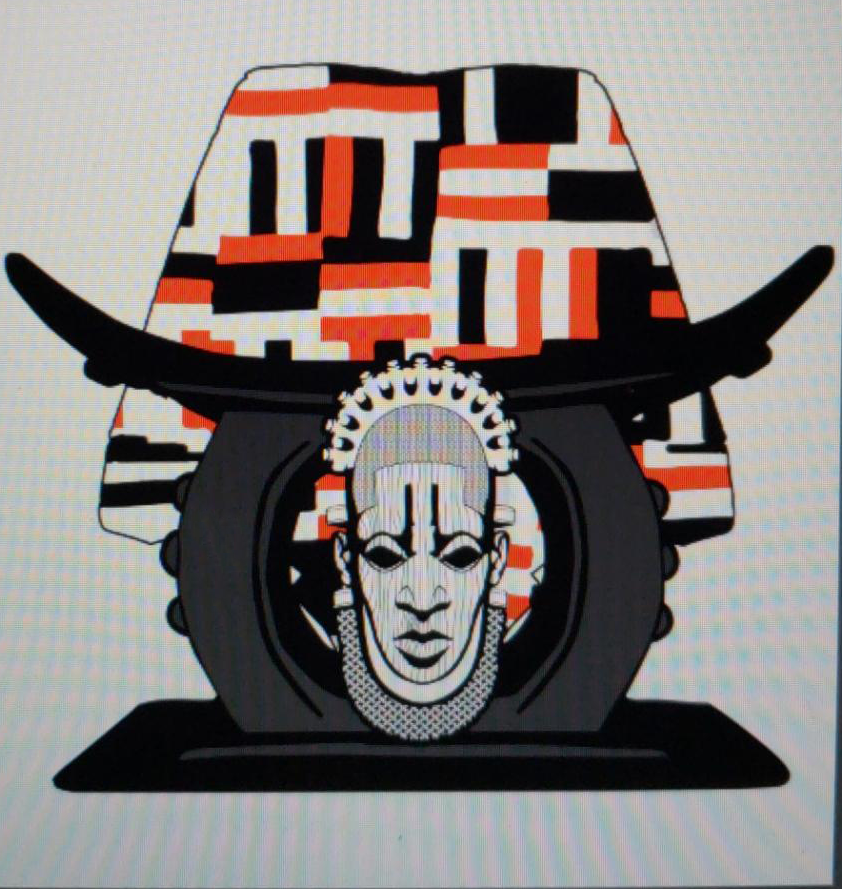
What Is the Ancestral Mandala?
The ancestral mandala places the living person at the center of a patterned map formed by maternal and paternal ancestral lineages. It is not simply a family tree. A family tree records descent. The mandala shows convergence, influence, relationship, active inheritance, and spiritual responsibility.
The person stands at the center because they are the present living expression of ancestral streams that meet inside one body, one mind, one destiny, and one order of obligation. The ancestors are not only behind the person. In meaningful ways, they are also present within the person.
The Mandala Begins With Two Lines
The first visible structure is simple: the maternal lineage and the paternal lineage. These open into four grandparental streams: mother's mother, mother's father, father's mother, and father's father. These are the four corners of the ancestral mandala. Each stream then opens backward through earlier generations.
In the seven-round ancestral-elevation sequence, the four corners receive their own known-and-unknown rounds after the complete ancestral body and the female and male ancestral collectives. The concluding blessing then turns forward to unborn and future generations, who receive the repaired inheritance rather than undergoing ancestral elevation themselves.
As the generations extend outward, the mandala becomes a widening pattern of inheritance. Each branch may carry biological inheritance, emotional tone, family narrative, cultural memory, spiritual capacity, trauma, protection, illness, obligation, leadership, secrecy, or unresolved grief.
This does not mean the person is mechanically trapped by ancestry. It means the person begins life inside an inheritance already shaped by ancestral conditions. With consciousness, discipline, ritual discernment, and ethical action, the person can act upon that inheritance.
Major Layers of the Ancestral Mandala
Maternal Lineage
The mother line and its grandparental streams, carrying gifts, wounds, habits, memories, protections, and obligations.
Paternal Lineage
The father line and its grandparental streams, carrying its own histories, strengths, injuries, spiritual signatures, and unfinished work.
Ori and Incarnation Objective
The governing head and life direction that must organize inherited forces instead of being ruled by them.
Egbe and Destiny Community
The companion-spirit and destiny-community layer that may support, pressure, or complicate earthly life.
Living Descendants
The future-facing side of the mandala: what the present person will transmit, repair, preserve, or refuse to continue.
Spiritual Obligations
Unfinished prayers, broken promises, abandoned rites, deity debts, family duties, and ancestral responsibilities that require discernment.
The Ancestors Within the Person
The body carries ancestral biology. The mind carries inherited assumptions and family narratives. The emotional life may carry grief, fear, loyalty, rage, caution, ambition, or longing that began before the present life. Spiritual gifts and obligations may also travel through particular branches of the family.
What appears as inner contradiction may sometimes reflect different ancestral streams interacting inside the mandala. One branch may carry caution while another carries risk. One may carry communal loyalty while another carries fierce independence. One may transmit spiritual sensitivity while another transmits fear of spiritual experience.
The point is not to blame the ancestors for everything. The point is to read the inheritance clearly enough to preserve what is worthy, heal what is wounded, refuse what should not continue, and transmit a more ordered inheritance.
How the Ancestral Mandala Fits the Body of Light
The ancestral mandala is one major structure within the Body of Light path. It shows how maternal lineage, paternal lineage, Ori, Egbe, descendants, inherited gifts, unresolved burdens, and spiritual obligations converge inside the living person.
But the Body of Light remains larger than ancestry alone because it also includes meditation, Ori, breath, energy, elements, Egbe, deity relationship, character, and destiny. The mandala is the ancestry architecture. The Body of Light is the whole developed vessel.
This distinction matters pedagogically. If the mandala is treated as the whole path, the learner may reduce spiritual development to ancestry only. If ancestry is left out of Body of Light work, the learner may build energy without roots. The correct frame is integration: ancestry roots the vessel, while Ori governs the whole development.
From Map to Repair
The mandala becomes practical when it helps identify where pressure, gift, blockage, or obligation may be entering the person. A repeated family pattern may come through one line more strongly than another. A spiritual gift may belong to a forgotten branch. A burden may require ancestral elevation, lineage repair, cleansing, apology, fulfilled promise, or direct spiritual intervention.
That is why the next step is not random ritual. The next step is discernment. In Ancestral Egbe's model, divinational diagnosis helps determine whether the issue is ancestral, Ori-related, Egbe-related, deity-related, psychological, somatic, practical, or several layers at once.
Read the Overlay in Order
Use ancestral elevation to understand repair, the ancestral mandala to understand the map, and Body of Light doctrine to understand whole-person development.