Kemetic Ashram Lineage Study
Buddhism in the Kemetic Ashram
Lineage, meditation, and African-centered integration.
A study in African initiatory continuity, cultural translation, and disciplined practice.
The lineage position
Ancestral Egbé understands Buddhist contemplative practice, and later Tibetan Tantra in particular, as a continuation and regional translation of older African initiatory sciences. This does not make every African and Asian practice identical. It recognizes a living field of transmitted spiritual functions: disciplined attention, life-force cultivation, sacred speech, the transformation of consciousness, and preparation for death and rebirth.
For the Kemetic Ashram, Buddhist training is therefore not an escape from African identity. Meditation, subtle-body practice, mandala work, Kundalini, Aru Ka, and Ra Ka can be studied as capacities of inner formation while Ori, ancestors, Egbe, spiritual jurisdiction, and lineage responsibility keep the practitioner rooted in an African sacred order.
Apedemak and the African image of awakened force
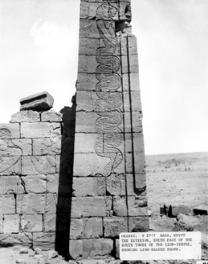
Apedemak of Naqa, the Kushite lion-headed and serpent-bodied deity, is central to this inquiry. In Ancestral Egbé interpretation, Apedemak rises from the lotus with six coils and a solar lion head, preserving an African image of the flowering of consciousness: rising life-force, the centers of spiritual anatomy, solar realization, and the transformation of the practitioner. The Kung / San teaching on kia supplies a related African vocabulary of activated healing force. This is read alongside the later language of Kundalini and chakra practice, not as a borrowed Asian discovery, but as an African sacred vocabulary with its own depth and continuity.
A Bushman creation story places Mantis within a great white flower floating on primordial water. When the first rays of the sun open the flower, Mantis awakens and the first San person is born. It is one southern African / |Xam-San creation account, not a single doctrine assigned to all San peoples. The preserved story does not name the flower botanically; its form, water setting, Bee companion, and solar opening nevertheless strongly resemble the indigenous African water lilies called “lotus” in Kemetic literature. The lotus also returns in Kemet through Nefertem, Ptah's lotus-blossom-born son and the first light of dawn. Together, the Bushman creation image, the Kushite Apedemak image, and the Kemetic Nefertem image form a continuous African field of lotus, awakening, solar consciousness, and sacred emergence.
The lotus, coils, lion form, and solar consciousness place Apedemak beside other African images of risen force: serpent symbolism, the uraeus, and disciplined movement toward clear spiritual perception. They also provide a meaningful cultural bridge for comparing Tibetan Tantra, mandala discipline, and the Ashram’s Aru Ka and Ra Ka practices. The full article will develop these connections through lineage testimony, iconography, ritual structure, and careful historical study.
In the lineage's reading of later Asian martial traditions, especially Tai Chi, the snake and crane are reinterpreted forms of an older complementary energetic pairing: the cobra and the Egyptian vulture. The Kemetic images name two coordinated powers within the Fa and sacred-crown teaching; later martial systems preserve the paired principle through animals and local visual languages available in another cultural setting. This is not a claim that Chinese traditions are identical to Kemetic ritual. It is an Ancestral Egbé reading of how an initiatory grammar can be culturally translated while retaining complementary energetic functions.
The Garu, Guru, and Heru tradition is another line of inquiry within this martial continuum. In Sila and related martial traditions, Garus and Gurus are warrior-teachers: figures of disciplined awareness, trained movement, protective capacity, and spiritual responsibility. The Ashram reads this alongside Heru—the Kemetic defender and restorer of right order—and the Heru-Ka current. The connection is not only a question of similar words. It concerns a dispersed practice of martial awareness: the warrior’s ethical formation, the serpent-coil rising path, and the awakening of consciousness through embodied discipline. The specific historical, linguistic, and ritual arguments will be developed in later studies.
Ptah Buddha and the awakening of consciousness
Within Ancestral Egbé lineage teaching, the Ptah-Buddha connection is part of the cultural genealogy of Buddhist awakening. The comparison follows the sacred-name and sacred-function complex around Ptah or Putah: the opener, the forming intelligence, and the power through which what is closed becomes manifest. In this reading, “Buddha” belongs to the same deeper field of opening, flowering, and awakened mind.
In the older Ptahic understanding, sacred making carries consciousness into form. Ptah, Mfundi Mkuu — Ptah, the Great/Master Craftsman. A shrine, ritual, word, or crafted object bears the discipline, moral order, and soul of its maker. The later Dzogchen use of the syllable PHAT offers a comparable formulation: PHA, Means, and TA, Wisdom, are brought together to interrupt thought and attachment. The Ashram reads this later practice as an expression of sacred craftsmanship—trained method guided by awakened intelligence—within a wider initiatory continuum. The connection is a lineage interpretation of shared sacred function, not a claim that the terms are proven direct translations.
Nefertem, Ptah's lotus-blossom-born son, gives this teaching its Kemetic image: first light arising through the opening flower. The Buddha is likewise understood as the awakened one, not merely as an individual teacher separated from all earlier initiatory memory. The lineage therefore reads the lotus, opened eye, solar consciousness, serpent power, and disciplined transformation as a continuing African initiatory grammar that later took regional form in Buddhist traditions.
This is not a claim built on an isolated similarity of sound. It is an Ancestral Egbé lineage argument that places names, symbols, ritual functions, contemplative disciplines, and the figure of the awakened teacher inside one longer history of transmission and cultural translation.
Afro Asian exchange is historical ground
The lineage argument stands within a documented world of contact. The western Indian Ocean became a major system of human and material exchange after roughly 300 BCE, linking the Red Sea, East Africa, Arabia, India, and the wider Mediterranean. It was a sea of movement, not a wall between civilizations.
At Berenike on Egypt's Red Sea coast, excavations found a Buddha statue dated to about 90 to 140 CE, together with later Indic material, including a Brahmi/Sanskrit and Greek inscription. These finds demonstrate that Buddhist-associated people and objects reached Egypt through this exchange world. They do not, by themselves, settle every question about an older Kemetic-to-Buddhist line of transmission; they do remove the false picture of Egypt and Buddhist India as sealed cultural worlds.
Within this wider field, Clyde Winters advances a more specific Afrocentric diffusion argument connecting Kush, Punt, Dravidian, Indus, and ancient Near Eastern cultural histories. Ancestral Egbé receives that work as part of the larger research conversation and develops its own lineage account through symbols, practice, texts, iconography, and lived transmission.
What the comparison is for
The purpose of this study is formation, not cultural collecting. Buddhist concentration, ethical discipline, visualization, breath, posture, and compassionate attention can strengthen the vessel. The Kemetic Ashram asks what those capacities are for: clear Ori, a stable nervous system, ethical self-command, responsible ancestral relationship, and the ability to serve without spiritual confusion.
Do not force breath, chase sensations, or mistake intensity for realization. Begin with ordinary meditation and grounding. Let advanced energy, Tantra, or death-oriented practices remain within appropriate instruction, health limits, and lineage guidance. Inner cultivation matures a practitioner; it does not automatically confer priestly authority or replace African traditional obligations.
How this study fits into the Kemetic Ashram arc
- Begin with the Meditation Manual and the Body of Light foundation. Those practices establish the inner discipline needed before taking up comparative symbolism or historical transmission.
- Use this study as a bridge between the African images of Apedemak, the Bushman flower story, Nefertem, Ptah, and the later Buddhist and Tibetan contemplative vocabulary.
- Follow the connected threads outward: Ptah-Buddha and sacred craftsmanship; Garu-Guru-Heru and martial awareness; cobra-vulture and snake-crane; and Aru Ka, Ra Ka, mandala, and serpent-coil practice.
- Read the Red Sea and Indian Ocean exchange record as historical context for the broader arc, while letting the linked articles, manuals, lineage testimony, and lived practice develop each strand in its proper depth.
Continue the connected threads
- Build Crown One first: return to the Kemetic Ashram, then work through the Meditation Manual, Body, Breath and Energy, Subtle-Body Literacy, and Body of Light.
- Follow the source and sacred-name layer: read Amen, Amun, Amma, Olokun, and Aum/Om alongside Amon Is the God of All Africa for the wider Amun, Kush, and sacred-sound context.
- Follow the law and interpretation layer: continue to Kemetic Fa and Divine Mathematics, then approach the Five Crowns and Spiritual Jurisdiction before deeper study of Ifa and divination.
Research starting points
- Eivind Heldaas Seland, Archaeology of Trade in the Western Indian Ocean, 300 BC to AD 700, for the wider exchange system.
- Results of the Winter 2022 Excavation Season at Berenike, for the Buddha statue, Indic inscription, and the Red Sea port context.
- Indians in Roman Berenike, for later archaeological study of Indian material from the site.
- Clyde A. Winters, The Meluhhaites or Puntites of East Africa, for one expression of the Kush-Punt diffusion argument.
Explore the existing path
Kemetic Ashram
Begin with the wider inner-cultivation path: meditation, breath, energy, Body of Light, Ori, ancestors, Egbe, and destiny.
Free Meditation Lesson
Start with a practical public foundation for attention, stillness, and disciplined awareness.
Meditation Manual
Continue with a structured approach to concentration, visualization, breath, and inner discipline.
White Elemental Goddess Tantra Manual
Explore the site’s existing work on elemental Tantra, life-force discipline, ethics, and embodied relationship.
Building the Body of Light
Read the companion doctrine on developing a coherent vessel for spiritual responsibility and perception.
Return to the Af-Ra-Kan Center
Place the inquiry within the site’s broader work of cultural restoration and African-centered interpretation.