Ancestral Priesthood Initiation - Egungun, Jurisdiction, and Lineage Responsibility
This initiation is a calling to heal not only yourself or your family, but the community that stands behind and around you.
Ancestral priesthood is not a title to collect. It is a journey of humility, reflection, discipline, and obligation. It begins with the ancestors, but it does not end with private devotion. The initiate becomes a working point of contact for lineage repair, ancestral authority, and the healing of family and community patterns.
What This Initiation Means
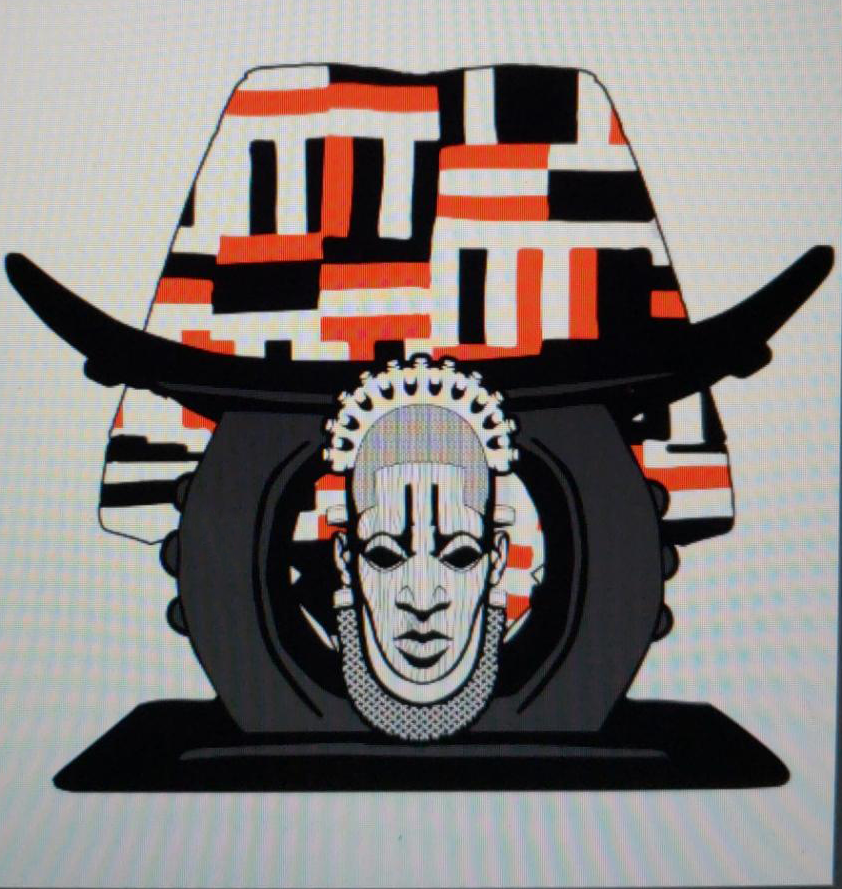
In the Egungun stream, the initiate is moving toward priesthood in the veneration of the collective spirit of the ancestors. Egungun is the ancestral current made visible through ritual, masks, costumes, performance, prayer, and embodied presence.
This priesthood serves as a bridge between the living and the dead.
The work is not only symbolic. It establishes a certain spiritual jurisdiction. The initiate receives authority to work with a specific set of ancestral forces, beings, and lineage obligations. This means the person is no longer only honoring the ancestors privately. They are becoming part of a structure that can serve, repair, carry, and respond.
Fundamentally, these priests gain the ancestral jurisdiction to work in other people's lineages and to mediate interactions between the ancestors of other people, not only their own. Those ancestral forces respond based on the authority and Ashe of this particular initiation.
The example we often use is simple. If you walked into a discussion or argument between a father, a son, and a grandfather, and you were not a family member, without some form of recognized external authority you would most likely be ignored at best. But with this Ashe and the divine authority given through initiation, the priest can intercede in other people's spiritual family matters.
Atori, Ancestral Pots and the Full Initiation
In our house, Isan is the smaller bundle for a more limited personal or family ancestral relationship. Atori is the large Egúngún shrine bundle: a gathering of the extended ancestral family that supports an ancestral priest's work across other people's lineages. An ancestral pot is a different construct for the recipient's own ancestral relationship. Atori's defining distinction is ancestral reach and jurisdiction, not simply size, price or a deluxe configuration of an ancestral pot.
Atori can function as an ancestral shrine or bundle. Its broader reach is understood through more remote Egungun ancestors whose descendants extend across many families. The movement toward shared primordial ancestry is a house doctrinal explanation of ancestral convergence, not a scientific genealogy claim.
The large Atori bundle is required equipment in our ancestral/Egúngún priesthood: part of the priest’s spiritual toolkit, not an optional substitute for a personal family shrine. Possessing it alone does not make someone a priest. Priesthood also requires the appropriate initiation, additional medicine, training and responsibilities, with masquerade eventually received as part of the development.
In the house distinction described here, the smaller Isan commonly has seven or nine wrapped sticks. Atori is the larger bundle, with a larger number of sticks and a broader ancestral scope. We do not establish a fixed Atori stick count here, or treat numbers alone as proof of priesthood or jurisdiction.
The bundle stories help explain the form: sticks can stand for ancestral bones, and the cloth binds the ancestral family into a gathered whole. These are sacred narratives and living interpretations, not interchangeable construction specifications. Across wide regions and communities, different versions can emphasize family remembrance, funeral obligations, masquerade, settlement or communal continuity.
Àtòrì / Atori: Name and Interpretation
Àtòrì, written Atori without tone marks, names the tree Glyphaea brevis and sticks or switches made from its wood. Kew treats Glyphaea lateriflora as a synonym of Glyphaea brevis. The Ifá teaching glossary hosted by the Atlanta University Center library also identifies atori as an ancestral sacred stick under the older botanical name.
In the ancestral practice described here, sticks may be consecrated and bound as a ritual bundle expressing family unity and continuity across generations. The shrine takes its name from the wood used to make it. Ancestral consciousness is a spiritual interpretation of that function, not a literal translation of the tree's name. The word for the wood does not by itself establish that any bundle is the full priestly shrine or confers cross-lineage authority.
Orí means head and is associated in Yoruba spiritual thought with personal destiny and the inner spiritual head. Similarity of unmarked spelling does not establish a shared linguistic origin. In the spelling used here, Àtòrì ends in òrì, whose tones differ from orí. A derivation from orí remains unverified; the interpretive connection must not be presented as established etymology.
Sources for the botanical name and recorded teaching vocabulary: Kew: Glyphaea lateriflora synonym record · Awo Fa’lokun Fatunmbi: Ifá glossary hosted by AUC Woodruff Library. The source glossary does not establish the proposed orí derivation.
The Bundle: Ancestral Bones and Red Cloth
In the patakí posted by Omi Buyi under “The Shrine” in “Egun (Ancestors)” on February 1, 2004, a son avoids his deceased father’s funeral rites and leaves the body beneath a sacred ìrókò tree. After years of hardship, a diviner directs him to recover the remains and fulfill those obligations. He finds bones and remnants of clothing, gathers the bones, binds them with strips of his father’s red garments, and performs the required rites. The account explains the prepared sticks as representatives of ancestral remains, bound in red cloth.
The surrounding description specifies nine sticks. This particular account does not identify the stick-producing tree as àtòrì or name an Odù. Its ìrókò is the tree beneath which the father’s body was left; that is not evidence that the bundle must be made from ìrókò. Here the story illuminates the bones, red wrapping and ancestral obligation without establishing one universal shrine recipe.
Omi Buyi, “Egun (Ancestors),” “The Shrine,” New LCO Community Boards, February 1, 2004 — patakí and nine-stick description. This is the cited narrator’s account, not a claim that every house tells the same version.
Other Egúngún narratives emphasize different parts of the practice. A related account, published in 2021 and credited to Gbade TV, describes a widow and children returning for their father’s remains and bringing them in colorful cloth to a new settlement. Its focus on relocation, communal return and masquerade belongs to a separate discussion, rather than replacing the red-cloth bundle story here. Related masquerade/settlement story: Yoruba Traditional & Cultural Renaissance, November 6, 2021, credited to Gbade TV.
Àtòrì and Osir: Gathering the Ancestral Whole
Within our house, the àtòrì ancestral bundle represents the gathering, ordering, and restoration of ancestral relationship. We draw an interpretive association with the Yoruba verb tò, “to arrange” or “put in order.” This is our house’s symbolic reading rather than an established etymological breakdown of the tree’s name. The separate sticks, gathered and bound into one sacred form, express the restoration of connection among ancestors, descendants, and the living community.
We understand this principle alongside the Kemetic mysteries of Osir, widely known through the Greek-derived name Osiris. In the traditions of his dismemberment and restoration, the scattered divine body is sought, gathered, and restored through the work of Aset—known in Greek as Isis—and her divine companions. For our house, this becomes an image of ancestral healing: recovering what death, displacement, conflict, and forgetfulness have scattered, and restoring it to a coherent spiritual whole.
A related image appears in the late Greek-language account preserved by Plutarch in On Isis and Osiris, §§15–16. The chest containing Osir’s body reaches Byblos, where a tree grows around and encloses it. The king has the trunk cut into a palace pillar, unknowingly incorporating the concealed divine body into his dwelling. Aset discovers its location and retrieves the chest. Here, Osir is enclosed within a tree rather than simply transformed into one; the wood becomes both his covering and the support of a house.
Our interpretation brings these images together: the gathered sticks become a figure of the gathered lineage, while the tree enclosing Osir evokes ancestral presence held within wood. This also resonates with the djed, the Kemetic emblem of stability associated with Osir’s backbone. Through these correspondences, we understand the ancestral bundle as an image of restored continuity: many lives gathered into one lineage, and ancestral memory becoming a source of stability for the living.
We present this as our house’s comparative African spiritual interpretation. It expresses a meaningful relationship between Kemetic and Yoruba sacred imagery without claiming that the Yoruba word àtòrì derives from Osir’s mythology or that Egúngún has been historically proven to originate in his worship.
Sources for the comparative images: Plutarch, On Isis and Osiris, §§15–16 — late Greek-language account, in English translation · The Met: djed pillar amulet, permanence/stability and Osiris’s backbone (34.6.2). These sources document the cited narrative and emblem, not a historical origin of Egúngún in Osir worship.
The Blue Crown Pathway places this distinction alongside study, personal ancestral practice and guided formation. A deluxe ancestral pot is not automatically Atori, and no separate Atori price or independent receipt entitlement is established by this explanation.
Preparation Comes First
This process is recommended for people who already have some working relationship with their ancestors and have begun basic ancestral practice. It is highly recommended that the candidate complete an Incarnation Objective Reading before entering the process.
That reading helps clarify whether this path belongs to the person, what patterns are active, and what preparation is needed before deeper ritual commitment.
The initiation also includes an internal diagnostic reading as part of building the shrine. If that reading shows the initiation is not appropriate, the process is stopped and the money is refunded minus the reading fee. The Incarnation Objective Reading helps reduce that risk by clarifying the call before the larger process begins.
The Three Phases
The process usually takes two to three months.
The first phase is the creation of the shrine in Africa and the establishment of the ritual container that will hold the ancestral current.
The second phase is the preparation of the candidate. This may include spiritual cleanings, correction work, training, and other recommended steps before the initiation itself. This is the reading and weeding before the feeding.
The third phase is the primary initiation, where the veil is pierced for the practitioner and the ancestral jurisdiction is formally established.
The initiation itself is usually done on a weekend in a three-day format. The third day closes with a social event so the work returns to community, family, food, and celebration. Friends and family may be invited, and in the summer this often becomes a cookout with barbecued lamb and other treats. The point is not only ceremony. It is also reintegration, witness, and communal joy after the sacred work has been completed.
The listed cost covers the first and third phases. The second phase varies from person to person because each candidate brings a different spiritual condition, family burden, and level of readiness.
What the Initiation Clears and Reveals
This initiation can clear certain karmic debts, ancestral obligations, and energetic imbalances. But it can also expose family and lineage issues that have been hidden, avoided, or suppressed.
That exposure is not failure. It is part of the healing crisis.
Sometimes the work feels heavier before it feels better because the lineage now has a place and a person through whom unresolved material can surface. The initiate becomes more established in the spiritual realm, especially within ancestral jurisdictions, and receives a level of power, Ashe, connected to that responsibility.
But power is not the same as completion.
Training, mentorship, ritual practice, and continued correction are necessary for the person to move from initiate toward priest.
Egungun Roles and Responsibility
Within Egungun practice, there are different roles and levels of function.
The Egungun priesthood has three core levels: priest, senior priest, and high priest.
Basic Priest: Oloje, also called Atokun. This is the attendant or guide who accompanies the Egungun and helps direct the Egungun during appearances and ritual settings.
Senior Priest: Alapani or Alapini. This is a higher-ranking title connected to leadership over Egungun manifestations and deeper responsibility within the current.
High Priest: Alagba. Alagba is the leader of the Eleegun, the community of Egungun initiates, and carries responsibility for correct ritual order.
Alaran refers to a successor being prepared for future leadership within the Eleegun structure.
These roles show that Egungun is not random spirit work. It is organized ancestral authority, ritual order, and communal responsibility.
Training After Initiation
The initiation itself opens the door, but it does not replace training.
After initiation, many personal, family, or lineage issues may arise for healing. This is why ongoing mentorship and coaching are strongly recommended, especially in the first few years. The initiate must learn how to carry the current without being consumed by it, how to serve without ego, and how to distinguish personal emotion from ancestral obligation.
This initiation should be done after, or at least concurrent with, the first level of ancestral training such as the Ancestral Training Package.
Who This Is For
This path is for people who are called to ancestral service, lineage healing, community responsibility, and disciplined priestly formation.
It is not for those seeking status, mystery, or spiritual decoration.
It is for those who understand that ancestral power must be carried with humility, structure, and accountability.
How It Fits the Larger Path
The Ancestral Manual gives the home foundation. The Isan Egun Bundle establishes a working point of contact. The Opa Iku Ancestral Staff extends ancestral communication and authority. The Benefits of Ancestral Trauma Healing article explains the repair logic behind the work.
The ancestral staff can be received before or after this initiation. Ideally, however, Level 2 and Level 3 of the staff are received and consecrated as part of the priesthood initiation during the three-night ceremony. This requires that the prior phase of the staff has already been completed earlier.
This timing is especially important for women, though both men and women need the staff path. Men are expected to masquerade immediately as part of their priestly responsibility. Women, by contrast, will often use their ancestral staffs in the management aspect of attending to the Egungun and guiding them. In both cases, the staff is not decoration. It is an instrument of authority, direction, and ritual function.
Ancestral Priesthood Initiation is the deeper threshold where relationship becomes responsibility.
If you are still beginning, begin with the foundation.
If the call has become serious, begin with diagnosis.