The Central Thesis
The "ten-thousand-year war" is Ancestral Egbe doctrine. It names a recurring civilizational pattern: older Earth-centered, ancestor-centered, water-centered, and feminine-centered orders are repeatedly subordinated by centralized Sky-Father systems that sacralize conquest, exclusivity, hierarchy, and dominion.
This is not presented as one uninterrupted military campaign with one continuous human command structure. It is a pattern of sacred history. Its names change. Its priesthoods change. Its languages change. Its empires inherit and revise one another. But the structure repeats: an uprooted or over-centralized power declares itself universal, rewrites older sacred memory, diminishes the feminine, absorbs the old gods, and converts land, bodies, ancestors, and spiritual law into property.
The word "push" should be understood carefully. These were not short organized war parties that left home, raided for a few years, and then returned. Nor is this article claiming that some white man in the sky issued a synchronized order and every group marched off in automation. That would be ludicrous. These were migration-style cultural movements unfolding across decades and centuries. Some raids, battles, executions, and settlements may belong to early threshold moments, while others happened generations later, and in some cases plausibly centuries later, after the broader social pressure had already changed the landscape.
The doctrine is closer to a civilizational cultural drive, something like a sacred-politics version of manifest destiny, than to a single command structure. A spiritual zeitgeist may stand behind the pattern, but that is beyond what historical evidence can prove by itself. What the evidence can show is that migrations happened, battles happened, displacement happened, male-line collapse happened in some regions, and the pressure generally fell on the same kinds of agricultural, land-rooted, feminine, water, fertility, and older sacred communities across a long span of time.
Religiously and spiritually speaking, this does not deny the possibility that some centralized metaphysical structure, entity, current, or spiritual intelligence may have stood behind parts of the movement. It only says that ordinary history does not prove that by itself. That kind of claim belongs to metaphysics, divination, priestly diagnosis, dream evidence, spirit work, or another system of proof beyond the scope of this article.
A historical analogy is useful. The Nazi movement had a visible leader in Hitler, but beyond one leader it was also a philosophy of breathing room, Fatherland identity, Sky-Father inheritance, racial destiny, and imperial state power. A leader can come and go while the philosophy continues. Likewise, the ten-thousand-year war may be read as philosophy, construct, social doctrine, spiritual current, or being; that is a larger argument for another article. This article points to the visible outcomes and recurring structure.
The method is African-centered and layered. Some points are documented by surviving texts, archaeology, linguistics, or genetics. Some are comparative doctrine. Some are sacred-history claims that exceed the limits of institutional archives. The point is not to let academic whiteness veto the argument, nor to let European-centered categories decide what African people are allowed to remember. The doctrine keeps its teeth while naming the level of support.
History Web and Doctrine Web
This article should be read as a doctrine web built over a history web. The history web includes data that even many Western historians, archaeologists, geneticists, biblical scholars, and linguists generally accept in some form: steppe migrations happened; caste formed in South Asia; Yahweh rose inside an older West Semitic and Canaanite religious world; Asherah and divine-council traces existed; Mesopotamian flood traditions predate the final biblical flood text; mass graves and male-biased ancestry shifts appear in Europe; Hyksos power entered Kemet through the Levantine corridor; and Abrahamic religions became dominant across Africa through historical processes, not through African spiritual continuity alone.
The doctrine web is the Ancestral Egbe interpretation of those facts. Western institutions may agree that many of the pieces exist while refusing the Pan-African reason for their relationship. This article does the weaving that the archive does not do by itself. It reads the fragments through a unified African-centered model: Sky-Father conquest against Earth memory, serpent wisdom, divine feminine power, Black sacred kingship, water intelligence, ancestor continuity, and the older global Black sacred tradition.
That distinction matters. The argument is not that every historical, mythic, linguistic, and spiritual element has the same evidence level. The argument is that the same pattern keeps appearing across the available data, and Ancestral Egbe doctrine names the relationship between the points. The history web gives the visible nodes. The doctrine web explains why those nodes belong in one map.
Yahweh as a Revised Deity, Not an Original Beginning
The biblical Yahweh is not the beginning of sacred history. He is the product of religious conflict, political consolidation, priestly editing, state formation, exile, restoration, and scriptural revision. Older recoverable layers present a southern, storm, mountain, fire, battle, army, and heavenly-host current. Israelite religion emerged inside the wider West Semitic and Canaanite sacred world, where El, Asherah, household religion, land powers, ancestor-adjacent practice, local shrines, and divine plurality already existed.
From the Ancestral Egbe lens, Israel was not originally a Yahweh nation at all. Its older religious world was Afro-Canaanite and West Semitic, with El/Elohim as high god and Asherah as wife, mother, and Queen of Heaven. In this doctrine, Israel is read as Israel, the Black Goddess Nation: Isis-Ra-El, the divine feminine Isis current joined to Ra-El, the divine El / father current. Isis is understood here as one African goddess stream related to the Asherah / Queen of Heaven layer, not as a later patriarchal nation defined by Yahweh's exclusive rule.
That is why the later interpretation of Israel as a story of "struggle with God" or angelic wrestling is treated here as revisionist recoding. The older doctrine reading preserves a goddess-centered sacred state: Isis / Asherah / Queen of Heaven with El / Elohim, before Yahwist editors redefined the name, history, and spiritual memory through patriarchal storm-war theology. Yahweh entered that world as a foreign patriarchal storm-war power associated with the Shasu and then rose through usurpation, title absorption, political violence, and later textual editing.
The New Kingdom Egyptian material strengthens the distinction between name-stream, geography, and later deity. Rachel Ish-Halomi's discussion of YHWA/YHA/YH in Egyptian topographical lists emphasizes that the records connect the name with Shasu geography but do not yet prove that YHWA/YHA/YH was known in New Kingdom Egypt as a deity. For this article, that does not weaken the doctrine; it sharpens it. Yahweh appears as a Shasu-associated name-current or place-current before the later biblical system elevates and edits him into the exclusive god of Israel.
Knauf's 1984 study Yahwe gives this line sharper force. Building on an etymological direction also associated with Julius Wellhausen, Knauf links the tetragrammaton to the Arabic verbal root hawa / hawiya, meaning "to blow," yielding the definition "he who blows" or "the Blower." That meaning fits a southern nomadic storm god associated with active wind, rain, weather, and destructive storm agency. That is the point of the Ancestral Egbe reading: Yahweh is not abstract being first. He is a storm-war current, a blowing power, and a later biblical praise-title/name-current of Enlil, the older storm-command authority.
That is why the Yahweh problem matters for African people. If the conquering religious archive is treated as pure, original, and morally neutral, then African spiritual systems are judged by someone else's edited propaganda. The first move is to break the spell of biblical originality.
The Exodus 20:2 Anunnaki Reading
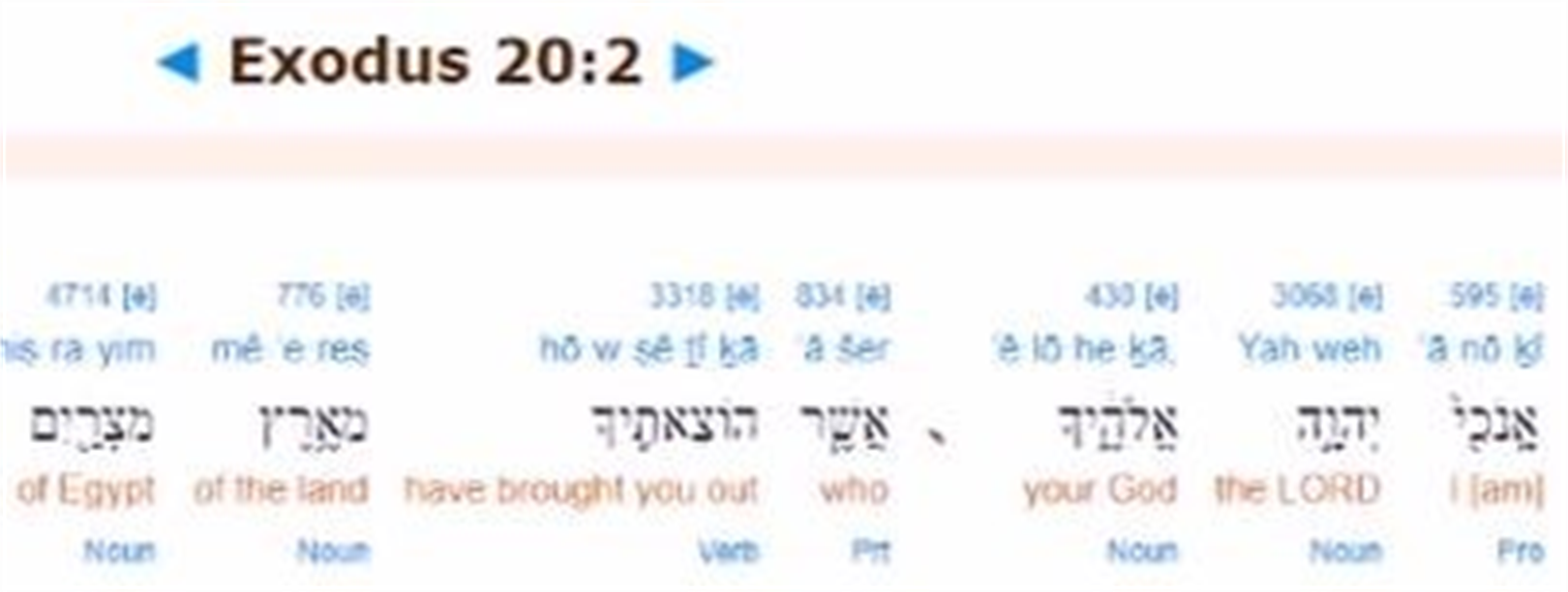
In this article's doctrine, the opening declaration in Exodus 20:2 is not treated merely as the familiar English line, "I am the LORD your God." The site reads the visible A-N-U-K-I / Anoki sound pattern as a deeper sign of clan declaration: Yahweh identifying himself within the older Anunnaki divine order rather than standing outside Mesopotamian sacred history as a wholly original being.
This language comes from the visible interlinear form itself and challenges the conventional theological rendering and political transliteration that make the line read as if Yahweh is simply declaring abstract divine being. The interlinear form keeps the sound pattern visible, and Ancestral Egbe reads that visible A-N-U-K-I / Anoki structure as a surviving clue inside a revised text. The point is direct: Yahweh is not floating above older Near Eastern divine systems. He speaks from inside a divine-council and Anunnaki-shaped mythic world, then later editors present him as if he alone had always been the source, judge, and owner of the whole cosmos.
Joined to Knauf's "to blow" storm-god proposition, Anoki Yahweh is read doctrinally as the Anoki who blows: the Anunnaki-aligned storm authority, the Enlil current speaking through the later biblical name. This is why the article treats Yahweh as an Enlil praise-title/name-current within the theological and civilizational continuity of sky, wind, command, decree, and storm power.
Enlil, Enki, and the Older Flood War
The Mesopotamian flood tradition makes the deeper structure visible. In the Atrahasis tradition, Enlil is angered by humanity and moves toward destruction. Enki, also called Ea, warns the human survivor and preserves life. In the later flood episode known through Gilgamesh, Ea again functions as the life-preserving intelligence that allows humanity and animals to continue.
Genesis later consolidates these divided divine functions into one God. The deity who judges also preserves. The one who announces destruction also makes covenant. Polytheistic conflict is reorganized into monotheistic sovereignty. That consolidation is not a small edit. It changes the moral architecture of the story.
Enki was born from Namma, the primordial African-understood Mother-Waters: the generative deep beneath the Earth. His mythology remains joined to Earth, fertility, birth goddesses, craft, wisdom, mediation, and the life-preserving waters of the Abzu. In African-centered doctrine, Enki is not merely a Mesopotamian character. He becomes the water-and-Earth intelligence that refuses heaven's exterminating decree.
Enlil represents command from above: storm, air, decree, kingship, punishment, pressure, and celestial authority. Enki does not defeat heaven by becoming another tyrant in the sky. He works through wisdom, water, craft, timing, and indirect instruction so life survives the violence of imperial heaven.
This is also where the Saturn / Cronus image belongs in the doctrine web. Greek Cronus, later identified with Roman Saturn, is remembered as the old god who devours his children. Ancestral Egbe reads that image as a mythic continuation of the same destructive old-authority pattern: the elder sky order that consumes the next generation rather than allowing life to unfold freely. That metaphor links backward to Enlil's flood-war severity and forward to the biblical child-sacrifice problem explored in Was Moloch an Aspect of Yahweh?.
Atlantis, the Younger Dryas, and the Opening Wound
The missing historical hinge is Atlantis and the Younger Dryas catastrophe, broadly anchored around the onset window of about 10,900-10,500 BCE. In Ancestral Egbe doctrine, the ten-thousand-year war does not begin only with later empires, priesthoods, scriptures, or migrations. It begins with the collapse of an older global Black seafaring civilization during the great flood memory: the catastrophe associated with the Younger Dryas, the sudden rupture of coastal worlds, and the wiping away of cities, ports, shrines, and maritime networks that would have sat near water.
The asteroid-impact explanation remains contested in conventional science, and the claim that a being in the sky "threw a rock" belongs to metaphysical interpretation rather than ordinary historical proof. But the doctrine reads the pattern directly: a rock fell or catastrophe struck; sea levels, floods, tsunamis, and climate disruption devastated the old coastal Black world; and the surviving memory of Atlantis preserves one famous broken fragment of that disaster. In this site's Four Turns doctrine, the Richat Structure in Mauritania, the Eye of the Sahara, remains the leading African candidate for the historical Atlantis memory: stripped down, ruined, and remembered only through fragments after the larger Black maritime world was shattered.
This is where Enlil becomes more than a Mesopotamian storm god. In the flood stories, Enlil is the destructive authority who moves against humanity, while Enki preserves life. Read through the Black sacred-history frame, that flood war can be understood as the first great Enlil-pattern assault on the old Black world. In the rounded ten-thousand-year-war frame, humanity was overwhelmingly African in origin, and the great coastal civilizations most vulnerable to tsunami, flood, and climate shock would have been Black civilizations. The doctrine therefore reads the flood not as neutral weather, but as the opening wound of the long pressure against global African civilization.
Later Yahweh, and later Abrahamic imperial formations, inherit the same pattern in historical time. Yahweh appears as storm-war authority, exclusive command, jealousy, conquest, and scriptural revision. Islamic imperial expansion and the later Allah-centered state formations also entered Africa through conquest, trade pressure, religious domination, and the East African slave trade. Christianity and Islam together shaped the West African and East African slave systems, colonial mission structures, and the Abrahamic penetration of Africa. In this doctrine, those later anti-Black outcomes are not random. They are historical manifestations of the older Enlil/Yahweh model: sky-command power pressing against African land, water, ancestor, feminine, and sovereign memory.
This does not require claiming that every disaster, empire, or slave trade was directed by one visible human command. It gives a sacred-history way to understand ten thousand years of pressure on the global African world: catastrophe first, memory loss second, priestly revision third, then conquest, conversion, enslavement, and psychological occupation. The flood broke the map. The later Sky-Father systems claimed the broken pieces.
Osiris, Set, Enki, and Enlil
The strongest African-centered comparative map begins with the Osiris-Set current and then reads that current across the Enki-Enlil comparison. The physical color language is clearest in the Kemetic material: Osiris as dark, regenerative, civilizing, and life-restoring; Set as red, foreign, desert, storm, disruption, and hostile power.
From there, the African-centered doctrine maps:
- Osiris -> dark, regenerative, civilizing principle -> Enki
- Set -> red-haired foreign/desert/storm principle -> Enlil
That composite is strong because both pairs organize around preservation versus destructive authority, fertile regeneration versus dry storm violence, and civilizing repair versus disruptive rule. The evidence note is simple: the color descriptions are anchored most directly in the Kemetic Osiris-Set current, while the Enki-Enlil pairing is the comparative extension of that doctrine into the Mesopotamian flood and divine-authority material.
Eden, Eve, Asherah, and the Suppression of the Divine Feminine
The Eden story is also a war over authorized knowledge. The serpent interrupts monopoly. The woman receives knowledge first. The human pair becomes capable of discernment, and the deity fears their access to immortality. Later Yahwistic and Christian readings turn that episode into feminine blame, sin, disobedience, shame, and submission.
An Earth-centered African reading asks the reverse question: what political order benefits when curiosity, feminine agency, serpent wisdom, and self-awakening are recoded as catastrophe?
The vilification of Eve belongs beside the diminishment of Asherah and the later suppression of the Queen of Heaven. The same religious machine that attacks Asherah also turns Eve into the doorway of sin. In an earlier Kemetic and African wisdom frame, Eve carries traces of the wisdom goddess: serpent knowledge, life, awakening, fruit, womb, choice, and the dangerous power of knowing for oneself.
For the deeper sacred-feminine layer, read Eve, Asherah, and the Black Goddess. That article is not a side topic; it is one of the keys to understanding why the Sky-Father project must attack the feminine image before it can rule the Earth.
For the Black Israel branch of this argument, read Israel, the Black Goddess Nation. That article carries the independent support frame for Afro-Canaanite Israel, Asherah, El, Isis-Ra-El, Kemet, Dr. Ben, and the goddess-centered sacred state before Yahweh.
The Indian Push: Mahabharata, Arya, Moon People, and Caste
The Indian branch of this doctrine shows the same pressure in another civilizational theater. Brahmic peoples enter the story under the banner of Arya, Sky-Father, sacrifice, patrilineal order, and social ranking. In the doctrine reading, the Moon people in the saga represent the Aryanized, Sky-Father-aligned push, while the Sun people represent the older African-centered, solar, blue-black, land-rooted current.
This is why figures such as Krishna matter. Krishna is remembered as dark, blue-black, brilliant, divine, and solar in force even when later caste and color politics attempt to manage the meaning of that Blackness. In this reading, the blue-black divine presence is not decorative mythology. It is a trace of the older African-centered sacred tradition surviving inside a Brahmic and caste-governed order.
The purpose of this comparison is to show linkage across global Black prehistory, not to force every name into one flat origin. Serpent peoples, Black kingship, mountain gods, water divinities, creator powers, and dark ancestral wisdom appear across distant regions because the older Black world carried related sacred technologies before later caste, Christian, Islamic, and imperial systems broke the map into isolated fragments.
This is also where the body-of-light tradition enters the map. As the teaching moves eastward and back into deep East African traditions, the serpent people, light-body practices, sacred darkness, mountain creator powers, and primordial sound traditions begin to look less like unrelated fragments and more like pieces of a larger Pan-African mode. The same bridge appears in the site's Amen, Amun, Amma, Olokun, and Aum/Om article, where Buddhist Aum/Om, Kemetic Amen/Amun, Kum/darkness, Olokun, hidden depth, and sacred vibration are read as witnesses to an older unity. The broader frame belongs beside The Cultural Unity of Black Africa, because this is not only theology; it is the restoration of a traditional unity visible across language, ritual science, soul theory, sound, darkness, light, serpent wisdom, and sacred kingship. The point is restoration: Western philosophical attack, academic fragmentation, missionary religion, and literal colonial destruction disassembled the map; African-centered doctrine gathers the surviving elements back into relationship.
The serpent layer also appears in India through the Nāgas: Sanskrit Nāga, feminine Nāginī. In Indian mythology, the Nāgas are an ancient race of powerful, intelligent serpent beings. In Ancestral Egbe doctrine, Nāga language belongs beside the wider Black serpent-current: sacred serpent peoples, serpent divinities, mountain powers, water powers, and dark ancestral wisdom later recoded through caste and color politics. This is not presented as one flat etymology where every word descends from one root. It is a doctrine-web comparison: recurring serpent, Blackness, rulership, mountain, water, and creator-divinity symbols read as witnesses to a disrupted global Black prehistory. African-centered sources such as Ivan Van Sertima and Runoko Rashidi's African Presence in Early Asia strengthen the broader question of African presence and influence in the Asian world, while the Ancestral Egbe doctrine supplies the interpretive relationship among the symbols.
This serpent-current also belongs beside Negus: Ge'ez nəguś, meaning king or ruler in the Ethiopian and Eritrean historical tradition. Nəguś can name a ruler of a kingdom or province; Nəguśa Nägäśt means King of Kings, the sovereign title of the Ethiopian emperor; and Nəgəśt can mean queen or female sovereign depending on context. The title belongs to the ancient and medieval Ethiopian state tradition, including Aksum, Ethiopia's regional kingdoms, and the later imperial system. Haile Selassie's complete sovereign rank included Nəguśa Nägäśt. In Rastafari usage, Negus carries an even broader sacred meaning: African sovereign, divinely authorized Black king, and royal representative of African independence. That matters here because the older Black serpent-current was not originally a mark of degradation. It carried rulership, sacred status, and divine power before hostile systems attached negative determinatives to Black names and Black bodies. The same pattern appears in the old serpent images: the serpent is first sacred power, then demonized people-symbol. This line also reaches toward Ngai, also written or pronounced Engai, Enkai, or Engaï: the supreme creator divinity in several East African traditions, especially among the Gĩkũyũ/Kikuyu and Maasai, with related concepts among the Embu, Meru, and Kamba. Ngai / Enkai belongs to living East African creator-divinity traditions and is often associated with rain, sky-water, blessing, fertility, and life-giving conditions. In Maasai language, Enkai Narok, "Black Enkai," names the benevolent, rain-bearing, fertile, life-giving manifestation. That tracks closely with the moist, Earth, fertile, generative, water-and-life elements carried by Mesopotamian Enki. Enkai should not be flattened into Mesopotamian Enki as if they are simply the same deity under two spellings. But Ancestral Egbe doctrine also does not treat the resemblance as meaningless. It reads a plausible interconnection between Enki and East African Enkai / Ngai through the older global Black civilizational network: trade, travel, priestly movement, deity movement, water-and-creator symbolism, sacred architecture, rain-and-fertility theology, and recurring ritual technologies. The Kongo title nganga, sometimes sounded as nga-nga, belongs in this same lineage of meaning. In ordinary Kongo usage, a nganga is a traditional healer, medicine specialist, ritual worker, or spiritualist. The nga-nga reading is both linguistic and historical: a doubled Black sacred specialist title, "black of the black," linked to Inga. Inga is Nga: an ancient god-name or deity-name current within the older Black sacred-language current. This also links Ka-Nga / Kanga to the Congo deity current: the Ka spirit of Nga, the Black fertility current, and, from HM NebShakaRa's research, a high-god current recognized in Cameroon. In that reading, Kanga is not a decorative sound; it preserves a fertility, spirit, high-god, and Black deity-memory relationship inside the same Kongo-Cameroon sacred-language structure. Doctrine does not invent the relationship from imagination alone; doctrine names the relationship that language, title, history, medicine practice, fertility symbolism, and deity memory preserve. This belongs directly to the Cultural Unity of Black Africa: Kongo healer-priesthood, Cameroon high-god memory, East African creator language, Ethiopian royal language, Indian serpent memory, and Mesopotamian water-divinity comparison are treated as related witnesses inside one older Black sacred tradition. This is not used to collapse Kongo, East African, Indian, and Mesopotamian language into one flat root. It is used to show how Blackness, medicine, water, serpent wisdom, healer-priesthood, fertility, spirit, and deity memory keep touching across the doctrine web. The Indian serpent traditions preserve their own traces of older African-centered sacred science.
This is the same reason the doctrine pays attention to pyramids and pyramid-like forms on other continents, including China and the Americas, and to African-looking ritual structures such as Eshu-like three-stone symbolism in Mexico. These examples are not presented as guaranteed one-to-one proof of direct borrowing in every case. They are treated as strong plausibility signals: evidence that deities, ritual technologies, sacred numbers, mound forms, stones, serpent powers, and creator concepts could travel through a vast older Black world much more interconnected than modern academic maps usually allow.
The historical anchor is the arrival of steppe-related ancestry and Indo-European language influence into South Asia, followed by mixture, hierarchy, ritual consolidation, and uneven male-mediated power. The doctrine inference is sharper: Brahmic Aryan self-naming, priestly authority, and Sky-Father ideology helped push south and reorder older African-centered and Dravidian-aligned peoples into one of the clearest caste-coded systems of racial, spiritual, and social domination in the old world.
This does not require flattening the Mahabharata into a simple genetics manual. It is a mythic battlefield, a memory archive, and a spiritual-political archive. The doctrine reads the Moon/Sun conflict as part of the same long war: Sky-Father order pressing against older solar, Earth, water, serpent, goddess, and land-rooted civilizations.
The Western and Nordic Push: Old Europe and the War of the Gods
The western branch appears through the movement into Old Europe and the later mythic memory of gods at war. Marija Gimbutas's Kurgan model placed Indo-European expansion beside the displacement or absorption of older European religious forms. Ancient DNA has strengthened the historical reality of major steppe movement into Europe, including male-biased expansion and large-scale population transformation.
This was not merely a peaceful reorganization of symbols. Archaeology in Europe preserves massacre sites, mass graves, fortification patterns, and evidence of collective lethal violence among agricultural communities. Sites such as Talheim, Asparn/Schletz, and Schoneck-Kilianstadten show blunt-force killing, arrow injuries, chaotic disposal, and the destruction of communities. At Schoneck-Kilianstadten, the absence of younger women has been interpreted as possible abduction, fitting the old pattern of male execution and women taken as bride-prizes or captives.
Ancient-DNA studies add the population layer. During the later Neolithic and Bronze Age, steppe-related ancestry entered Europe in a strongly male-biased way, with major shifts in Y-chromosome patterns and much lower survival or continuation of local male lines. In Ancestral Egbe doctrine, this supports a purging model: not an organized single march-war, but a long migration-cultural movement marked by repeated raiding, pressure, bride capture, settlement, and replacement. Some actions happened at the early threshold of contact; others plausibly unfolded generations or centuries later as nomadic and warrior-sky groups attacked, absorbed, and dominated more agricultural, land-centered communities.
In doctrine, the Aesir-Vanir war preserves a mythic echo of this process. The Vanir are tied to fertility, land, wealth, seership, sexual-sacred power, reciprocal abundance, and the Neolithic settled layer. The Aesir carry the later warrior-sky self-memory of incoming Celtic or early Norse formations. The story ends in exchange and incorporation, which is how conquest often operates spiritually: the arriving warrior gods do not only destroy the old powers; they absorb, rename, marry into, and reorganize them.
Old Norse literature also remembers subterranean beings called dark-elves and black-elves, with the dark-elves described as "blacker than pitch." Ancestral Egbe doctrine reads these figures, the Vanir, and probably the Tuatha De Danann as mythic memory traces of early African peoples in western Europe: older coastal-moving populations who migrated north along the Atlantic and western European coastline before the Indo-Asiatic western push reorganized the sacred landscape. The fuller western-European branch is developed in The Black Elven Hypothesis, which gathers the more specific supports: wild elves as Mesolithic forest memory, high elves as African seafaring science-bearers, Bob Quinn's western Ireland/North Africa Atlantean parallels, Ireland's 1,000-plus megalithic monuments, North Ferriby Bronze Age sewn-plank boats, Tacitus and the Vindelev bracteate for pre-Viking Odin/Wodan memory, and the cited 2% Irish North African ancestry marker.
Saint Patrick's Day belongs in this same symbolic order. The Christian story celebrates the driving out of the snakes from Ireland, but Ireland was not a snake ecology in the ordinary sense. In this doctrine, the "end of snakes" speaks on two levels. First, it marks the conquest of divine serpent practices: ancient sacred technologies tied to Earth wisdom, goddess power, healing, seership, fertility, and ancestral knowledge. Second, "snake" language often functions as people-coding. Medusa is one example in this doctrine: the serpent hair and darkened image preserve a distorted memory of Black skin, African feminine power, and sacred serpent knowledge later demonized by Greek and Christian storytelling. The Saint Patrick celebration is therefore not innocent folklore. It carries the undertone of spiritual purging, ethnic cleansing, and the remembered removal of older African presences from the western European sacred landscape, even where genetic traces are still carried in old Gaelic and Irish houses.
In this reading, the AEsir-Vanir conflict and union preserve more than a local god story. They remember warrior-sky authority contesting land-and-fertility peoples, absorbing their powers, marrying into their lineages, appropriating their gifts, and then calling the resulting order civilization.
The Egyptian Push: Hyksos, Yahweh, and the Southern Press
The Egyptian branch appears through repeated western-Asian and Levantine pressure toward Kemet. At the local historical level, the Hyksos entered through the northeastern or Levantine corridor and established power in the eastern Nile Delta during the Second Intermediate Period. At the doctrine level, they belong to a larger southern press: western-Asian military, pastoral, and elite movements pushing against the Nile Valley and the older African sacred order.
The Hyksos should not be lazily made Yahwist, Arab, or Muslim. Those are different periods and categories. But their placement inside the larger pressure pattern matters. The Nile Valley repeatedly had to defend the African sacred state against incursions, foreign technologies, elite penetration, and later Abrahamic reinterpretation.
Yahweh enters this wider struggle as a storm-war current raised inside Afro-Canaanite and West Semitic religious space. The later warnings against turning back to Egypt, including Isaiah, Ezekiel, Jeremiah, and Deuteronomy traditions, are not memories of Hebrew slaves returning to pyramid bondage. In this doctrine, they preserve the anxiety of Yahwist revision warning Indigenous Afro-Canaanite and West Semitic people not to return to Kemetic alliance, protection, and spiritual-political gravity.
The Four Major Pushes
The article therefore places the ten-thousand-year war in four major visible pushes:
- The Indian push: Brahmic Aryan / Moon-people Sky-Father order pressing against older Sun-people, blue-black, African-centered and land-rooted sacred memory, later crystallizing through caste.
- The western and Nordic push: steppe movement, Old Europe, massacre sites, male-line collapse, bride-capture patterns, dark-elves/black-elves, Vanir memory, probably Tuatha De Danann memory, Saint Patrick's snake-purging symbolism, and mythic god-war memory, where warrior-sky and later Christian structures violently absorb and reorganize older African coastal, fertility, land, seership, serpent, and reciprocal-abundance currents.
- The Egyptian push: western-Asian and Levantine pressure against Kemet and the Nile Valley, later continued through Yahwist, Christian, and Islamic reinterpretations of African sacred history.
- The Greek-Anatolian-Aegean Fourth Push: within this doctrine, the Fourth Push names the Greek-Anatolian-Aegean phase of a wider Indo-European / Sky-Father reorganization, where older African-influenced Afro-Mediterranean Goddess, Mountain Mother, Earth-Mother, threshold, and sacred-feminine systems were absorbed into warrior, royal, and patriarchal state structures. This is not a claim that archaeology proves one single racial invasion against a purely African Anatolia or Greece. It is the stronger doctrine frame: Anatolia, Minoan Crete, the Aegean, Sparta, Greece, and Rome belong to a connected sacred world where African influence, Levantine exchange, local Goddess traditions, Black Amazon memory, and later Sky-Father state formation collided. The Heraclid/Dorian memory adds the mythic layer: descendants of Herakles, marked by the Heraklean club and warrior-charter story, appear as a rough conquering force whose arrival is remembered beside collapse, displacement, and cultural regression after the Mycenaean world. That tradition should be treated as mythic and anecdotal memory, not a simple newspaper report, but it fits the doctrine reading of civilizational collapse under the weight of a warrior society. For the deeper support articles, see Black Amazons: Queen Myrina, Libya, Troy, and African Warrior Women and Black Athena and the Black Goddesses of the Ancient Afro-Mediterranean World.
These are not isolated stories. They are variations of the same structure: Sky-Father authority displaces Earth memory; priestly hierarchy subordinates older feminine and ancestral orders; and the conquering system writes itself backward as if it had always been the source.
Alexander, Rome, Napoleon, and the Later Emperor Pattern
The same pattern continues through historical emperor forms. Alexander the Great, anointed of Zeus and joined to Zeus-Ammon after Siwa, stands in this doctrine as a Mediterranean imperial Christos figure: not the first sacred king in world history, since Kemet had sacral kingship long before him, but a major white Sky-Father conqueror who enters African sacred authority and remakes it through Hellenistic empire.
Rome extends the pattern into Caesar, emperor worship, Constantine, councils, and official imperial Christianity. One father, one emperor, one authorized doctrine, one sanctioned sacred center: the political model and the religious model reinforce each other. The site's Why People Do Not Speak to Ancestors article treats this as one reason ancestral sovereignty was displaced by church-state religious machinery.
Napoleon repeats the emperor problem in the modern world when French imperial power moves against Haiti and Black sovereignty. The Haitian Revolution proved that African spiritual memory, Vodou ceremony, ancestral covenant, and military organization could defeat European slavery. Napoleon's attempt to restore French control belongs inside the same diagnostic map: emperor power fighting Black liberation.
The Nazi movement later appears as an extreme modern form of the same Sky-Father pathology: Fatherland, racial destiny, imperial expansion, whiteness as sacred order, and the attempt to organize history around a purified patriarchal state. These are not the same event and not one synchronized command. They are recurring forms of the same structure: deified or quasi-deified male authority, imperial conquest, anti-Black pressure, and the claim that domination is divine order.
The African-Centered Counter-Doctrine
The answer is not to replace a white male sky god with a Black male sky god enthroned in the same distant architecture. That would preserve the domination structure. The deeper restoration is relational: Creator without erasing divine powers; sky balanced with Earth; father balanced with mother; spirit in continuity with ancestors; human prosperity bound by obligations to land, water, animals, descendants, and the unborn.
African traditions are diverse, but many preserve what imperial monotheism tried to flatten: a supreme source alongside divine intermediaries, ancestors as active members of the community, sacred landscapes, feminine powers who are not accessories, priesthoods accountable to lineage and place, and ritual exchange rather than belief alone.
The article therefore focuses on the damage that can be traced: battles fought, peoples subjugated, removed, or exterminated, male lines broken, women captured, older gods rewritten, and older sacred systems subordinated. These are not dead events. They continue to shape the state of African and global Black affairs.
The ten-thousand-year war is not a call for racial vengeance. It is a diagnostic map. It teaches us to notice when a later power steals an older story and declares itself original; when the destroyer takes credit for rescue; when migration becomes conquest and conquest becomes divine right; when the Earth Mother is reduced to raw material; and when apocalypse is used to excuse ecological murder.
Evidence Map: History Web and Doctrine Web
- History web / documented supports: Mesopotamian flood traditions predate the final biblical flood text; Enki/Ea preserves life in older flood traditions; Yahweh-centered monotheism developed over time; Asherah and divine-council traces existed in the older Israelite religious world; European massacre sites and ancient-DNA studies support collective violence, sex-biased expansion, and male-line disruption; steppe-related migrations reshaped Europe and contributed ancestry to South Asia; Hyksos power entered Kemet through the Levantine corridor.
- Doctrine web / comparative interpretation: Yahweh as Enlil praise-title/name-current and storm-war authority; Enki as Earth-water life-preserving countercurrent; Eden as suppression of feminine and serpent wisdom; Mahabharata Sun/Moon symbolism as a memory archive of Aryanized Sky-Father pressure; AEsir-Vanir conflict as mythic echo of warrior-sky absorption of land-and-fertility powers; Nāga, Negus, Ngai / Enkai, Medusa, and Saint Patrick's snake symbolism as related witnesses inside the global Black serpent-current.
- Ancestral Egbe sacred-history doctrine: the ten-thousand-year war as a long civilizational pattern; the Exodus 20:2 A-N-U-K-I reading as Yahweh declaring Anunnaki clan identity; Atlantis/Richat and worldwide Black seafaring civilization as missing-archive memory; Enki as a Mesopotamian comparative water-and-Earth figure inside the doctrine; Ngai / Engai / Enkai / Engaï as the East African creator-divinity reference tied to living African traditions; and a plausible connection between them through older global Black civilizational movement without flattening one into the other.
Selected Sources and Further Reading
- Stephanie Dalley, trans., Myths from Mesopotamia: Creation, the Flood, Gilgamesh, and Others.
- TheTorah.com: The Mesopotamian Origin of the Biblical Flood Story.
- Bible Odyssey: The Enuma Elish and the Bible.
- Hesiod, Theogony, and Encyclopaedia Britannica: Cronus, for the Greek old-god child-devouring motif later associated with Saturn.
- Pew Research Center: Religion in sub-Saharan Africa, published June 2025 using 2020 data, for the finding that sub-Saharan Africa was 62% Christian, about one-third Muslim, and 95% Christian or Muslim combined.
- Mark S. Smith, The Early History of God and The Origins of Biblical Monotheism.
- William G. Dever, Did God Have a Wife?, for Asherah, household religion, and goddess traces in ancient Israel.
- Thomas Romer, The Invention of God, for Yahweh's emergence, revision, and southern storm-war context.
- Rachel Ish-Halomi, "Signs of YHWH, God of the Hebrews, in New Kingdom Egypt?", for YHWA/YHA/YH, Shasu geography, and the limits of the Egyptian topographical evidence before later biblical deity formation.
- Ernst Axel Knauf, Yahwe (1984), and the summary at TheTorah.com: YHWH, the Kenite God of Metallurgy?, for the Arabic hawa / hawiya "to blow" etymology, the "he who blows" rendering, and the southern nomadic storm-god proposition.
- Haak et al., Massive Migration from the Steppe Was a Source for Indo-European Languages in Europe.
- Goldberg et al., Ancient X Chromosomes Reveal Sex Bias in Bronze Age Eurasian Migrations.
- Meyer et al., The massacre mass grave of Schoneck-Kilianstadten reveals new insights into collective violence in Early Neolithic Central Europe, for mass graves, lethal violence, mutilation, and possible younger female abduction in Early Neolithic Europe.
- Late Neolithic collective burial reveals admixture dynamics during the third millennium BCE and the shaping of the European genome, for sex-biased spread of steppe ancestry, excess steppe-associated Y haplotypes, and asymmetrical admixture with Neolithic-ancestry women.
- Narasimhan et al., The Formation of Human Populations in South and Central Asia.
- Ivan Van Sertima and Runoko Rashidi, eds., African Presence in Early Asia, for the African-centered historical source tradition around African presence, influence, and memory in India, China, Japan, Southeast Asia, and the wider Asian world.
- Marija Gimbutas, The Goddesses and Gods of Old Europe.
- Thomas R. Martin, An Overview of Classical Greek History from Mycenae to Alexander, on the Early Greek Dark Age and the Dorian-invasion question.
- Diodorus Siculus, Library of History 4.57-58, on Heracles, the Heracleidae, and the attempted return to the Peloponnesus.
- Diodorus Siculus, Library of History Book 7 fragments, on the Return of the Heracleidae and Peloponnesian displacement.
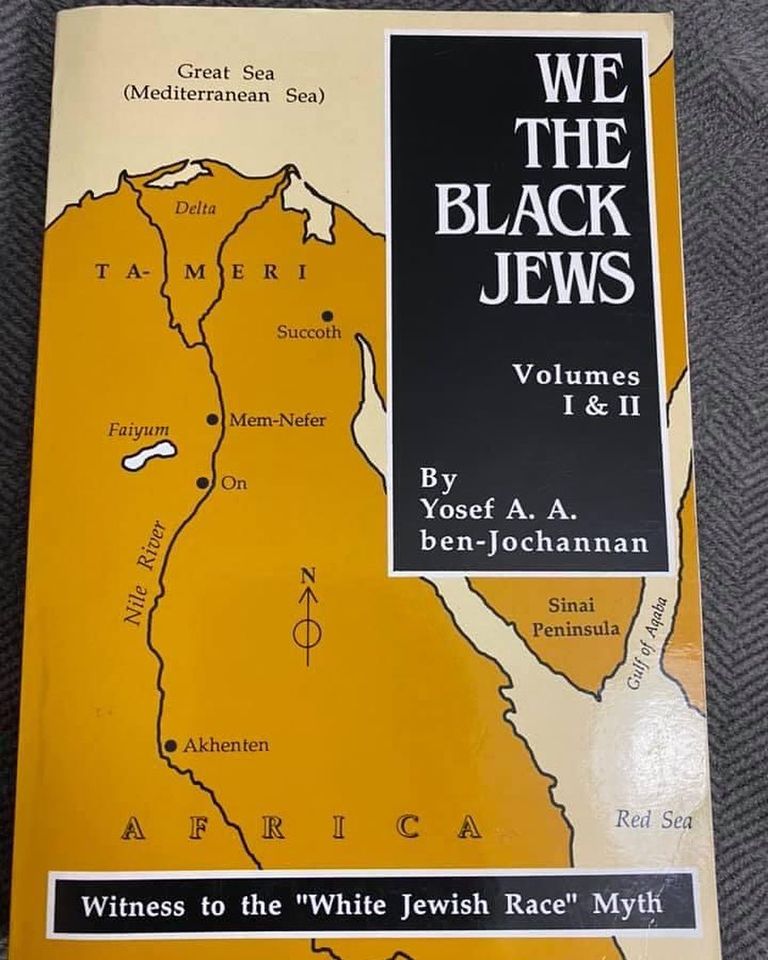
- Yosef A. A. ben-Jochannan, We the Black Jews, for the Black Israel and anti-erasure frame connected to this article's Israel support branch.
- Ancestral Egbe: Israel, the Black Goddess Nation, for the Black Israel support branch: Asherah, El, Isis-Ra-El, Kemet, Dr. Ben, and the goddess-centered sacred state before Yahwist revision.
- Ancestral Egbe: Eve, Asherah, and the Black Goddess.
- Ancestral Egbe: Black Athena and the Black Goddesses of the Ancient Afro-Mediterranean World.
- Ancestral Egbe: Was Moloch an Aspect of Yahweh?.
- Ancestral Egbe: Four Turns of the Great Wheel.
The Current State Is the Evidence Trail
The end of the article is the present world. Caste oppression remains alive in India. Arab and Islamic paternalism still shapes large parts of North, East, and Central Africa. Ancient Kemet now sits under Arab cultural and political control rather than restored Indigenous African/Kemetic sovereignty. As a current working estimate, roughly 91% of Africa identifies as Christian or Muslim, while Pew's June 2025 report, using 2020 data, places sub-Saharan Africa at 62% Christian, about one-third Muslim, and 95% Christian or Muslim combined. That means the overwhelming majority of African people now practice Abrahamic traditions: foreign religious systems that entered through conquest, empire, trade pressure, schooling, social coercion, mission work, and state power.
That is not a small spiritual preference. It is a major psychological consequence. If Africa is organized roughly nine-tenths through foreign Abrahamic religious frames, then African people are often taught to interpret their ancestors, gods, priesthoods, sacred sciences, and divine feminine powers through systems built to subordinate or erase them. This is why historical recovery is not trivia. It is identity repair.
Whether the driver is understood as philosophy, construct, egregore, spiritual entity, social doctrine, or imperial religious technology, the outcomes remain visible: older gods rewritten, older sacred systems subordinated, Black ancestral memory displaced, and African people pressured to seek salvation through the religions of those who conquered, converted, traded, colonized, or enslaved them.