The Claim
In Ancestral Egbe doctrine, Israel was not originally a Yahweh nation. The older layer is read as a Black, goddess-centered, Afro-Canaanite sacred state rooted in African migrations, Kemetic influence, El / Elohim, Asherah, Queen of Heaven memory, household devotion, fertility, land, lineage, and ancestor-adjacent practice.
The name is read through this doctrine as Isis-Ra-El: the divine feminine Isis current joined to Ra-El, the divine El / father current. This does not mean every later Israelite, Judean, Canaanite, or Levantine person was one unmixed African population. The ancient Mediterranean and North African world was a trade, migration, sailing, vassal-state, intermarriage, and temple-contact zone. The point is that the foundation is not a white Indo-European oasis in the sands. It is fundamentally Black, African-centered, matrifocal, goddess-bearing, and tied into Kemet.
Dr. Ben and the African Origin Frame
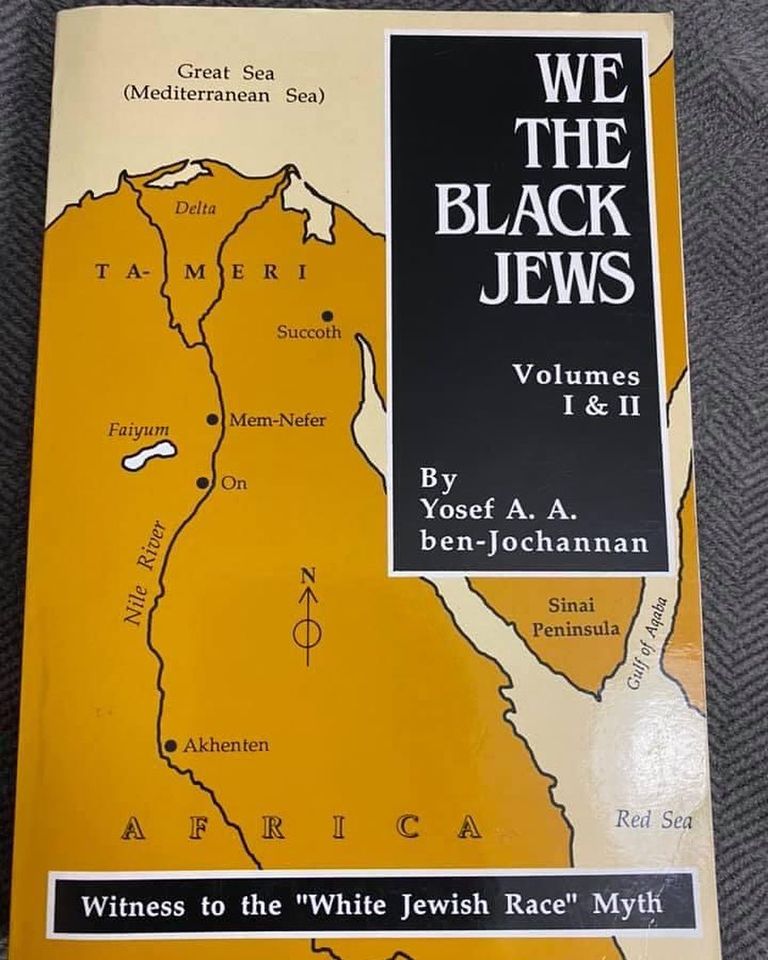
Dr. Yosef A. A. Ben-Jochannan's work, especially African Origins of the Major Western Religions, is important here because it refuses the idea that Judaism, Christianity, and Islam floated above Africa as foreign spiritual inventions. Dr. Ben argued that these so-called Western religions must be read through African history, African religion, Black people, Kemet, Ethiopia, the Nile Valley, and the traditional religious systems that colonial scholarship tried to separate from them.
This article carries that point into the Black Israel question. The Hebrew world is not treated as an isolated white biblical population that later touched Africa from the outside. It is read as part of a wider African and Afro-Asiatic sacred tradition, with Kemet, Congo-origin oral narratives, Canaan, El, Asherah, Isis, household goddess religion, and later Yahwist revision all belonging to the same contested archive.
Congo, Kemet, and the Hebrew Stream
Our oral narratives say that the actual Hebrew people migrated out of the Congo and were among the core groups involved in the foundation of ancient Kemet. Kemet itself is understood here as a great African synthesis: not one tribe, not one small ethnic line, but a powerful civilizational mixture of African streams, priesthoods, houses, migrations, and sacred technologies.
In that same oral-history frame, some of these people moved farther north and helped establish the pre-early Canaanite culture that later scholars would call pre-Yahweh Israelite or West Semitic religion. That older culture shared gods, images, rites, names, and sacred ideas with Kemet, sometimes under different names. In doctrine, some stories identify Ptah and El as related currents: Ptah as an ancient Kemetic and Congo-linked creative power, and El as the old father power remembered farther north. That is a doctrinal linkage, and it belongs here as part of the map.
The historical side is that North Africa, the Nile Valley, the Levant, the Mediterranean, and the Sahara were never sealed compartments. Ancient princes, temple houses, traders, sailors, vassal rulers, intermarried elites, mercenaries, farmers, pastoralists, and priestly groups moved across this world for thousands of years. Some Kemetic princes and houses established influence outside the Nile Valley. Some Levantine rulers operated as vassals under Kemetic power. The region was mixed, but the African center of gravity must not be erased.
Before Yahweh: Goddess State, El, and Asherah
The older Israelite and Canaanite religious world was not clean Yahweh-only monotheism. It held El / Elohim, Asherah, goddess figures, household devotion, fertility images, local shrines, divine plurality, and land-based religious life. In the Ancestral Egbe reading, that older state was matrifocal and goddess-centered before Yahwist conquest, priestly editing, and later monotheistic reform recoded the archive.
This is why Asherah matters. Asherah is not a minor footnote. She is the Queen of Heaven layer and the goddess memory that Yahwist revision had to attack, absorb, and erase. The same pattern later appears in Eve: wisdom, serpent knowledge, life, fruit, womb, choice, and awakening recoded as sin, temptation, and female blame.
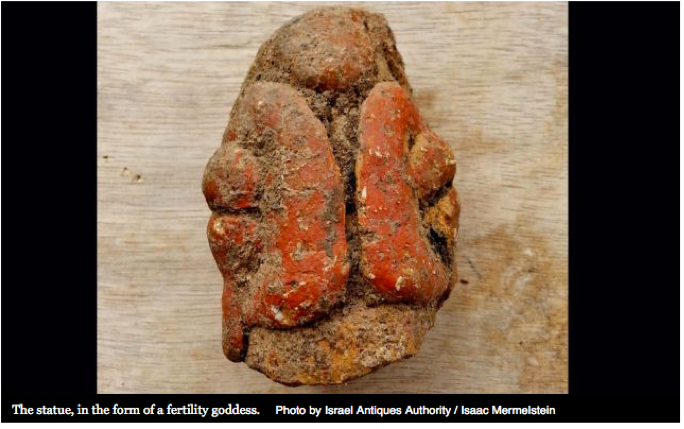
The archaeological record supports the existence of a powerful feminine religious layer in the ancient Levant long before Yahweh appears in Egyptian material even as a Shasu geography or name-stream. The roughly 8,000-year-old Neolithic fertility-goddess horizon, including the Beit Hilkia / Gedera-area figurine reported through the Israel Antiquities Authority, places a full-bodied feminine ritual image thousands of years before the later Yahwist archive. In the Ancestral Egbe reading, this matters because it shows the land was already carrying a goddess, fertility, womb, and mother-current long before patriarchal storm-war theology claimed the center.
Later Judahite pillar figurines, Canaanite fertility goddess figures, household objects, and Asherah discussions show that this feminine layer did not disappear quickly. Popular religion did not match the later official monotheistic story. Some figurines are interpreted as fertility or mother goddess images; others are debated. The doctrine point is not weakened by the debate. The debate itself proves that the sacred feminine was present enough to require explanation.
Black Israel Was Not a White Oasis
The Black nature of ancient Israel has been misrepresented by later racial storytelling. The biblical world is often painted as if a white Indo-European island somehow appeared inside Africa, Canaan, Kemet, Ethiopia, the Red Sea, the Sahara, and the Afro-Asiatic world. That image is propaganda. It is a later political and racial imagination imposed backward onto an older Black and mixed African-centered world.
Even the Exodus story, which this site does not accept as literal history in its biblical scale, gives away a visual truth. If Moses is imagined as passing inside the Kemetic royal house, and if the older African kings of Kemet were African in appearance as argued through the work of Dr. Cheikh Anta Diop and other African-centered researchers, then Moses would also have had to appear African enough to move inside that royal world. The story may be national folklore, but even as folklore it points to a setting where Kemetic and Hebrew identity were not visually separated by modern white racial imagination.
This is not a claim that ancient Israel was genetically pure or culturally sealed. Purity is not the argument. The argument is foundation and direction: a Black matrifocal sacred culture, an African-centered goddess layer, and a later Yahwist conquest and editing process that redefined the people, the name, the God, and the story.
Why This Supports the Ten-Thousand-Year War Article
The 10,000-Year War article names the broad pattern: Sky-Father command systems displacing older Earth, water, ancestor, serpent, feminine, and Black sacred memory. This article gives the Israel-specific support. It shows why Yahweh must be read as an arrival, usurper, and editor inside a pre-existing goddess-centered tradition, not as the original source of sacred history.
Read this page as the Black Israel support branch. Yahweh, Enlil, and the Ten-Thousand-Year War carries the master pattern. Eve, Asherah, and the Black Goddess carries the sacred-feminine proof branch. This article carries the ethnic, cultural, and doctrinal frame for Israel before Yahwist revision.
Selected Sources and Support
- Yosef A. A. Ben-Jochannan, African Origins of the Major Western Religions, for the African-origin critique of Judaism, Christianity, Islam, and colonial religious framing.
- Yosef A. A. ben-Jochannan, We the Black Jews, for the Black Israel and anti-erasure frame used in this article's visual and doctrinal support layer.
- AfricaBib: African Origins of the Major Western Religions, for bibliographic details and summary of Dr. Ben's work.
- Google Books: African Origins of the Major Western Religions, for table of contents and publication details.
- The Metropolitan Museum of Art: Israelite nude female pillar figurine from Lachish, for Iron Age II goddess / fertility figurine evidence from Judah.
- The Jewish Museum: Female Figurine from Lachish, for ancient Israelite female figurines and discussion of YHWH, Asherah, and popular cult practice.
- The Israel Museum: Tree of Life Goddess, for the long goddess and Tree of Life horizon in the ancient Near East.
- Biblical Archaeology Society: Neolithic Figurine Could Lead to Reassessment of Prehistoric Israel, summarizing the Haaretz / Israel Antiquities Authority reporting on the Beit Hilkia figurine, its Yarmukian context, cultic possibility, and roughly 8,000-year-old placement.
- Nir Hasson, "New archaeological finds challenge ideas of prehistoric Israel," Haaretz / Israel Antiquities Authority reporting, for the original report on the Beit Hilkia / Gedera-area Pottery Neolithic fertility-goddess figurine and its placement within a wider ancient Levantine figurine horizon.
- Image source used in this article: fertility-goddess figurine credited in the supplied source image and public summaries to the Israel Antiquities Authority / Yitzhak Mermelstein.
- Image source used in this article: We the Black Jews cover from the local Ancestral Egbe image library.
- William G. Dever, Did God Have a Wife?, Mark S. Smith, The Early History of God, and related Asherah scholarship for the older West Semitic divine-council and goddess layer.
Evidence levels: the Congo-to-Kemet Hebrew migration stream, Isis-Ra-El reading, Ptah/El linkage, and Black Israel matrifocal state frame are Ancestral Egbe doctrine and oral-history interpretation. The existence of goddess figurines, Asherah debates, El/Yahweh religious development, and the African-origin critique of Western religions are the historical and scholarly support layer.