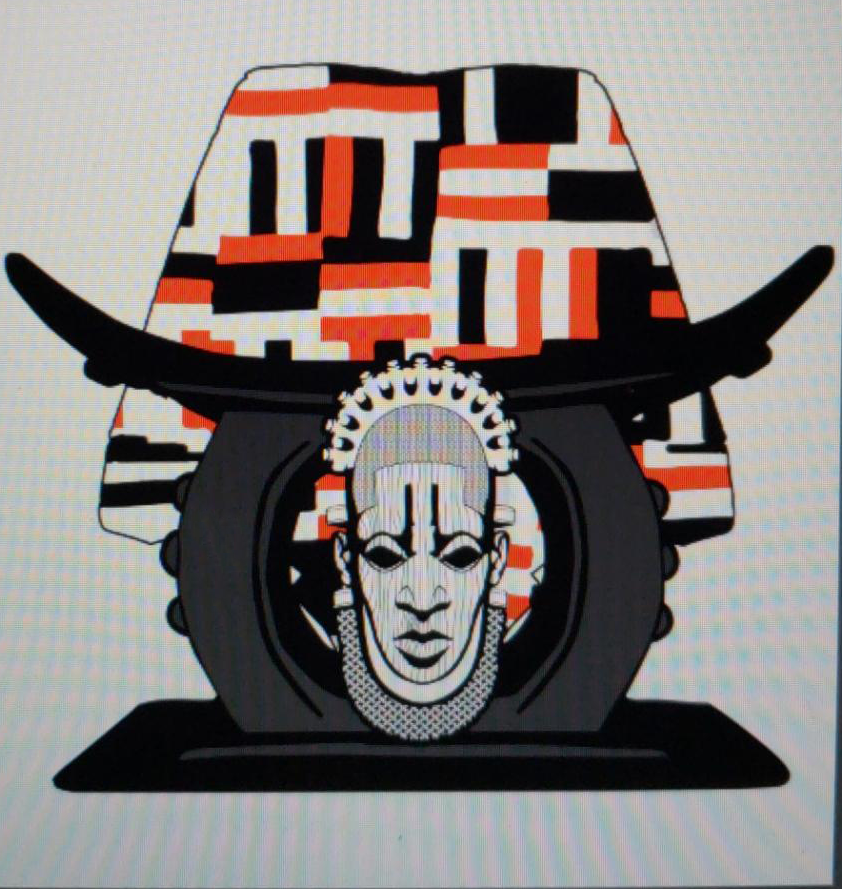
Mfumbi in Plain Language
In Palo, mfumbi, nfumbe, and related spellings name a deceased person or dead one. The word belongs to a Kongo language field connected with the dead and the condition of having died.
That definition is important because it does not automatically answer every other question. Calling a being Mfumbi does not by itself establish that the being is an elevated ancestor, an Ascended Master, an Egúngún, an Akh, a spirit guide, or a psychopomp. Those are different classifications of condition, tradition, or function.
Four Terms That Must Not Be Collapsed
Nga-nga/Nganga: Doubled Nga
Properly, Nga-nga/Nganga is the doubled Nga title of the healer-priest person. Within the Ancestral Egbe Cultural Unity reading, the doubled title carries “black of the black,” or rich Black: sacred Black authority embodied by the healer-priest. Inga is Nga, the older Black deity, fertility, moisture, and life-force current. Ka-Nga / Kanga is the Ka spirit of Nga: the Black fertility current moving through the Congo deity current.
In this reading, the healer-priest is a representation of Inga and carries a title of sacred Black authority. The connection reaches eastward toward the Inga / Ngai / Enkai creator field named in Maasai and related East African cultural material, and toward Unga / Negus, the Black king or kingly title field. Nganga therefore preserves more than an occupational role: it names Blackness, medicine, fertility, spirit, sacred authority, and rulership in one title-current.
This is an Ancestral Egbe doctrinal and comparative language reading. It does not erase the living distinctions among Kongo, Maasai, Ethiopian, Cameroonian, and other African traditions. It connects the title to the wider Black sacred-language current already developed in Cultural Unity of Black Africa and Pan-African Cosmology Integration.
Ba Nganga: The Kongo and Ndongo Healer-Priesthood
Ba nganga, also written banganga, is the plural: the trained healer-priests of the Kingdom of Kongo and the Kingdom of Ndongo. Their formation included communion with ancestors in the spiritual realm of Ku Mpémba, where they sought ancestral guidance.
Their responsibility was not limited to a single kind of illness. Ba nganga divined the causes of illness, misfortune, and social stress, then prepared measures to address them through sacred medicine, or minkisi, and other authorized means. This makes the title a trained vocation of ancestral communication, diagnosis, medicine, and repair.
The plural matters. A Nga-nga/Nganga is the healer-priest person; Ba nganga names the healer-priesthood. Neither word should be collapsed into a pot, a prenda, or the Mfumbi relationship associated with a particular working.
The Shona N’anga: A Living Healer-Priest Role
Among the Shona people of Zimbabwe, an n’anga is a traditional healer who works through herbs, medical and religious advice, spiritual guidance, divination, and healing. N’angas have historically been a principal place of counsel for many dimensions of life, not merely a provider of remedies for physical illness.
The role is understood as carrying religious power: to tell fortunes and to change, heal, bless, or harm. It belongs to a living social field of healing, spiritual responsibility, and community consultation that precedes British colonial rule. It is therefore a vital southern African witness to the wider Nga-nga/Nganga healer-priest title current.
Zimbabwe also recognizes traditional medicine through organized and statutory structures. ZINATHA, the Zimbabwe National Traditional Healers Association, has been officially recognized, while national traditional-medical-practitioner registration structures are maintained in law and through the public-health field. N’angas may also refer a person to Western medical practitioners or hospitals where emergency care or an illness lies outside what the healer can treat. Public respect for an n’anga therefore does not require refusing appropriate clinical care.
Swahili Mganga
In Swahili, mganga refers to a qualified physician or traditional healer. The term can include a medical person or doctor, while mganga wa kienyeji specifically identifies a traditional healer or herbalist. This preserves another living East African expression of the healer title without making Swahili practice identical to Kongo/Palo or Shona practice.
Together, the Kongo Nga-nga/Nganga, Shona n’anga, and Swahili mganga show a wide African field in which healing, medicine, counsel, spiritual guidance, and qualified responsibility remain connected. Each tradition retains its own language, law, and social setting.
The Nganga Is Not Only a Container
In the proper traditional usage, Nga-nga/Nganga is the doubled Nga healer-priest title. In Cuban diasporic use, the word was later extended or conflated with a consecrated Palo pot or prenda and, at times, with the Mfumbi relationship associated with it. Those are connected later uses, but they are not identical to the controlling title of the healer-priest.
The Ralph Alpizar teaching preserved in the Ancestral Egbe source library gives a decisive corrective to simplistic descriptions of the receptacle. It presents the prenda as a materially important focus of relationships, spiritual virtues, and pacts. Yet it rejects the idea that a Nfumbe is merely trapped inside physical materials. In that teaching, the dead one responds through the spiritual virtues and agreements connected with the working, whether the call occurs at the receptacle or away from it.
This gives the public reader the right principle: material forms matter in Kongo/Palo work, but the work cannot be reduced to an object, a bone, a vessel, or an ingredient list. The relationship, authority, spiritual virtue, and house formation are load-bearing.
House Ethics: Containment, Release, and Elevation
A Mfumbi used in Palo is not automatically elevated at the beginning. A dead person may become empowered during a process and become identified with the spirit relationship of a nganga, but empowerment and elevation are not the same claim. Not every Mfumbi becomes elevated over time.
Houses differ in their philosophy and practice. Some work with a catch-and-release understanding: the dead is called into relationship for a defined purpose and is then released. Some maintain a containment model without making elevation its central aim. Other houses explicitly understand their work as an elevation process for the dead. These are not minor details; they describe what a house believes it owes to the deceased being with whom it works.
There is also a serious Western critique of practices understood as indefinite imprisonment or the spiritual enslavement of the dead. Ancestral Egbe does not collapse every Palo house into that critique, but it does treat the question as ethically real. A seeker should ask plainly: What is this house's philosophy of the dead? Is release possible? What responsibility does the house carry for a Mfumbi's development? Is elevation an intended outcome, and how is that understood?
Public Orientation and House Boundary
This article explains terms and cultural placement. It does not teach the construction of a nganga, the making of pacts, the handling of remains, offerings, sacrifice, or ritual operations. Those matters belong to authorized house practice, priestly responsibility, and the Kongo/Palo formation path.
Kalunga and the Inverted World
The Kongo idea of Kalunga names the threshold between the lands of the living and the dead. In the Central African cosmological image used in the martial-history discussion, the ancestor world is inverted: the living walk on their feet while ancestors move on their hands.
T. J. Desch-Obi traces this inverted-world pattern through Central African combat traditions and their Atlantic continuities. Within that reading, hand-supported and inverted movement is not a decorative acrobatic addition. It carries a cosmological memory of crossing, ancestor relationship, and the reversal of ordinary orientation at the Kalunga boundary.
Capoeira, Engolo, and Nganga Movement
Capoeira preserves many inverted positions, including bananeira, aú, and hand-supported forms associated with rabo de arraia. The tradition discussed by Desch-Obi connects these movements to nganga imitation of ancestors who walk on their hands in the spirit world.
This does not make every capoeira movement a ritual act, nor does it erase Brazilian development, music, strategy, and history. It identifies a Central African cosmological current carried into an Atlantic martial art: physical inversion becomes a way of remembering Kalunga, ancestral power, and a world organized differently beyond the visible one.
Mfumbi in the Red Crown Jurisdiction
Within the Ancestral Egbe Five Crowns map, Palo belongs to the Red Crown jurisdiction: Earth, land, matter, elemental force, oath, boundary, danger, protection, and terrestrial responsibility. Mfumbi language belongs here because it concerns the dead within a Kongo/Palo field of material and spiritual relationship.
That placement does not make Palo a substitute for general ancestor veneration or Yoruba Egúngún priesthood. It identifies a distinct Kongo-rooted practice field with its own vocabulary, authority, forms, and responsibilities. The appropriate public next step is orientation and discernment, not imitation.
Separating Palo From Its Public Stereotypes
In Western media, Palo has often been attached to images of gangs, criminal underworld activity, and “satanic” work. Those associations do not define the tradition. They also collapse different religious worlds into one label: Satanic work is a category built from a Christian worldview, while Palo is a Kongo-rooted African diasporic religious field with its own cosmology, ethics, houses, and historical development.
That distinction does not remove the reader's need for discernment. It makes discernment more exact: evaluate an actual house, its lineage, its ethics toward the dead, its responsibilities to the living, and its stated practice—rather than accepting either media demonization or uncritical romanticism.
Research and Source Notes
The public definitions in this article are supported by Kongo/Palo scholarship and martial-history work. The Ancestral Egbe source library also preserves Ralph Alpizar’s teaching on the Nfumbe and nganga relationship, together with house material on nganga as healing, mediation, and Palo ritual context.
- Todd Ramón Ochoa, Society of the Dead: Quita Manaquita and Palo Praise in Cuba
- The Kingdom of Kongo and Palo Mayombe: Reflections on an African-American Religion
- The Metropolitan Museum of Art: Yombe-Kongo nganga and minkisi
- T. J. Desch-Obi, Fighting for Honor: The History of African Martial Arts in the Atlantic World
- UNESCO ICM: World Martial Arts, inversion and ancestor-world symbolism
- Taasisi ya Uchunguzi wa Kiswahili: mganga
- Arkovitz and Manley, Specialization and Referral among the N’anga of Zimbabwe
- Zimbabwe Ministry of Health and Child Care: Traditional Medicine
- Zimbabwe Traditional Medical Practitioners Act
Mfumbi FAQ
Is Mfumbi the same as an ancestor?
No. Mfumbi or Nfumbe identifies a deceased-person or dead-spirit category in a Palo context. Whether a dead person is stable, elevated, unresolved, ancestral, or performing a particular role is a separate question.
Is a Mfumbi already elevated when it enters a Palo working?
No. A Mfumbi used in Palo is not presumed elevated at the beginning. Some dead become empowered or develop through an ongoing relationship, while others may not become elevated. A seeker should ask a house directly how it understands containment, release, responsibility, and elevation of the dead.
Does an Nfumbe simply live inside the nganga?
Not in the Ralph Alpizar teaching used here. The nganga is materially important, but the Nfumbe responds through the virtues, pacts, and spiritual relationships assembled there rather than being reduced to physical containment inside a vessel.
Does this article teach nganga construction or Palo operation?
No. It is public vocabulary and cultural orientation. House-specific construction, pacts, materials, offerings, and operations remain matters of proper lineage, permission, and priestly formation.
Suggested next step
Continue Through the Kongo/Palo Path
Use the public orientation manual and registration process to determine whether the Kongo/Palo path is actually indicated. The goal is disciplined relationship and correct placement, not collecting terms or force.