Africa Is a Sacred Continuum
African spirituality is often misunderstood because it is studied in fragments. Kemet is treated as ancient and majestic. Kongo is treated as mysterious or primitive. Yoruba is treated as ritual technology without its broader African context. That separation is not neutral. It is part of the damage done by colonial scholarship, missionary religion, and racial mythology.
A Pan-African approach must repair that split. Kemet, Kongo, and Yoruba are not the same system. They have different languages, priesthoods, symbols, ritual technologies, and historical developments. But they are not strangers to each other either. They are branches of a larger African cosmological tree.
The correct approach is not to say, "Kemet is everything," "Yoruba is everything," or "Kongo is everything." The correct approach is to understand African civilization as a living network of migrations, refinements, exchanges, and recoveries.
The Core Doctrine
Kongo gives the circle. Kemet gives the temple. Yoruba gives the head.
Or stated another way: Kongo teaches how life and death move. Kemet teaches how the cosmos is ordered. Yoruba teaches how the person aligns with destiny.
Kemet as Fountainhead, Not Original Source
Kemet became one of the most visible sacred civilizations in African history. Its temples, pyramids, priesthoods, cosmology, writing systems, and concepts of Ma'at, Neteru, Duat, Ka, Ba, Akh, and divine kingship gave Africa and the world a high symbolic grammar of sacred order.
But fountainhead does not mean first source. A fountainhead is where waters gather and flow outward in a recognizable stream. It does not mean the water was born from nothing at that location.
The Nile Valley was populated and shaped by African movements over long periods. Environmental change in the Sahara helped push populations toward river valleys and more stable ecological zones. Kemet should therefore be understood as an African synthesis: a high crystallization point where many African streams gathered, organized, and expressed themselves through architecture, sacred kingship, writing, mathematics, ritual calendars, and cosmology.
This is the missing piece: Kemet was a major African fountainhead, but not the original source of all African civilization. Congo-related, Central African, Twa, proto-Bantu, and other deep interior streams helped feed the sacred foundation that later became visible as Kemetic civilization.
The Earlier Movement Into Kemet
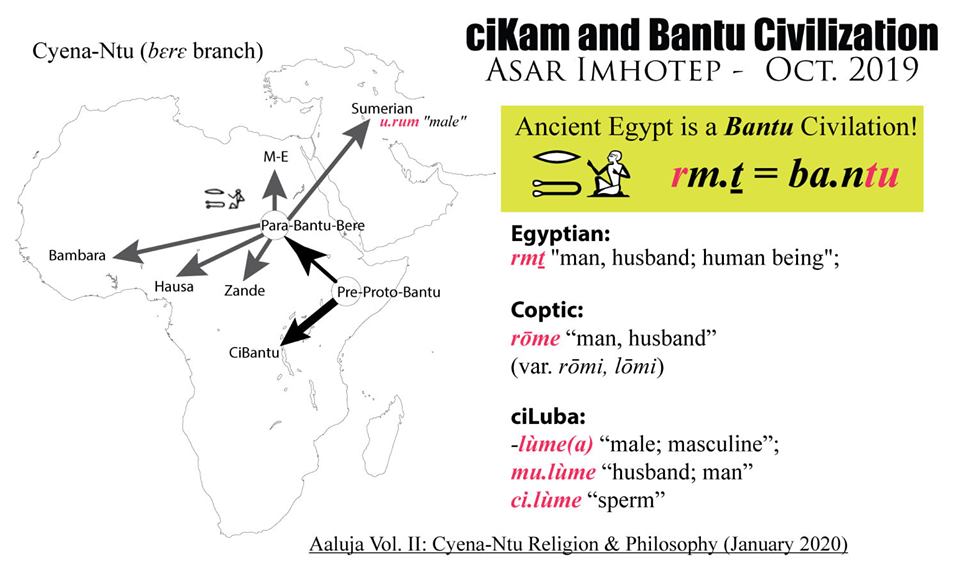
Before later Kemetic influence echoed back across Africa, there was an earlier movement of African interior peoples, priesthoods, and cosmological systems toward the Nile Valley. This is where the Congo/Twa argument becomes important.
The strongest claim is not that modern Kongo civilization directly created dynastic Egypt in a simple one-line fashion. The stronger and more mature claim is that Central African, Twa, proto-Bantu, and deep interior traditions represent older layers of African sacred culture that contributed to the wider civilizational matrix from which Kemet emerged.
This avoids overclaiming while preserving the Pan-African insight: Kemet should not be imagined as disconnected from older African forest, river, and interior priesthoods.
Kongo: The Sacred Circle of Life, Death, and Return
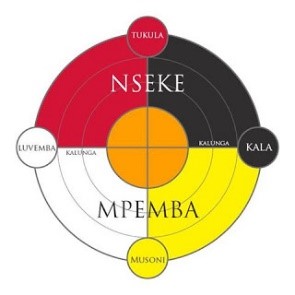
Kongo cosmology gives us one of Africa's clearest models of life, death, rebirth, and ancestral continuity. At the center is the Kalunga line, the boundary between the visible world and the ancestral/spiritual world. In Kongo thought, the universe is not merely heaven above and earth below. It is a living cycle.
The Kongo cosmogram, often called Dikenga dia Kongo, maps the human being into the cycle of sunrise, noon, sunset, and midnight. It teaches that existence is movement. Life is a circle. Death is not annihilation. Ancestors are not dead memories. They are active powers in the web of life.
- Kalunga: the boundary between worlds.
- Bakulu: ancestors as active spiritual forces.
- Nganga: priest, healer, medicine specialist, spiritualist, and ritual worker. In Ancestral Egbe doctrine, the nga-nga reading is both linguistic and historical: "black of the black." Inga is Nga, an ancient deity-name current, and Ka-Nga / Kanga is the Ka spirit of Nga, the Black fertility current: a Congo deity current also recognized, in HM NebShakaRa's research, as a high-god current in Cameroon.
- Minkisi/Nkisi: spirit-empowered sacred medicine objects.
- Dikenga: the cosmic circle of life, death, transformation, and return.
The Nganga / Inga / Ka-Nga language belongs to the Cultural Unity of Black Africa because it links title, healer-priesthood, Blackness, medicine, Ka spirit, fertility, Congo and Cameroon high-god memory, and deity memory inside the same older African sacred-language current.
In a Pan-African integration, Kongo gives the ancestral system its crossroads of life and death, its elemental force, its spiritual medicine technology, and its direct relationship with the dead.
Kemet: The Temple Science of Cosmic Order
If Kongo gives us the cosmogram of life, death, and ancestral return, Kemet gives us one of Africa's most elaborate temple systems of cosmic order. Kemet preserved and monumentalized African cosmology through Ma'at, Neteru, Ka, Ba, Akh, Duat, sacred architecture, daily temple ritual, and divine kingship. Within this system, Per-em-Heru—Coming Forth by Day, also known as the Book of the Dead—is the Kemetic cultural process of elevation and transfiguration through which the deceased may become an Akh, a being of light.
Kemet took African sacred science and built it into architecture, law, ritual, education, funerary practice, leadership, art, astronomy, and statecraft. This is why Kemet remains crucial. It shows what happens when spiritual principles govern civilization.
But Kemet should not be isolated from the rest of Africa. That isolation was part of the colonial trick. Europeans attempted to remove Egypt from Africa, whiten it, or treat it as an exception. At the same time, Central African and Kongo traditions were degraded as savage or primitive.
A Pan-African correction says: Kemet is not outside Africa. Kongo is not beneath Kemet. Yoruba is not disconnected from either. These are interrelated African systems expressing different levels of the same civilizational intelligence.
The Later Movement Back Across Africa
The movement was not only one-directional. There was an earlier African interior movement into the Nile Valley. Then, over time, there were later movements, exchanges, and cultural echoes from Kemet back across Africa, including into West and Central Africa.
African peoples moved. Languages shifted. Priesthoods migrated. Wars displaced people. Trade routes carried symbols. Initiation systems preserved old knowledge under new names. Sacred kingship, ancestor veneration, divine-mother principles, iron and warrior cults, river deities, serpent symbolism, solar symbolism, and ideas of destiny moved across the continent in complex ways.
The better model is not a straight line. It is circulation: Central African and Congo-related deep ancestral streams feed the Nile Valley; Kemet crystallizes a high temple civilization; later returns, echoes, and cross-migrations move into West, Central, and diasporic Africa.
Yoruba: Ori, Orisha, Ancestors, and Destiny
Yoruba cosmology gives Pan-African integration a highly developed language of personal destiny, divine forces, ritual alignment, and ancestral accountability.
Ori is not simply the physical head. Ori is the inner head, the seat of destiny, consciousness, choice, and spiritual authority. This makes Yoruba practice especially useful for modern people because it answers a practical question: how do I align my life, choices, character, ancestors, and destiny?
- Ori: personal destiny and inner authority.
- Orisha: divine forces and powers of nature.
- Egun/Egungun: ancestors and ancestral collectives.
- Ifa: divination, wisdom, diagnosis, and correction.
- Ase: sacred power, command, life force, and authority.
- Iwa Pele: balanced character and ethical development.
In the Ancestral Egbe structure, Yoruba becomes a practical model for spiritual diagnosis, Ori alignment, ancestor connection, and disciplined development. Yoruba is not just ritual. It is governance of the self.
The Integrated Framework
| System | Core Gift | Spiritual Function |
|---|---|---|
| Kongo | Cosmogram, Kalunga, ancestral medicine, elemental force | Teaches life/death cycle, spirit technology, ancestral crossing, and nature power. |
| Kemet | Ma'at, Neteru, temple science, sacred order | Teaches cosmic law, civilization, ritual architecture, divine kingship, and soul refinement. |
| Yoruba | Ori, Orisha, Ifa, Egun, Ase | Teaches destiny alignment, divination, character, personal correction, and ancestral accountability. |
Why This Matters for Ancestral Healing
Many people come to ancestral work because they are spiritually blocked, culturally uprooted, emotionally burdened, or confused about identity. They may have fragments: a little Kemet, a little Ifa, a little Palo, a little Vodou, a little meditation, a little conspiracy research, a little trauma language.
Fragments are not enough. Pan-African cosmology integration helps people understand why ancestor veneration appears across African systems; why water, crossroads, earth, sun, iron, serpent, drum, and bloodline symbols repeat; why destiny and character matter as much as ritual; and why spiritual power must be governed by ethics.
African traditional religions are not merely belief systems. They are worldviews and ways of life. Ancestral healing is therefore not just about lighting a candle or pouring water. It is about restoring relationship with the whole web of existence: self, family, lineage, nature, deity, culture, and destiny.
Correcting the Colonial Split
The colonial mind separated African systems in order to weaken them. It said Kemet was not really African, Kongo was primitive, Yoruba was superstition, Vodou was evil, ancestors were demons, African ritual was backward, and European religion was civilization.
Pan-African cosmology rejects that structure. It says Kemet is African. Kongo is profound. Yoruba is philosophical and practical. Ancestors are central to African reality. Ritual is technology. Culture is governance. Spirituality without history becomes fantasy, and history without spirituality becomes dry information.
This is why the integration of Kemet, Kongo, and Yoruba is not just academic. It is part of identity repair.
Seven Principles of Pan-African Cosmology
- Africa is a sacred continuum, not a set of isolated tribes. African systems developed through migration, trade, marriage, conquest, priesthood transmission, ecological adaptation, and diaspora survival.
- Kemet is a fountainhead, not the original source. Kemet gathered and crystallized many African streams, but older African interior traditions helped feed its foundation.
- Kongo preserves one of Africa's deepest life-death cosmograms. Kalunga, Dikenga, and Bakulu teach the living relationship between birth, death, ancestors, water, sun, and return.
- Yoruba preserves a precise technology of destiny. Ori, Ifa, Orisha, Egun, and Ase give the person a system of alignment, diagnosis, correction, and spiritual responsibility.
- Ancestors are not optional. Across African cosmology, ancestors are part of the living web of reality. They carry memory, warning, blessing, debt, and instruction.
- Spiritual power must be governed by character. Ma'at, Iwa Pele, and ancestral accountability all teach that power without ethical order becomes disorder.
- Pan-African spirituality must restore sovereignty. The goal is restored memory, restored destiny, restored discipline, restored culture, and restored relationship with the sacred.
Read This as a Thread
This article is the lead doctrine for the Cultural Unity of Black Africa reader path. Continue through the Kongo/Kemet foundation article, then into the Sahelian architecture materials and the Pan-African creator theology thesis.
One Tree, Many Branches
Kongo shows the deep ancestral cycle. Kemet shows the temple of cosmic order. Yoruba shows the personal head of destiny. The work now is integration without confusion: not mixing everything carelessly, not pretending every tradition is identical, and not reducing African spirituality to one nation.
African cosmology is a living network. Kemet, Kongo, and Yoruba are ancestral relatives. When properly understood, they help restore the African person, the African family, and the African world.