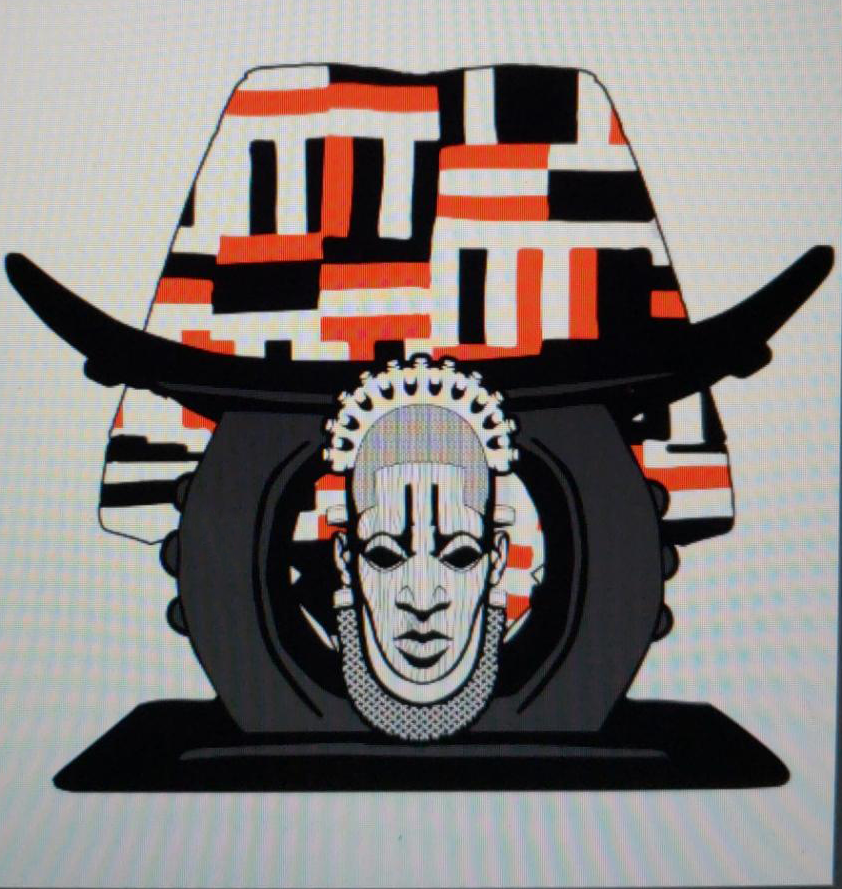
Buey Suelto the Loose Ox in Palo Monte
A required reading for the Ancestral Egbé Red Crown Palo learning path.
Buey Suelto means “Loose Ox.” In writing about Cuban Palo Monte, also known as Palo Mayombe, the name brings together questions of spiritual strength, independence, religious memory, and responsibility. It appears as a name associated with a remembered elder and sacred foundation, and in some discussions as an image for independent practice. Understanding the distinction matters: a striking name is not, by itself, evidence of a separate religious order or permission to operate without training.
For students of the Red Crown, the Loose Ox is a useful place to examine the relationship between power and its custodians. Who carries a foundation? Who taught the practitioner? What obligations remain when someone works independently? Those questions connect the history of a name to the responsibilities of a living tradition.
What Buey Suelto Means
The Spanish image is straightforward: an ox no longer held under a yoke. The related proverb El buey suelto bien se lame celebrates freedom from restraint or dependence. The Instituto Cervantes records that meaning in its multilingual collection of proverbs, including the expression’s use in discussions of unmarried life. This explains the wider linguistic image; it does not establish why any particular Palo elder or foundation received the name. Instituto Cervantes, Refranero multilingüe.
As a spiritual metaphor, the Loose Ox can suggest force, self-direction, and an unwillingness to be contained. Within our teaching, however, independence is a question of maturity and responsibility, not simply separation from other people. An animal without a yoke still has strength that must be understood; a practitioner outside a particular house still has relationships and obligations to answer for.
Arcadio Calvo Espinosa and Religious Memory
A practitioner remembrance associates Arcadio Calvo Espinosa, named as Tata Ndibilongo, with Buey Suelto and his prenda. This is testimony about how an elder and a foundation are remembered, rather than a complete verified biography. It is important to retain that association without adding unsupported dates, succession claims, or an explanation of his independence as settled fact. Practitioner remembrance of Arcadio Calvo Espinosa.
The relationship between a practitioner’s name and a foundation’s reputation deserves serious attention. A community may remember an elder through the sacred work entrusted to them. Remembering the foundation then also preserves the human relationships through which people encountered it: teachers, religious family, and those who sought assistance.
Such remembrance is not less meaningful because it is carried through practitioners. It should be treated as testimony with a context, not inflated into a universal history of every house using a similar name.
The Prenda Is More Than a Container
To understand this name in Palo, a student needs to understand the prenda or nganga as a sacred foundation, not merely an unusual vessel. Todd Ramón Ochoa’s ethnographic work, Society of the Dead, examines Cuban Palo through relationships with the dead, religious society, and the work of prendas-ngangas-enquisos. His account supplies a scholarly setting for understanding why a foundation has social and spiritual significance beyond its outward appearance. Ochoa, Society of the Dead, University of California Press, 2010.
Central African Kongo traditions provide an important background. The Metropolitan Museum of Art describes minkisi as works created through collaboration between an artist and a ritual specialist, with purposes that could include healing, settling disputes, and protection. This offers context for the relationship among material form, specialist knowledge, and social responsibility; it is not a claim that every Cuban prenda is identical to a museum’s Kongo figure. The Metropolitan Museum of Art, Power Figure Male Nkisi.
A list of physical ingredients cannot substitute for those relationships. Nor does possession of a container establish initiation, authority, or competence. This lesson therefore concerns public orientation and discernment, not instructions for making or consecrating a foundation.
Independence and the Religious House
An independent practitioner and an untrained practitioner are not the same thing. Someone may exercise judgment away from a particular institution while remaining shaped by teachers, initiation, inherited obligations, and the spiritual relationships of their practice.
Likewise, affiliation with a house does not remove the need for personal responsibility. The useful questions are concrete: What was transmitted? What is the practitioner authorized and prepared to do? Who can clarify that history? How are obligations maintained, and how are problems addressed?
In Ancestral Egbé’s teaching, autonomy must be assessed alongside accountability. Buey Suelto is not a shortcut around preparation or a title that students can acquire by choosing the name. Nor should it be used to portray every independent practitioner as illegitimate. The person, foundation, religious history, and scope of practice have to be considered together.
Buey Suelto and Japan’s Rōnin Compared and Contrasted
Japan’s rōnin were samurai without a lord. When Buey Suelto is used to describe independent Palo practice, there is a useful parallel: a practitioner may stand outside a particular institution while retaining knowledge, training, and relationships acquired within a tradition. Independence does not necessarily mean someone is untrained or without a history. National Library of Australia, Life under the Shoguns.
The contrast concerns what each person stands independent of. Rōnin describes a warrior’s position in relation to Japanese lordship. Buey Suelto, in its independent-practitioner usage, concerns religious-house affiliation and spiritual practice. A Palo house is not a feudal lord, and religious initiation is not military employment. Moreover, Buey Suelto can name a particular elder or sacred foundation; it does not always describe an unaffiliated practitioner.
The comparison therefore raises a shared question without making the traditions equivalent: what remains binding when institutional attachment changes? A practitioner may work independently while retaining responsibilities to teachers, initiatory lineage, spiritual relationships, and those they serve. In our teaching, the Loose Ox represents neither automatic illegitimacy nor freedom from accountability. Independence must be considered alongside formation, competence, and conduct.
One Name Does Not Prove One Lineage
A name can identify a person, a foundation, a remembered religious branch, or a descriptive style of practice. These uses are related possibilities, not interchangeable categories. When the same expression appears in different accounts, students should ask which meaning is intended before combining the accounts.
The presence of a shared name does not establish that two foundations are the same, that their keepers share a succession, or that there is one standardized Buey Suelto method. Those are lineage questions that require evidence from the relevant custodians. A proverb can illuminate symbolism; it cannot supply a missing genealogy.
Why the Loose Ox Belongs in Red Crown Study
Within Ancestral Egbé’s Crown framework, Kongo/Palo study belongs to the Red Crown field of earth, elemental relationships, spiritual work, and responsibility. This is our organizing framework for learning, not a claim that all Palo houses use the Five Crowns terminology.
The Loose Ox belongs early in that study because it teaches students to distinguish spiritual force from permission, independence from lack of formation, and a foundation’s reputation from a documented lineage. These distinctions should be understood before a student seeks initiation or imagines that a powerful name confers authority.
Read this lesson after the basic public orientation, alongside Mfumbi in Palo Nganga Kalunga and Capoeira and Kongo Palo Dead and the Dikenga. Continue through the Kongo Palo Mayombe Student Path for house-guided preparation. The separate funeral and will preparation reading addresses obligations that must be planned for beyond a practitioner’s lifetime.
Questions for Study
Before continuing, be able to explain what Buey Suelto means, distinguish a practitioner from a named foundation, and describe why neither a shared name nor working alone proves a lineage. Consider how an independent practitioner can remain accountable, and which questions should be taken to the responsible house rather than answered by speculation.
Private Student Assessment
After completing this reading while signed in, take the private Buey Suelto student assessment. It contains twelve questions, including two application questions; ten correct answers are needed to pass. The assessment checks understanding, not spiritual rank or permission to operate.
Common Questions
Is Buey Suelto a Separate Branch of Palo
The name’s appearance alone does not establish a universally recognized branch. Identify the house, elder, foundation, and source before making that claim.
Does Loose Ox Mean Someone Can Initiate Themselves
No. Independence as a description or metaphor does not establish self-initiation, ritual authorization, or exemption from the preparation required by a house.
Is This Lesson an Initiation Manual
No. It is a required orientation reading in our Red Crown Palo learning path. Studying it is not initiation, a credential, or authorization to perform spiritual work.
Sources and Further Reading
- Practitioner remembrance of Arcadio Calvo Espinosa and Tata Ndibilongo. A practitioner testimony link, not independent biographical verification.
- Todd Ramón Ochoa, Society of the Dead Quita Manaquita and Palo Praise in Cuba. University of California Press, 2010. Ethnographic context; not evidence for Arcadio’s biography.
- Instituto Cervantes, El buey suelto bien se lame. Linguistic and proverbial context, not ritual genealogy.
- The Metropolitan Museum of Art, Power Figure Male Nkisi. Kongo material and specialist context, not identification of a particular Cuban prenda.
- National Library of Australia, Life under the Shoguns. Historical context for rōnin; the cross-cultural analogy is ours, not a claim of shared lineage.