
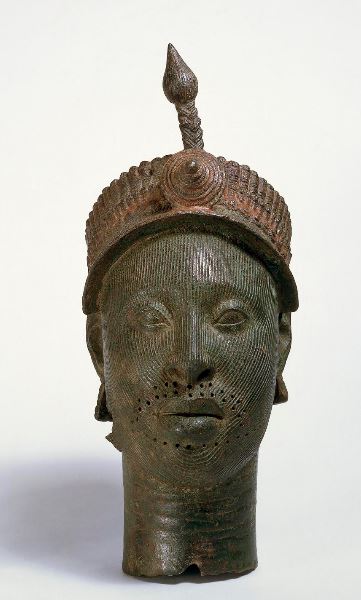
This article is dedicated to Fiona A. Edwards, MBA, JD.
Start Here
This page is an Ancestral Egbe companion map for the Yoruba Language Program, a close affiliate and business partner connected to our shared Yoruba language product and service line. At this time, Yoruba language service purchases and enrollment happen through the YLP site. Read the YLP article here: Yoruba for Dummies: 6-Month Fluency Path.
For beginners, "learn Yoruba" can sound simple, but Yorùbá is not only a vocabulary project. Yorùbá is a tonal language, a cultural system, a prayer technology, and a living archive of names, praise, ethics, ancestral memory, and spiritual intelligence.
The goal is not to collect random words. The goal is to train the ear, discipline the mouth, understand the worldview, and create a daily rhythm strong enough to survive ordinary life. Six months will not make everyone a master speaker, but it can build a serious foundation if the work is organized correctly.
Why Yoruba for Beginners Must Start With Sound
Yorùbá is tonal. That means tone is not decoration. Tone changes meaning. A beginner who ignores tone may memorize words and still be misunderstood, especially in prayer, praise names, songs, and sacred speech. The printable YLP guide correctly begins with special letters such as Ẹ, Ọ, and Ṣ, then moves into the three basic tone patterns: high, mid, and low.
- Listen before trying to rush into long sentences.
- Practice short phrases until the sound becomes familiar.
- Record yourself and compare your speech with native models.
- Learn greetings as musical patterns, not flat English-style phrases.
Chapter 1: Foundation, Months 1-2
The first two months should build humility and listening power. Begin with the alphabet, the special Yorùbá letters, tone marks, respectful greetings, basic introduction language, and counting. The point is not speed. The point is to make the ear and mouth reliable.
Useful beginner targets include greeting in the morning, afternoon, and evening; saying your name with Orúkọ mi ni...; and learning numbers one through ten with the correct sound pattern. This is also where the student learns that tone marks are not optional decoration. They are part of the word.
Chapter 2: Building Blocks, Months 3-4
In months three and four, build language around the things closest to you: family, body, food, movement, time, and ordinary action. A language becomes real when it enters the house and stops living only in a notebook.
Learn family words like mother, father, child, elder sibling, younger sibling, and friend. Add body words such as head, eyes, arms, and legs. Then attach action words: eat, drink, go, come, sleep, speak, and hear. The simple grammar pattern is already enough to begin forming clean basic sentences.
Use labels, short commands, and daily repetition. Say what you are doing. Name what you touch. Let the language become physical.
Chapter 3: Fluency in Action, Months 5-6
By months five and six, the beginner must stop hiding inside silent study. Speak out loud daily. Narrate simple parts of your day in Yorùbá. Record your voice and listen back. Bring music, songs, chants, and community correction into the practice.
In an Ancestral Egbe context, Yorùbá study is not performance. It is a return of the tongue to ancestral order. Even partial learning can change how a person prays, listens, remembers, and speaks to the lineage.
At this stage, the question is no longer "Can I learn Yoruba?" The question becomes "What rhythm will keep Yoruba alive in my mouth, my home, my prayer, and my community?"
Proverbs, Oriki, Songs, and Cultural Logic
After the basic structure is moving, begin studying short proverbs, simple oríkì, songs, and repeated ritual phrases. This is where the language starts teaching worldview. Yoruba wisdom often arrives in compact forms: praise, proverb, rhythm, and call-and-response.
Do not rush to collect complicated verses. Learn smaller pieces deeply. Speak them with respect, ask what they mean, and notice how meaning changes when the words are translated into English.
The Sacred Layer: Ifa Vocabulary
For students coming through ancestor work, Orisha work, Ori, Ifa, or broader African spiritual literacy, the sacred vocabulary matters. Words like Àṣẹ, Ìwà pẹ̀lẹ́, Orí, Òrìṣà, Odù, and Ewé are not only dictionary terms. They carry a spiritual worldview.
This is where language recovery becomes spiritual repair. The student begins to hear the difference between English explanation and Yorùbá category. The original category carries force, relationship, rhythm, and cultural memory that translation can only approximate.
A Simple Weekly Practice Rhythm
- Two days for listening and tone repetition.
- One day for greetings and conversation phrases.
- One day for vocabulary tied to home, family, body, and daily action.
- One day for prayer language, proverb, song, or oríkì.
- One review day to repeat what is weak instead of chasing new material.
Keep the daily baseline realistic: about 15 minutes spoken out loud, every day. Add one proverb each week and one song or chant each month. Small daily consistency beats occasional dramatic study sessions.
Common Beginner Mistakes
The biggest mistake is treating Yorùbá like English with different words. It is not. Tone, respect, context, lineage, and spiritual worldview all matter.
- Do not ignore tone marks because they look unfamiliar.
- Do not learn only isolated words without phrases.
- Do not separate language from culture and then wonder why the meaning feels thin.
- Do not collect too many resources without one disciplined practice schedule.
- Do not confuse beginner humility with failure. The tongue is being rebuilt.
Where YLP Fits
The Yoruba Language Program is a close affiliate and business partner in the Yoruba language education lane. Ancestral Egbe frames the spiritual, cultural, and ancestral importance of language recovery, while YLP is the current home for Yoruba language study products, services, enrollment, and purchase flow.
That relationship matters. Language recovery needs structure, correction, repetition, and an actual learning container. The stronger the language foundation, the stronger the ancestral, cultural, and spiritual work can become.