New Cultural Doctrine, Ancestral Practice Guides, and Study Manuals
This month, Ancestral Egbe has continued expanding the educational side of the site with new doctrine articles, free resources, health coaching pathways, language recovery work, and deeper manual pages. The goal is to help readers move through clear paths: ancestor work, Yoruba language recovery, identity repair, cultural healing, spiritual diagnosis, and serious study.
This feature article develops a Pan-African Black creator-deity thesis: Amun, Amma, Olokun, Aum/Om, hidden depth, primordial water, sacred sound, and Blackness as a unified divine source rather than isolated religious fragments.
A new Afrofuturism Books landing page now features Ibeji by James Hunter as a mythic Afrofuturist novel of twin destiny, ancestral memory, and Black spiritual awakening. The page introduces the book, synopsis, author framing, and production potential for screen, audio, and immersive cultural storytelling.
Ibeji follows two men pulled together by visions, trauma, Ifa, and the sacred twin current, revealing that the future of Black storytelling may begin with the ancestors we were taught to forget.
Ancestral Practice, Yoruba Language Recovery, and Cultural Healing
This month, Ancestral Egbe has been expanding the educational side of the site with new free resources, doctrine articles, and clearer pathways for people entering ancestral work, Yoruba language recovery, Egbe practice, cultural trauma healing, and health coaching. These additions help readers move from confusion into a clearer path: read, understand, practice, and choose the next step with more confidence.
Cultural Doctrine, Study Manuals, and Priest-Service Pathways
Since the original June update draft was prepared, Ancestral Egbe has added another layer of public teaching and study resources. This includes new doctrine on generational wealth as ancestral responsibility, the Pan-African creator deity of Blackness, spiritual jurisdiction, African Greece, Black goddess memory, Ogboni orientation, and new priest-service pathways for reconciliation and Eshu/Elegba work. Together, these additions deepen the site's public map for cultural doctrine, serious study, and practical spiritual development.
The final phase of this update makes the public site easier to move through. The newsletter area now separates the Culturelist Field Notes newsletter from the Newsletters & Press Releases archive and the Featured Articles page. This gives readers a cleaner way to find official announcements, featured essays, and the major teaching lines without crowding the dropdown menu.
The June Yorùbá Language Program dispatch celebrates a major transition point for students and the wider language-recovery effort. The Foundation cohort completed its 16-week journey in late May, moving from alphabet, greetings, and core vocabulary toward practical confidence and fuller conversational use.
The program has now entered Unit 5: Temple Manual Overview & Applied Ifá Yorùbá, a phase focused on applied spiritual language. Students are working with praise poetry, invocations, sacred temple text, and pataki so that language study becomes more than memorization. It becomes a disciplined path into ancestral memory, ritual precision, and Ifá-centered cultural understanding.
Ifá Scribe and Study Support
The May 30 Q&A Open House highlighted Ifá Scribe as a digital study companion for transcription, pronunciation support, and between-session practice.
New Learning Resources
The dispatch points students toward foundation tracks, the Ifá Scribe hub, the featured article on reclaiming Yorùbá as an ancestral language of power, and ongoing program news.
Deepening the Root System
New program news and teaching resources continue to connect language mastery with Ifá practice, ancestral reconnection, cultural repair, and student retention.
The dispatch frames Yorùbá language recovery as a living bridge between study, ancestry, and practice: when students speak to the ancestors in their own tongue, the work gains depth, tone, and spiritual precision.
Many men spend years developing skills, building careers, supporting families, and serving communities. Yet leadership without self-knowledge often creates success on the outside while leaving disconnection on the inside.
Our colleagues at Diving Within are addressing this challenge through the Rise & Lead Retreat, a transformational experience designed specifically for Black men seeking deeper clarity, purpose, and authentic leadership. Rather than focusing solely on external achievement, the program emphasizes brotherhood, self-examination, emotional intelligence, and personal integration.
This approach aligns with a principle we frequently teach within the Pan-African Ancestral Egbe: before a person can effectively lead a family, organization, or community, they must first establish leadership over themselves. Self-mastery, cultural grounding, emotional discipline, and clear purpose create the foundation for meaningful service.
Whether one approaches this work through coaching, ancestral practice, spiritual development, or personal reflection, the goal remains the same: to become a more integrated human being capable of carrying responsibility with wisdom and integrity.
If you are a Black professional, entrepreneur, community leader, or simply a man seeking a deeper level of growth, we encourage you to explore the work being offered by Diving Within and consider whether the Rise & Lead experience may be part of your next stage of development.
Strong communities are built by strong men and women who have first learned to govern themselves.
Ghana Projects: Cultural Restoration with Economic Infrastructure
Ancestral Egbe also carries forward the Ghana development work introduced in the May press release. The initiative is aligned with community development efforts in Assin Kruwa, Ghana, connecting cultural restoration, ancestral return, village partnership, and practical economic infrastructure.
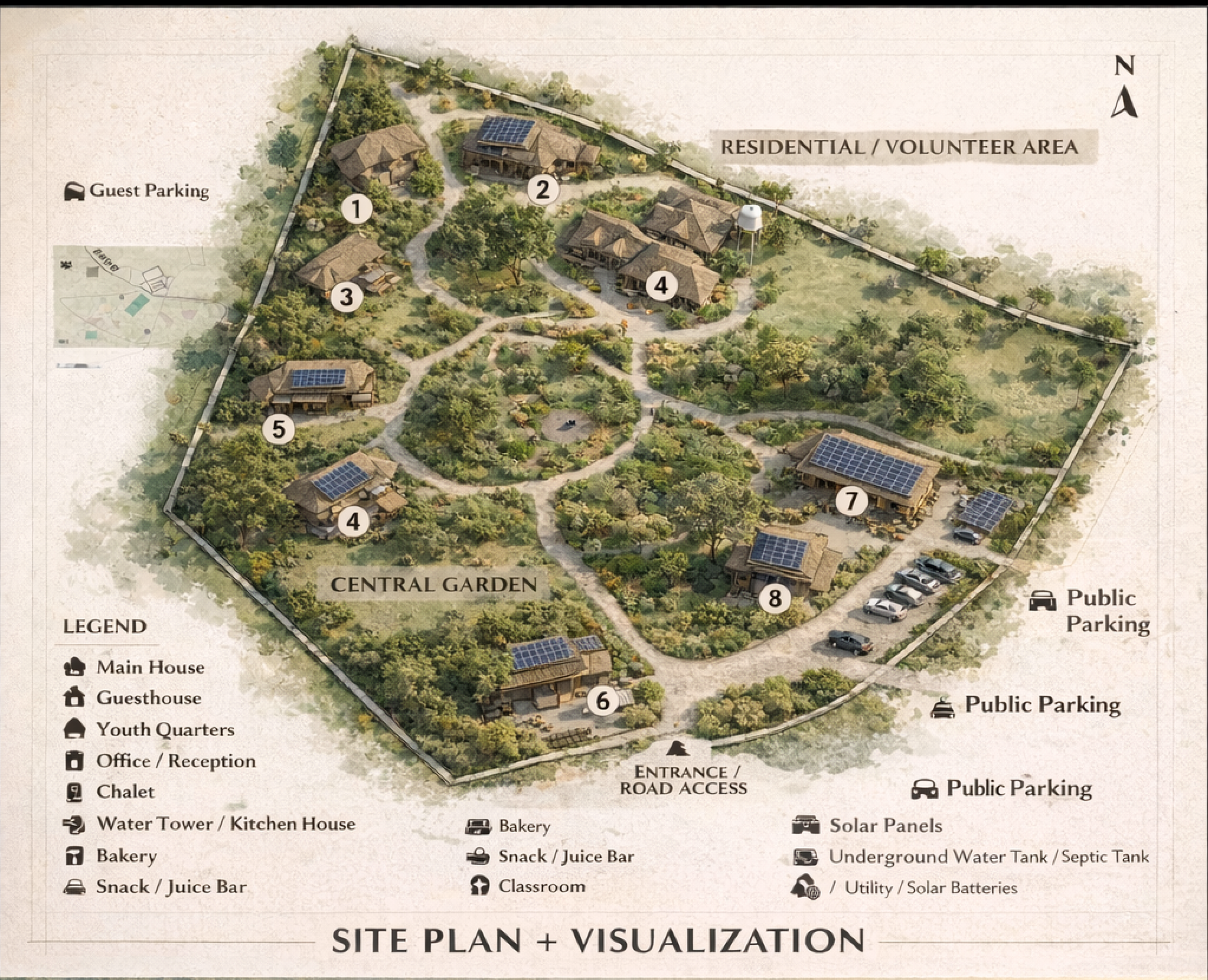
This work matters because the public platform is not only a library of doctrine, services, and newsletters. It is also a bridge between cultural restoration and real development: housing for visiting teachers and volunteers, village-centered cultural tourism, workforce training, income-generating enterprise, and long-term relationship with a Ghana-based nonprofit partner.
Fundraising Campaign: Spring/Summer 2026
Goal: $8,000 to $16,000+
Model: 100 to 200 participants contributing $80
Deadline: June 19, 2026
Volunteer Bungalow and Cultural Tourism
The volunteer bungalow project is designed to support eco-retreat housing for teachers, professionals, visitors, and cultural workers coming into relationship with Assin Kruwa. It creates a practical base for cultural immersion, healing work, education, and guided village or rainforest experiences without treating the village as a backdrop.
Bakery and Juice Bar Training Center
The bakery and juice bar project is structured as both workforce training and income-generating enterprise. It supports rural women, youth, and residents through baking, operations, entrepreneurship, local food access, and skills transfer that can continue beyond a single fundraiser cycle.
These projects represent the economic grounding of the cultural system: return, restoration, and responsibility translated into infrastructure.
Site plan and visualization for the Assin Kruwa, Ghana development initiative.
Events
June 2026: Yoruba New Year and Seasonal Alignment
June also carries the public event rhythm already described in the site calendar and the Odunde page. Ancestral Egbe presents this as a three-week ritual and teaching cycle: the closing of the year, the reading of the year, and the Odun Day celebration that opens the next movement forward.
The Odunde page explains that the new year cycle only makes sense when the opening of the year is presented together with the necessary closing of the old one. The closing focuses on unfinished matters, ancestral obligations, and the clearing of burdens carried forward from the previous cycle.
The calendar marks the 1st Sunday in June as the Reading of the Yoruba year, Baltimore aligned with Ile Ife. The 2026 reading is centered on Osa Meji with Ire Aje: blessing around wealth, prosperity, and success. Its guidance emphasizes conflict resolution, respect for mothers and parents, careful speech, and appeasement connected to Sango, Esu, Ogun, and Egbe Orun.
Odunde is presented as a Yoruba New Year celebration rooted in Oshun, water, renewal, and communal realignment. The site describes the procession, river movement, Oshun offering, return, and celebration as one ritual system of renewal rather than a generic festival.
The broader calendar treats solstice moments as real seasonal thresholds, not symbolic decoration. The summer solstice concentrates the visible lesson of the sun: its rays energize growth and development, making this a powerful period for manifestation, elemental attunement, guidance, and symbolic messages. Ritual gives that energy direction through movement, visualization, spoken intent, sound, dance, and disciplined action.