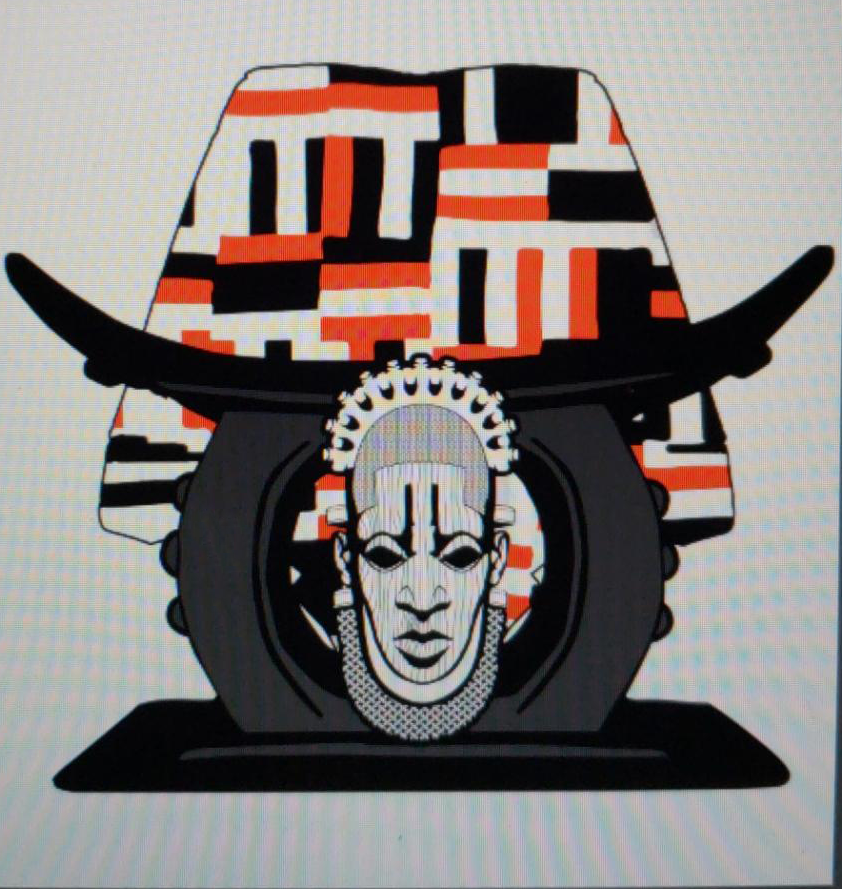
The Black Sparta material is history, cultural recovery, and suppressed Mediterranean memory. It belongs to the wider effort to restore African presence in ancient Greece, the Aegean, the eastern Mediterranean, and the older sacred world that later European history tried to recolor or erase.
The public question is simple: what happens when the ancient Mediterranean is treated as a mixed, African-connected world instead of a purely European origin myth? A different map appears. Africa, Kemet, the Levant, Crete, Greece, and the wider sea world begin to look like a zone of exchange, memory, conflict, migration, and spiritual transmission.
Egyptian Colony Traditions in Greece
This African-Greek memory is not a new invention. Older European scholarship also preserved traditions of Egyptian movement into Greece. Montesquieu summarized a tradition that history mentioned four colonies from Egypt settling in Greece: Danaus founding Argos, Cadmus connected with Egyptian and Phoenician peoples and Thebes of Boeotia, and Cecrops and Erechtheus connected with early Athens. These reports should not be treated as a simple modern map of DNA, nor should they be erased because they disturb the later white-origin story of Greece.
The important point is that the older archive itself remembered Egyptian and Phoenician presence inside the making of Greek civilization. The African-centered reading therefore does not have to pretend Greece was Kemet. It must simply refuse the false story that Greece developed as an isolated white European miracle outside Kemet, the Levant, Crete, Anatolia, and the wider African Mediterranean.
Balkan Egyptian and Isis Memory
The Balkan frame also matters. Rubin Zemon's work on the history of Balkan Egyptians points to Egyptian cults, Isis-related monuments, scarab symbolism, and Roman-era Egyptian sacred presence in the Balkan Peninsula, including references to Ohrid and Heraclea/Bitola. Zemon also highlights classical-source traditions in Herodotus: Egyptian movement into Balkan territory under the Sesostris/Ramesses memory archive and the report that the rulers of the Dorians could be traced to Egyptian descent according to the Hellenic account. These are not small details for a Black Sparta article.
Some of this material requires careful historical sorting because myth, migration, royal genealogy, settlement, cult spread, and later Roman-era religious movement are not identical categories. But that is exactly the point: Egyptian sacred and historical memory moved across the Balkans and the Mediterranean instead of remaining sealed inside the Nile Valley.
For Black Sparta and African Greece, this supports the larger map. Greece and the Balkans sit inside a mixed Afro-Mediterranean field of movement, trade, cult, military service, diplomacy, migration, and sacred translation. The later racial picture of a pure white classical origin is too narrow for the evidence and too politically convenient to leave unchallenged.
Libyan Amazons and African Female Warrior Memory
The Amazon material also belongs in the Greco-African frame. Diodorus preserves an account of earlier Amazons in Libya, led by Queen Myrina, who fought the Atlantides and Gorgons, moved through Egypt, and made friendship or treaty with Horus, the son of Isis. Newton's chronology preserves the same broad memory: Libyan women warriors, Minerva/Myrina, the army of Bacchus/Osiris, and movement from Libya through Egypt toward the Mediterranean world.
In this doctrine, these are clearly African Amazons because the story places them in Libya and ties them to Egyptian sacred history before their memory is later displaced into the more familiar Greek and Thermodon Amazon frame. The point is not that every Amazon story is the same event. The point is that Greek memory itself carries African female-warrior material, and later Europe often forgets the African layer while keeping the exotic Amazon image.
The Myrina material should be handled as mytho-history: legend, geography, and sacred memory braided together. Some traditions place Myrina's tomb or memorial memory toward Anatolia, Phrygia, or the Troad, though that may also reflect a daughter, granddaughter, successor, or later namesake in the Amazon line. The broader pattern is what matters: Myrina, her daughters, granddaughters, and successor women appear to push far east and north toward Asia Minor and the Black Sea world.
This movement also makes ecological sense inside the older African frame. If part of the memory reaches back toward the green Sahara period, then Libyan African warrior women would already come from an open-land world where horses, bows, mobility, and steppe-like fighting could become natural extensions of culture. That makes their movement into Asia Minor, Anatolia, and the Black Sea plains more intelligible: not as impossible fantasy, but as African martial adaptability moving through changing landscapes.
This also connects ancient memory to African historical continuity. Dahomey/Agojie women warriors show that organized African female martial traditions were not fantasy. They survived into the colonial period and were then filtered through European language as "Amazons." The Greek Amazon story should therefore be read beside African female warrior traditions, not severed from them.
For the full branch, read Black Amazons: Queen Myrina, Libya, Troy, and African Warrior Women.
Why Sparta Matters
Sparta carries a strong symbolic charge: discipline, warrior formation, austerity, state structure, initiation, and social control. When placed in a broader African and Mediterranean frame, Sparta becomes useful for asking how warrior cultures form people and how later racial storytelling decides who is allowed to be remembered inside ancient greatness.
This does not mean every claim should be accepted without evidence. It means the standard European framing should not be accepted without challenge. The ancient world was not built inside modern racial categories. Later racial politics often narrowed the memory.
From Article to Premium Study
This shorter article introduces the Black Sparta line. The fuller premium study integrates it into the larger argument on Eve, Asherah, Black goddess memory, Kemetic wisdom, and suppressed African sacred history in the ancient Mediterranean.
Read the Premium Study - $11Sources and Support
- Montesquieu, Discours et memoires, as preserved in the support article's French quotation on Egyptian colonies in Greece.
- Rubin Zemon, "History of the Balkan Egyptians," Council of Europe education material, including Herodotus references, Isis monuments, scarab symbolism, Ohrid, Heraclea/Bitola, and Balkan Egyptian identity memory.
- Diodorus Siculus, Library of History Book III, chapters 52-56, on the Libyan Amazons, Myrina, the Atlantides, Gorgons, Horus son of Isis, and the older African Amazon memory.
- Isaac Newton, Chapter 2: Of the Empire of Egypt, for the Libyan women, Minerva/Myrina, Bacchus/Osiris, Horus, and Amazon movement through the Mediterranean memory archive.
- Smithsonian Magazine: The Real History Behind The Woman King, for Dahomey/Agojie women warriors and African female martial continuity into the colonial period.
- Martin Bernal, Black Athena: The Afroasiatic Roots of Classical Civilization.