
Calendar and Sacred Cycle
Ancestral Resolutions & Yoruba New Year
This is not a one-day celebration page. It is a three-week ritual and teaching cycle: the closing of the year, the reading of the year, and the Odun Day celebration that opens the next movement forward.
Why This Is a Separate Page
The cycle only makes sense when the opening of the year is presented together with the necessary closing of the old one. The page exists to show the logic of that transition clearly, especially for Western readers who do not inherit a calendar tradition that makes closing, cleansing, reading, and re-opening one continuous process.
In this framework, the celebration of the new year is weakened if the unresolved issues of the previous cycle are never acknowledged, released, and ritually addressed. The ancestral resolution is therefore not optional decoration around the Yoruba New Year. It is part of the foundation that makes the opening meaningful.
The Three-Part Sequence
-
Ancestral Resolution
The closing of the year focuses on unfinished matters, ancestral obligations, and the clearing of burdens carried forward from the previous cycle. This is where one names what must end, what must be reconciled, and what must be released.
Specifically, as we close the old year on Remembrance Day (Old South) (Memorial Day weekend), we then do the Reading of the Year (Sunday, 1st weekend in June). Then we celebrate in the Yoruba context on Odunde (2nd weekend of June); the new year celebration focuses on the orisha Oshun/Òṣun for refreshing and rebirth. This time is a period of closing resolving and remembering before forward focused divination for the next year, then celebration. The Year closing is a time to make your annual ancestral resolution, in which you affirm your faith and respect for your ancestors and traditional forces; make libations, salutations and ask for protection and the good things you want coming into the future; offer kola nut, water, and food; and ask for forgiveness for what you may have done wrong in the past. Lastly, we perform prayers or a ritual of ancestral elevation to uplift family and self while clearing old issues.
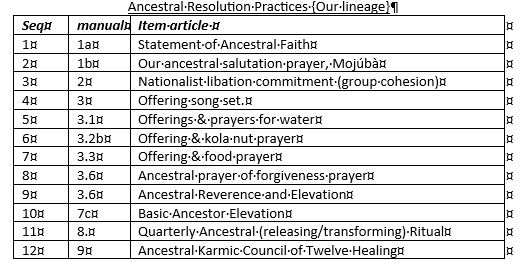
Excerpt from Ancestral Manual
-
Reading of the Year
The first Sunday in June centers the divination and reading that sets orientation for the next year. It clarifies spiritual weather, responsibility, and the conditions under which the community will move.
-
Odun Day / Odunde
The second Sunday celebration marks the visible opening into the new year. It is communal, public, and forward-facing, but it rests on the work already done to close the old cycle correctly.
1.0 Overview
The Odunde Festival represents one of the most complete African American expressions of Yoruba New Year practice in the West. It functions not merely as a cultural gathering, but as a ritual system of renewal, aligned with ancestral veneration, Orisha devotion, and communal realignment.
Within the Ancestral Ẹgbẹ framework, it is correctly positioned alongside:
- New Year Ancestral Resolutions
- Annual Ritual Calendar cycles
This placement reflects its true role as a time-reset mechanism, not a symbolic celebration.
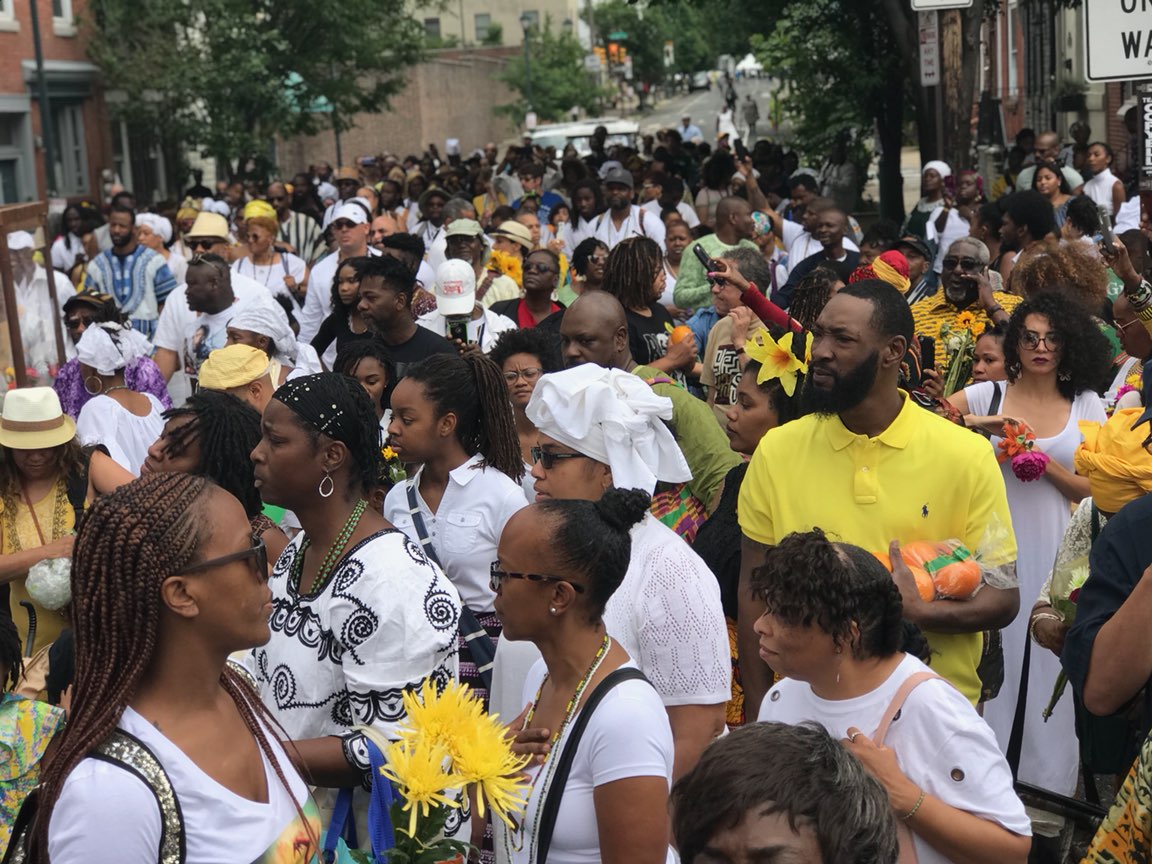
2.0 Origin and Diaspora Reconstruction
The modern Odunde Festival was established in 1975 by Lois Fernandez in Philadelphia, drawing from traditional Yoruba practices honoring Oshun and the sacred role of water in renewal.
In the diaspora, this tradition represents:
- The recovery of interrupted ritual systems
- The reconstruction of sacred calendar time
- The re-establishment of ancestral and Orisha alignment
It is therefore best understood as cultural restoration through ritual practice.
3.0 Procession Structure and Ritual Logic
The Odunde procession follows a clear spiritual sequence rooted in Yoruba cosmology:
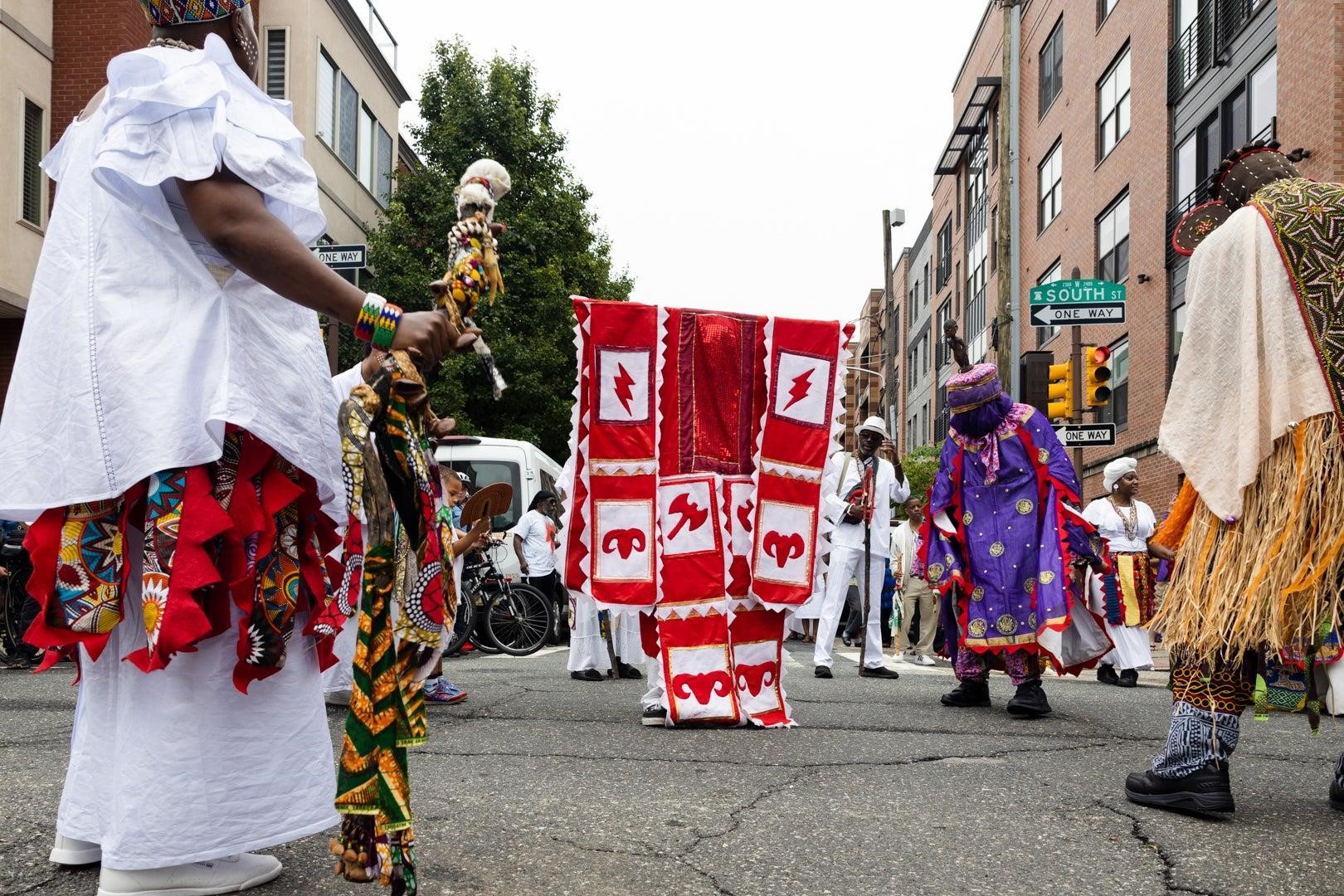
3.1 Egungun Leads (Ancestral Activation)The procession begins with the Egungun society.
- Establishes ancestral authority
- Clears the spiritual pathway
- Aligns the living with lineage
This phase affirms that all renewal begins with the ancestors.
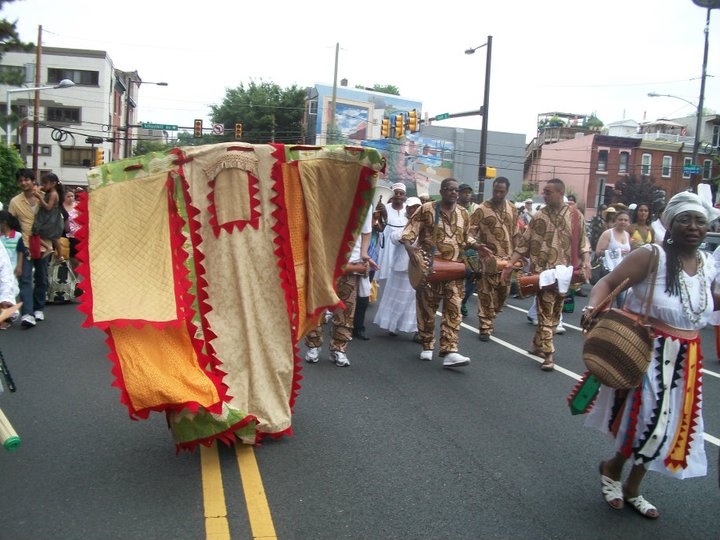
Images of ancestral staffs in public use. Learn about the Opa Iku ancestral staff path.
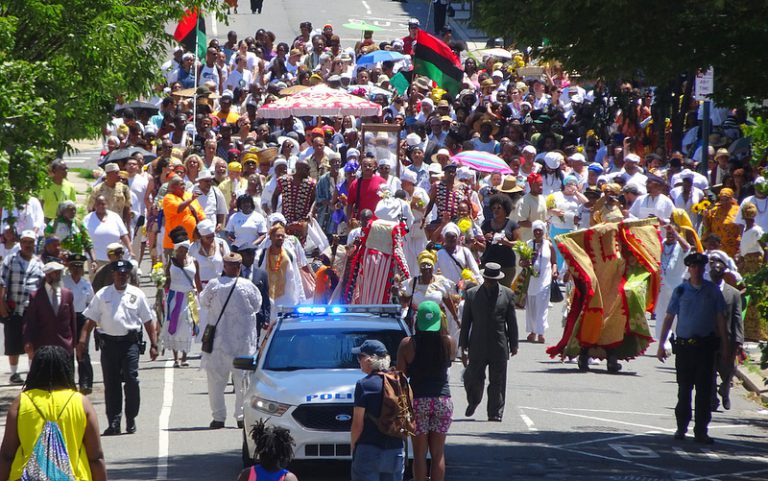
3.2 Movement to the River (Collective Alignment)The community moves together toward the river, transitioning from public space into sacred space.
- Represents movement from disorder to alignment
- Prepares the group for ritual exchange
- Marks the threshold between worlds
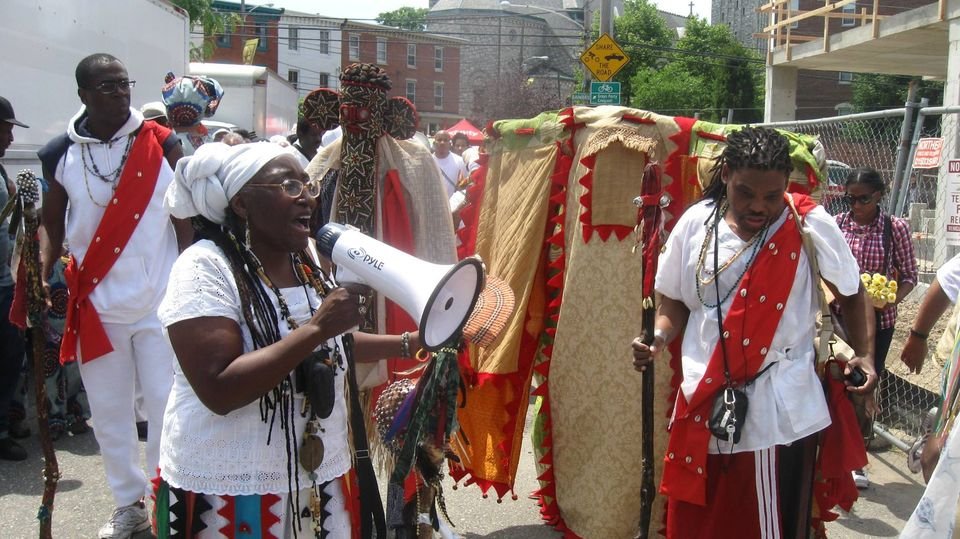 3.3 Oshun Offering (Divine Exchange)
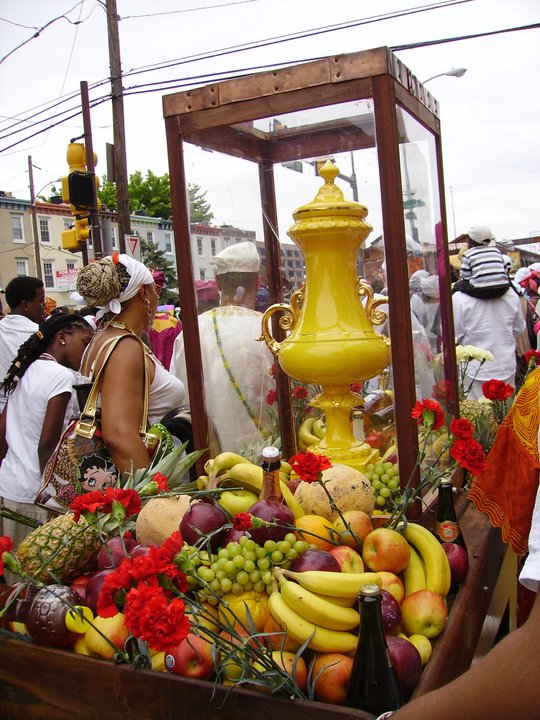
 At the river, offerings are made to Oshun.
- Offerings include honey, fruit, flowers, and symbolic items
- Requests are made for:
- Prosperity
- Love
- Peace
- Fertility and flow
This is the central ritual act, where intention becomes transaction.
 3.4 Return and Celebration (Manifestation)
 Following the offering, the community returns and celebrates.
- Marks reintegration into daily life
- Celebration reflects successful alignment
- Joy, abundance, and community cohesion act as visible outcomes
4.0 Functional Structure
Phase Function Outcome Egungun Leads Ancestral activation Protection and legitimacy Procession Collective alignment Transition to sacred space Oshun Offering Divine exchange Renewal and blessing Return Reintegration Carrying power back Celebration Manifestation Visible abundance
5.0 Relationship to Ancestral Resolution
Odunde operates in direct relationship to New Year Ancestral Resolutions:
- Resolution sets intention
- Egungun activates lineage support
- Oshun powers the intention through offering
- Celebration confirms manifestation
Without ritual, resolution lacks force.
Without resolution, ritual lacks direction.
6.0 African American Expression
While rooted in Yoruba tradition, the Odunde Festival reflects a distinct African American development:
- Public-facing ritual format
- Integration of multiple African diasporic identities
- Economic dimension through vendors and community exchange
- Cultural affirmation within a Western context
This creates a layered system combining:
- Spiritual practice
- Cultural identity
- Economic circulation
7.0 Closing Position
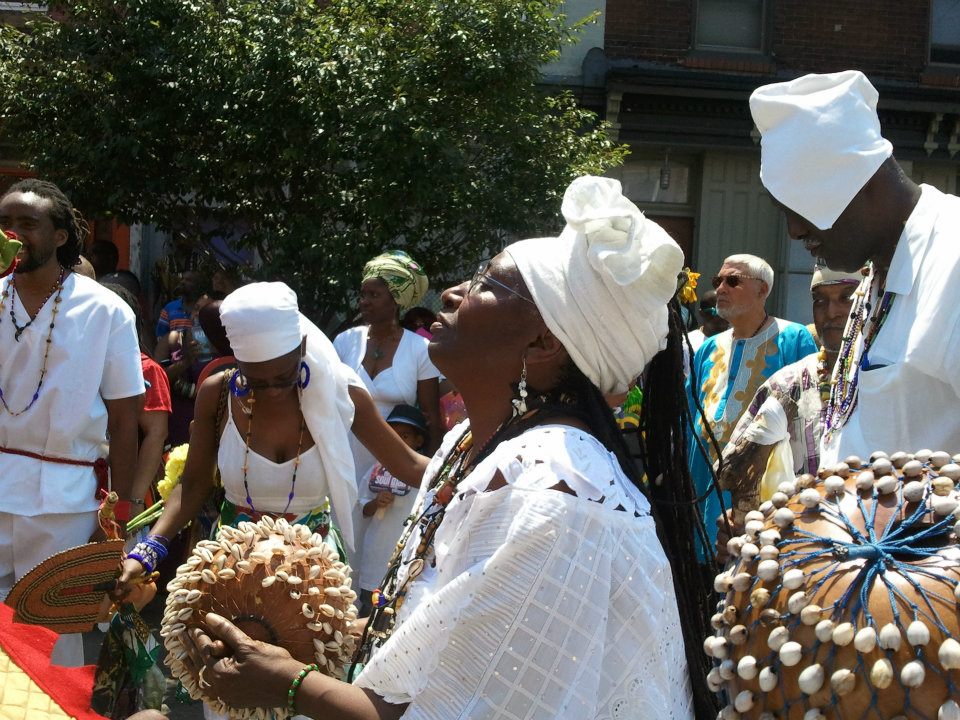
Odunde should be understood as a functional ritual system operating within the public sphere, not merely a festival.
Its structure reflects:
- Ancestral authority (Egungun)
- Sacred exchange (Oshun)
- Communal renewal (procession and return)
- Manifested blessing (celebration)
Within the Ancestral Ẹgbẹ system, it stands as a key annual mechanism for:
- Resetting time
- Realigning destiny
- Restoring the flow of Irẹ̀ (blessings of life)
Ancestral Practice and Orisha Practice
This page also clarifies the relationship between ancestral practice and Orisha practice. In this presentation, the Orisha way is not detached from ancestry. It is built upon ancestral grounding, continuity, and obligation. That is why the cycle begins with ancestral resolution rather than skipping directly to celebration.
For readers formed only by the Western civic calendar, this helps translate a ritual logic that might otherwise be flattened into a generic new-year event. The point is sequence, preparation, and alignment.
Calendar Markers
- 1st Sunday in June: Reading of the Yoruba year, Baltimore aligned with Ile Ife
- 2nd Sunday in June: Odunde celebration in Philadelphia
- Before both: Ancestral resolution and the closing of unresolved matters from the previous year