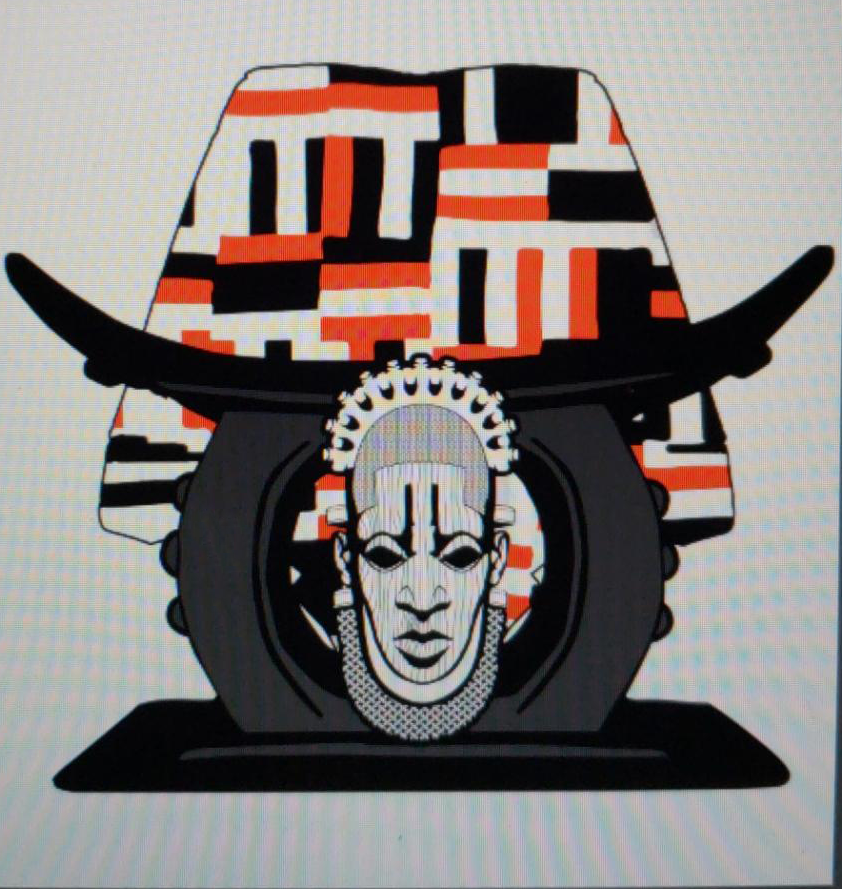
Days of Rebirth · December 24–31
7 Days of Ancestral Ascension & Kwanza
Seven days to move from the depth of the solstice into the elevation of the new year. Each day holds a Kwanza principle in an ancestral frame — not as cultural decoration, but as a living practice of memory, gratitude, and covenant.
What This Period Is
This is not a standard Kwanza observance, and it is not separate from it. It is Kwanza read through the lens of ancestral practice. The seven principles (Nguzo Saba) are carried forward, but each day is also structured as an act of ancestral acknowledgment — feeding the ancestors, naming the lineage, releasing what no longer serves, and aligning with what is being called forward.
The period follows immediately from the Winter Solstice Awan of Olokun on December 21. That ceremony involved descent — acknowledgment of the deep and the difficult. These seven days are the ascension: building upward from that foundation into clarity, covenant, and community alignment for the year ahead.
The Seven Days and Their Ancestral Correspondence
- Day 1 – Umoja (Unity) · Dec 25
We unify with the ancestors themselves — acknowledging that community does not begin with the living. The strength of this household includes those who came before.
- Day 2 – Kujichagulia (Self-Determination) · Dec 26
Self-determination begins with knowing who defined you — and who formed you. On this day we name the defining ancestors: the people whose lives made this life possible.
- Day 3 – Ujima (Collective Work and Responsibility) · Dec 27
We acknowledge the unfinished work that the ancestors left because they could not finish it. We receive that work as inheritance, not burden — and commit to moving it forward.
- Day 4 – Ujamaa (Cooperative Economics) · Dec 28
Economic solidarity connects to ancestry. Who built this? Who was robbed of it? On this day we connect material life to the history of sacrifice that underlies it.
- Day 5 – Nia (Purpose) · Dec 29
Purpose comes from somewhere. On this day we trace the purpose of this generation back to the choices and commitments of the ancestors who planted it.
- Day 6 – Kuumba (Creativity) · Dec 30
We honor the ancestors who created under impossible conditions — music, language, cooking, ceremony, resistance. We commit to keeping that creative memory alive and moving it forward.
- Day 7 – Imani (Faith) · Dec 31
The final day closes the cycle. Faith, in this context, is not abstract belief — it is covenant. We commit to the ancestors, to the work, and to one another as the year ends and the new one is entered.
Kwanza with the Ancestral Aspect
Kwanza was created by Maulana Karenga in 1966 as an explicitly Pan-African cultural celebration. Its roots reach into harvest traditions, communal gathering, and the affirmation of African values in the Diaspora context. In this community's practice, those roots are extended one layer deeper: into the specific ancestral relationships that make the principles real rather than rhetorical.
Saying "unity" means nothing if there is no relationship with the specific ancestors who fought to maintain it. Saying "self-determination" requires knowing who was determined against, what the cost of that determination was, and whose refusal to break made the present moment possible. Kwanza in this frame becomes an ancestral practice — not a replacement for it.
Where This Sits in the Calendar
These seven days are positioned at the close of the year's Days of Rebirth section. The full winter sequence is:
- Nov 11 – Dec 21: Native American medicine wheel ritual period
- Dec 21: Awan of Olokun — the descent and the threshold
- Dec 24–31: 7 Days of Ancestral Ascension — the elevation and the covenant
- Jan 1: Entry into the new year having done the work of both
The sequence is not casual. Ascension is only meaningful after genuine descent. The Awan of Olokun creates the foundation for what these seven days can do.