
Newsletter Archive — Culturalist Article
The US Erasure of Black History as a Control System:
Memory, Land, & Power
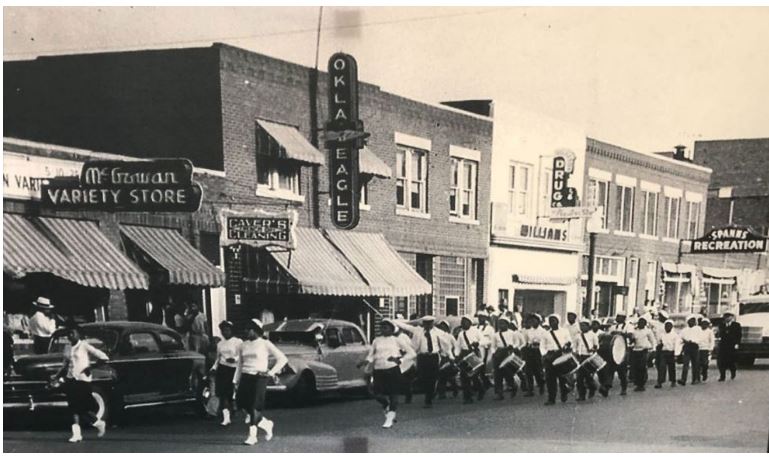
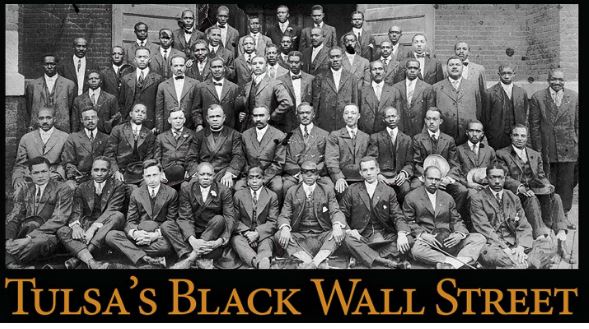
Across North America, debates about how history is taught—what is included, excluded, or reframed—have intensified in recent years. At first glance, these conflicts may appear to be political disagreements over curriculum or public memory. "Over 30 state legislatures across the country have introduced bills to limit the discussion of racial history in a wave prompted by the emergence of critical race theory as a subject of political fear-mongering" (ACLU.org website) Also book banning is wide spread. According to PEN America, there have been nearly 23,000 instances of book bans in U.S. public schools since 2021. The 2024-2025 school year saw 6,870 instances of book bans, affecting nearly 4,000 unique titles with instances of book bans in U.S. public schools since 2021. The 2024-2025 school year saw 6,870 instances of book bans, affecting nearly 4,000 unique titles. Bans are widespread, occurring in 45 states and 451 school districts, with Florida, Texas, and Tennessee leading in total bans. Hundreds of book by Black authors regarding race are now being banned and many teachers are threatened with losing their license if they teach these now "illegal topics."; such as African American contributions or the horror of the history of slavey because it may make "white" students uncomfortable This when placed in a broader historical context, reveal something deeper: a long-standing pattern of erasing, distorting, or minimizing Black history as part of a larger system that has shaped land ownership, wealth distribution, and cultural identity.
This is not a new phenomenon. It is a continuation.
1. Erasure in the Present: Curriculum, Culture, and Public Memory
Recent years have seen a surge in efforts to limit how race and Black history are discussed in schools and public institutions. Legislative restrictions, book bans, and curriculum revisions have reshaped what students are allowed to learn about slavery, segregation, and systemic racism. Between 2021 and 2023 alone, multiple states passed laws restricting how these topics are taught, often framing them as "divisive."
At the same time, hundreds of books—many by Black authors—have been removed from school libraries, narrowing access to perspectives that document lived experiences of racism and resistance.
This trend extends beyond classrooms. Public lands, monuments, and museums—spaces that function as a nation's collective memory—are also being reshaped. Policies that censor exhibits or strip context from historical narratives effectively disconnect Black achievement from the realities that made it necessary.
Taken together, these efforts do not simply "reinterpret" history. They reduce its complexity, often flattening the role of slavery and systemic inequality into vague or neutral narratives.
2. Historical Precedent: Violence, Silence, and the Removal of Evidence
To understand why this matters, we need to look at how Black history has been erased before—not just symbolically, but materially.
Massacres and Suppressed Memory
Events like the 1919 Elaine massacre in Arkansas, where hundreds of Black sharecroppers were killed after organizing for fair wages, were not widely taught or acknowledged for decades.
Similarly, the 1910 Slocum whole town massacre in Texas—comparable in scale to more well-known atrocities—remains largely absent from mainstream narratives.
These were not isolated incidents. The "Red Summer" of 1919 saw widespread racial violence across the United States, often targeting Black economic progress and community organization.
Erasure Through Burial and Neglect
Even earlier, during the Civil War era, tens of thousands of formerly enslaved people were confined in camps like the Devil's Punchbowl in Mississippi, where disease and neglect led to mass death. These sites often remain unmarked or poorly documented, leaving entire chapters of suffering outside public consciousness.
Destruction of Black Communities
cross the country, thriving Black communities were destroyed and then forgotten. In Pierce City, Missouri, racial violence in 1901 forced the entire Black population to flee, after which their land was seized and resold at low prices.
This pattern was not isolated—it repeated itself across multiple regions and decades.
In Erwin, Tennessee (1918), racial terror following the murder of a Black man led to the forced expulsion of Black residents from the town. In Celina, Tennessee (1878), sustained intimidation and violence drove Black residents out over time, achieving the same result without a single defining event.
In Corbin, Kentucky (1919), white mobs rounded up approximately 200 Black residents and forced them onto trains, effectively removing the Black population from the town in a coordinated act of expulsion. These events were not random outbreaks of violence; they were deliberate mechanisms of removal—designed to clear land, eliminate competition, and reassert economic and social control.
The pattern continued into the 20th century under more "legal" frameworks. In the Triangle District of Charleston, West Virginia, a predominantly Black neighborhood was demolished in the mid-20th century through urban renewal programs and interstate construction, displacing residents and dissolving established community networks. What earlier generations experienced through mob violence, later generations experienced through policy and infrastructure.
Taken together, these cases illustrate a consistent national pattern:
Black communities establish stability → they are destabilized through violence or policy → residents are displaced → land and economic value are transferred → and over time, the history of what occurred is minimized or erased.
This pattern—violence followed by silence—created a gap between what happened and what is remembered. The same structural logic that removed entire communities from land in the past continues to shape who remains vulnerable in the present.
But removal was never just about people—it was about what they owned, what they could pass down, and what they were prevented from becoming.
When Black communities were expelled, their land did not disappear.
It was transferred.
When their businesses were destroyed, their economic networks did not vanish.
They were replaced.
Over time, this produced a quiet but profound shift: wealth moved in one direction, while vulnerability accumulated in another.
What looks like social inequality in the present is often the direct afterlife of economic removal in the past.
To understand the full impact of this process, we have to move beyond events and examine what was taken—and what that loss created across generations.
This pattern—violence followed by silence—created a gap between what happened and what is remembered.
3. Land Seizure and Wealth Extraction: The Material Side of Erasure
Erasing history is not only about narrative—it has direct economic consequences.
Black land ownership in the United States has been systematically undermined through intimidation, legal manipulation, and outright theft. From sharecropping exploitation to forced sales and fraudulent contracts, Black families were often stripped of land that could have generated generational wealth.
When history is erased, the justification for restitution is also erased.
If the record of harm disappears—or is reframed as insignificant—then the demand for repair becomes easier to dismiss.
3b. Flooding Black Communities: Erasure Beneath Water
Beyond well-known massacres and expulsions, another quieter—but equally devastating—method of erasure took place across the United States: the deliberate flooding of Black communities to create lakes, reservoirs, and public infrastructure.
In multiple cases throughout the 20th century, predominantly Black towns and settlements were displaced through government-backed projects under the justification of "public benefit." Land was seized—often through eminent domain—and entire communities were submerged beneath newly constructed lakes. While framed as progress or development, these projects frequently targeted areas where Black landownership was concentrated and politically vulnerable.
One of the clearest examples of this pattern can be seen in Forsyth County, Georgia, in the area now known as Lake Lanier.
In 1912, Forsyth County experienced a violent racial expulsion in which Black residents were terrorized, attacked, and driven out of the region. Over a thousand Black residents fled under threat of violence, leaving behind land, homes, and economic foundations. What had been a multiracial county was transformed into a nearly all-white territory through force.
Decades later, in the 1950s, that same land became the site of a federally backed project: the construction of Lake Lanier. Through eminent domain, thousands of acres were acquired, and entire communities—including homes, churches, and cemeteries—were submerged beneath the reservoir.
The sequence is critical:
- 1912: Black residents are violently expelled → land is left behind
- 1950s: Land is acquired and flooded for infrastructure
- Present: The original Black presence is largely absent from public memory
What appears, on the surface, as a neutral infrastructure project is in fact layered over a prior act of racial cleansing. The lake does not just cover land—it covers history.
This case reveals something essential about the mechanics of erasure: dispossession does not always end with removal—it is often completed through transformation.
When land is taken through violence, its history can still be traced. When that same land is later submerged, its history becomes physically inaccessible.
Like other cases of destruction, this process follows a recognizable pattern:
- A Black community establishes land ownership and stability
- That community is destabilized or removed through violence
- The land is repurposed through policy or development
- The original history is obscured, minimized, or forgotten
What makes the Lake Lanier case particularly powerful is how it bridges two phases of the same system:
- Phase 1: Terror and expulsion (visible violence)
- Phase 2: Policy and infrastructure (sanitized displacement)
Different methods—same outcome.
This reinforces a broader truth: erasure does not always look like destruction—it can also look like disappearance.
When a community is burned, there is evidence. When a community is flooded, there is silence.
And in that silence, the same transfer occurs: land changes hands, wealth is redirected, and history is rewritten—this time, beneath the surface.
The same structural logic that removed entire communities from land in the past continues to shape who remains vulnerable in the present—sometimes not through fire or force, but through water, policy, and the quiet burial of memory.
4. Land, Memory, and the Making of Vulnerability — The George Floyd Lineage
To understand the modern consequences of historical erasure, it helps to move from the abstract to the personal—from systems to a single-family line. The story of George Floyd offers a clear and sobering example of how land theft, historical distortion, and economic dispossession intersect across generations.
Before George Floyd became a global symbol, his family carried a very different legacy—one that has largely been absent from public narratives. His great-grandfather, Hillary Thomas Stewart, owned approximately 500 acres of land in North Carolina and was among the most prominent farmers in the region. This was not marginal success; it was substantial economic stability, the kind that typically forms the backbone of generational wealth.
Yet within a single generation, that land was taken.
As documented through historical accounts and family testimony, Stewart was coerced into signing over his land through exploitative and confusing legal mechanisms—documents he could not fully read or contest due to systemic barriers to education and legal protection. The result was not just the loss of property, but the collapse of a family's economic trajectory. What followed was a descent into sharecropping, labor exploitation, and long-term financial instability.
This pattern mirrors countless other cases across the United States, where Black landownership was systematically undermined through violence, fraud, and legal manipulation. The key point is this: the loss of land was not incidental—it was foundational.
5. From Land Loss to Policing: A Structural Chain
When we examine George Floyd's life through this lens, the conversation shifts.
Too often, public discourse reduces his story to individual behavior—framing him through the narrow language of personal choices or criminality. This is where a deeper hypocrisy emerges. The same system that stripped families like his of wealth and opportunity later turns around and blames individuals for the conditions created by that loss.
This is not simply unfair—it is structurally misleading.
Economic dispossession produces vulnerability. Vulnerability increases exposure to unstable housing, underfunded schools, and limited employment opportunities. These conditions, in turn, correlate with higher levels of policing.
In other words, over-policing does not arise in a vacuum—it follows economic deprivation, which itself often originates in historical acts of dispossession.
The narrative is then inverted:
- Structural harm becomes invisible
- Individual behavior becomes the focus
- Victim-blaming replaces accountability
"Land becomes wealth. Wealth becomes stability. Stability shapes environment. Environment determines exposure—to opportunity or to surveillance or police excution."
6. A Necessary Question: Could This Have Been Different?
This leads to a provocative but necessary question:
Would George Floyd's death have happened if his family had retained their land and wealth?
The short answer is: "No, Not impossible—but significantly less likely."
Not because wealth guarantees safety in all circumstances—but because it dramatically alters exposure to risk.
Families with land and generational wealth tend to:
- Live in less over-policed environments
- Have greater access to legal resources and advocacy
- Experience different forms of social and institutional treatment
The trajectory of a life is shaped long before any single encounter with law enforcement. In this case, the loss of 500 acres of land was not just a historical event—it was the starting point of a chain reaction that extended across generations.
7. Erasure as a Protective Mechanism
What makes this pattern particularly difficult to confront is the role of historical erasure.
When stories like that of Hillary Thomas Stewart are left out of mainstream narratives, the public is left with an incomplete picture. George Floyd is remembered, but his lineage is not. His death is debated, but the economic history that shaped his life is rarely discussed.
This selective memory serves a function.
If the history of land theft is obscured, then the present appears disconnected from the past. If the past is disconnected, then inequality appears accidental. And if inequality appears accidental, then responsibility becomes diffuse—if not entirely avoidable.
In this way, erasure is not just about forgetting. It is about protecting existing power structures from scrutiny.
"And when this history is erased, the outcome is misunderstood. The killing is seen as isolated. The system that produced it disappears and escapes unaccountable."
8. Cultural Erasure Beyond the United States
This pattern is not confined to North America. It reflects a broader global dynamic.
Latin America: Whitening and Cultural Reframing
In many parts of Latin America, African heritage has been systematically minimized through national narratives that emphasize European or mixed identities while downplaying African contributions. This "whitening" process reshapes how nations understand themselves, often obscuring the role of slavery and African cultural influence.
Europe: Diminishing African Presence
In Europe, African history is frequently treated as external—something that happened "elsewhere"—despite the continent's deep involvement in the transatlantic slave trade and colonial systems. The result is a partial narrative that disconnects European identity from its global historical impact.
Shared Pattern
Across these regions, the mechanism is similar:
- Violence or exploitation occurs
- Records are minimized, distorted, or ignored
- Cultural narratives are reshaped
- Responsibility becomes harder to trace
9. Why This Matters: Identity, Power, and the Future
The erasure of Black history has consequences beyond academia. It shapes how individuals and societies understand identity, belonging, and possibility.
- Psychological Impact: When history is removed, people lose access to a full understanding of their ancestry and contributions.
- Political Impact: A distorted past influences policy decisions in the present, particularly around inequality and justice.
- Economic Impact: Without acknowledgment of past dispossession, claims for restitution or repair lack institutional support.
As one analysis puts it, the systematic removal of Black history can be understood as a form of "cultural assassination"—a deliberate distortion of the past to shape the present.
10. A Continuous System, Not Isolated Events
It is tempting to view these examples—curriculum debates, massacres, land theft, cultural whitening—as separate issues. But they are better understood as parts of a continuous system.
That system operates across time through:
- Violence (to remove or control populations)
- Policy (to formalize inequality)
- Narrative control (to justify or obscure what happened)
The recent efforts to reshape how Black history is taught are not a break from the past. They are an extension of it.
Conclusion: Memory as a Form of Justice
If history is power, then memory is a form of resistance.
Reclaiming and preserving Black history is not only about honoring the past—it is about restoring accuracy to the present and accountability to the future. Without a clear record of what happened, conversations about justice, equity, and restitution remain incomplete.
The question, then, is not simply whether history is being erased.
It is whether societies are willing to confront what that erasure protects—and what it prevents from being repaired.
US abbreviated summary
LAND SEIZURE + COMMUNITY ERASURE TABLE
🏴 Signature Cases (High Weight)
| Place | State | Date | What Happened (Plain Language) | Type | Wound Tag |
|---|---|---|---|---|---|
| Greenwood District ("Black Wall Street"), Tulsa | OK | May–June 1921 | Thriving Black economic center destroyed by white mob violence; thousands displaced; wealth wiped out | Massacre + economic destruction | Economic annihilation + archive erasure |
| Rosewood | FL | Jan 1923 | Black town burned; residents killed or forced to flee permanently | Massacre + expulsion | Terror purge + land theft |
| Elaine (Phillips County) | AR | 1919 | Black sharecroppers organizing for fair pay were massacred; hundreds killed | Massacre (labor suppression) | Economic control + terror enforcement |
🏴 Land Seizure + Forced Displacement
| Place | State | Date | What Happened | Type | Wound Tag |
|---|---|---|---|---|---|
| Pierce City | MO | Aug 18, 1901 | White mob violence forced entire Black population to flee; land and property seized and resold cheaply | Expulsion + land seizure | Terror purge + asset stripping |
| Forsyth County | GA | 1912 | Racial terror campaign expelled over 1,000 Black residents | Expulsion | Terror purge |
| Corbin | KY | Oct 1919 | Black residents rounded up and forced onto trains out of town | Forced expulsion | Terror purge |
| Erwin | TN | May 1918 | Black residents terrorized and driven out after racial violence | Expulsion | Terror purge |
🏴 Urban Renewal / "Legal" Land Seizure (20th Century)
| Place | State | Date | What Happened | Type | Wound Tag |
|---|---|---|---|---|---|
| Seneca Village (Central Park) | NY | 1850s (removed by 1857) | Black landowning community displaced via eminent domain for Central Park | Legal seizure | Infrastructure erasure |
| Triangle District (Charleston) | WV | 1960s–1970s | Black neighborhood demolished for highways and development | Urban renewal | Infrastructure erasure |
| Brooklyn (Charlotte) | NC | 1960s–70s | Thriving Black district destroyed for redevelopment | Urban renewal | Economic annihilation |
🏴 Massacre + Suppression (Often Erased from Public Memory)
| Place | State | Date | What Happened | Type | Wound Tag |
|---|---|---|---|---|---|
| Slocum | TX | July 29, 1910 | Predominantly Black town attacked; large-scale killings; rarely taught | Massacre | Terror purge |
| Red Summer (multiple cities) | U.S. | 1919 | Coordinated racial violence targeting Black communities and economic growth | Multi-site violence | National terror enforcement |
🏴 Pre–Civil War / Civil War Era Structural Containment
| Place | State | Date | What Happened | Type | Wound Tag |
|---|---|---|---|---|---|
| Devil's Punchbowl (Natchez) | MS | Civil War era | Freed Black people forced into camps; tens of thousands died from disease and neglect | Containment camp | Mass death + archival neglect |

Post script
Author Reflection
I want to be clear about something from lived experience:
"From my own experience, this pattern is not theoretical. I have known individuals who entered cycles of crime rooted in economic deprivation—deprivation that traces back to families whose land and generational wealth were taken. This is not rare. It is patterned."
This is not rare. It is common.
It has happened to many.
And the outcome often becomes what we call "crime"—but in reality, much of it is better understood as the consequence of poverty engineered over generations.
When we ignore that history, we misdiagnose the problem.
When we misdiagnose the problem, we respond with punishment instead of repair.
Closing Insight
The story of George Floyd is not only about policing.
It is about land.
It is about memory.
It is about what happens when a people are separated from both their history and their economic foundation.
To confront the present honestly, we must reconnect these threads.
Because without that connection, the narrative remains incomplete—and the conditions that produced it remain unchanged.
Citation
1. Historical Erasure & Curriculum Suppression
Core Works
- James W. Loewen, Lies My Teacher Told Me: Everything Your American History Textbook Got Wrong (1995; revised ed. 2018) → Foundational work on how U.S. history is systematically distorted and sanitized in education.
- American Civil Liberties Union — The Movement to Erase Black History (2023) → Documents legislative restrictions, book bans, and curriculum censorship.
- NAACP Legal Defense Fund — The War on Truth: How Attacks on Education Harm Black Students (2023)
- Kimberlé Crenshaw → Foundational scholarship on structural racism and how legal systems obscure it.
2. Land Theft & Black Wealth Dispossession
Foundational Scholarship
- Thomas W. Mitchell — "From Reconstruction to Deconstruction: Undermining Black Landownership" (Northwestern University Law Review, 2001)
- Melvin L. Oliver & Thomas M. Shapiro — Black Wealth / White Wealth (1995; updated editions) → Demonstrates how asset stripping—not just income inequality—drives racial gaps.
- Ta-Nehisi Coates — "The Case for Reparations" (The Atlantic, 2014) → Explains systemic theft through housing, contracts, and policy.
- Associated Press — Torn From the Land (2019 investigative series) → Documents hundreds of cases of Black land theft (including Missouri cases like Pierce City).
3. Racial Violence, Massacres & Economic Suppression
Key Academic Works
- Ida B. Wells — Southern Horrors (1892) → Early documentation of lynching as economic and political control.
- Equal Justice Initiative — Lynching in America: Confronting the Legacy of Racial Terror (2017) → Identifies lynching as a tool of social and economic control.
- David F. Krugler — 1919: The Year of Racial Violence (2015) → Context for Red Summer violence and Black resistance.
- Equal Justice Initiative — Report on Elaine Massacre (1919) → Confirms mass killings tied to labor organizing and economic suppression.
- Mary E. Mebane — Research on Slocum Massacre (1910) → Example of large-scale violence erased from mainstream history.
4. Structural Racism, Poverty, and Policing
Foundational Works
- Michelle Alexander — The New Jim Crow (2010) → Connects economic marginalization to mass incarceration and over-policing.
- William Julius Wilson — The Truly Disadvantaged (1987) → Explains how structural economic shifts create concentrated poverty.
- The Sentencing Project — Reports on racial disparities in policing and incarceration
- Patrick Sharkey — Stuck in Place (2013) → Shows multigenerational transmission of neighborhood disadvantage.
5. George Floyd, Lineage, and Generational Impact
Key Sources
- Robert Samuels & Toluse Olorunnipa — His Name Is George Floyd (2022) → Documents Floyd's ancestry, including the land ownership of his great-grandfather and its loss.
- USDA — Reports showing Black farmers lost ~90% of their land between 1910–1997
- National Academies of Sciences — Reports on intergenerational wealth inequality and structural disadvantage
6. Cultural Erasure & Identity Suppression (Global Context)
Key Works
- Cheikh Anta Diop — The Cultural Unity of Black Africa (1978) → Argues for continuity of African civilizations and critiques historical fragmentation.
- Frantz Fanon — Black Skin, White Masks (1952) → Explores psychological effects of cultural erasure.
- Aníbal Quijano — "Coloniality of Power" (2000) → Explains racial hierarchy and identity suppression in Latin America.
- Walter Rodney — How Europe Underdeveloped Africa (1972) → Connects economic exploitation with historical narrative control.
7. Public Memory, Monuments & Narrative Control
- Center for American Progress — Article on erasure of Black history from public lands and monuments
- Michel-Rolph Trouillot — Silencing the Past: Power and the Production of History (1995) → Definitive work on how power shapes