Dedicated to Baba Ifakunle
For people asking why use the Yoruba spiritual model, the answer is practical as well as ancestral: Yoruba gives the diaspora a documented African system of language, cosmology, ritual logic, ancestral practice, and spiritual technology that can be studied and applied.
The Yoruba are one of the major West African groups from which African Americans are descendants of. Of these groups, the Yoruba ancestral spiritual system is extremely well developed and well documented (as is its deity system). Also, the Yoruba were under British colonialism, meaning that much of their documented culture is done in English and their native tongue. This is particularly good for most African Americans who only speak English and do not speak the French or Spanish colonial tongue.
Similar to why Swahili was chosen as a major trade language, the Yoruba language is broad and very well developed. Also, the Yoruba are a large cosmopolitan group; first, this means that they integrated several smaller other groups into their culture. Examples of this integration can be seen in the modern Yoruba deities who have different ethnic and regional origins, like Ochosi, who is from the Fon people, while Shango is recent and from Nupe, while Osian is a Congo deity.
Also, major migrations from the east, particularly from Kemet and Nubia, led to infusions of ancient Kemetic culture and spirituality into the western African region in general and practically in the case of the western native Nok people, who integrated this influx that shaped the development of the later Yoruba spiritual structure. Effects of this sub-Saharan cultural conduit can be seen in the Akan as well as Igbo spiritual elements.
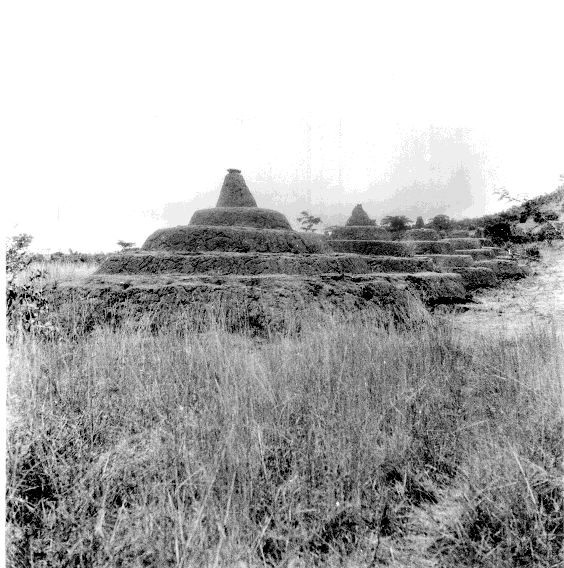
Another reason we in the diaspora choose the Yoruba model is that it is not simply a localized tradition, but an iconic expression of a much older and wider African civilizational system that extends across the Sahel and into the Nile Valley. Archaeological evidence of large earthen tumuli—often described as “mounds” but structurally functioning as proto-pyramids—has been found throughout West Africa, particularly in the Niger River basin, where these monumental burial and ritual structures formed part of a continuous architectural and spiritual tradition linking West Africa, Nubia, and ancient Kemet. These structures reflect the same underlying principles found in Yoruba practice: ancestral continuity, sacred relationship to the land, and the transformation of death into spiritual presence. When understood in this broader context, the Yoruba system stands as a living continuation of these ancient African knowledge systems—preserving, in accessible and functional form, the same cosmological logic that gave rise to pyramid-building cultures across the continent.
We view Yoruba culture as an iconic example of many common African cultural themes and spiritual philosophies and thus a very good starting point model for re-Africanization. Yoruba culture evolved to include rural, village, and city living, with bureaucracy and a lot of large, sophisticated concepts and topics that are transferable within any large complex society like the west.
This is opposed to some naturalist arguments which argue that one should seek the most rural, untouched by western civilization, and supposedly “authentically” African spiritual system. Which, unfortunately, were often smaller hunter-gatherer or nomad group whose cultural spiritual models do not translate very well to Western life.
Secondly, these groups usually do not have the regional cultural scope to connect to the mixed African diasporic ethic base composed of some 42 major different African ethnic groups.
Particularly within the context of the ancestral spiritual practice of the Yoruba, excluding Orisha divinity practice which vary amoung each other but are similar to Loa and Abosum practices, though that's a different discussion, the Yoruba ancestral cultural model is spiritually connected and ancestrally interconnected with other ancestral groups of West Africa.
Though West Africa has a large number of diverse cultural groups and ethnicities, intermarriage and trade between these groups have created a large amount of ancestral and genetic commonality, often much more than various ethnocentric groups are willing to admit to. As an ancestral spiritual practice, we also find that it works well with other major African cultural spiritual practices like Congo Mayombe and even older Khemetic systems of ancestral veneration. We believe this interoperability came from having a common integrated predecessor system. This all points back to Diop cultural unity of black Africa.
Also importantly, this ancestral link connects to a large proportion of Anglophone diasporic African descendants. Many Spanish and French-speaking slaves came from different regions of Africa, depending on the former colonial exploiter.
Finally, the Yoruba cultural and spiritual model, due primarily to slavery, has been widely exported and synchronized throughout the Americas and particularly within Afro-Caribbean mysticism in arts like Santeria and Candomble and, to a lesser degree in systems like Palo. Therefore, component elements of its parts and philosophy are often already practiced in elements of folk medicine and old family traditions.
These lay on top of old cultural practices, hailing from Aboriginal Africans in the Americas and through the bloodlines of West African groups that came across Atlantic journeys into the Americas, resulting in the cultural transfer of the African expressions, such as Aztec pyramids and black African groups such as the Olmecs.
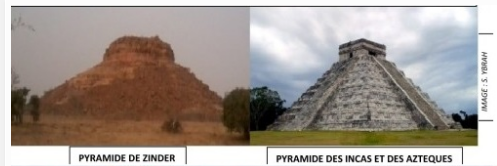
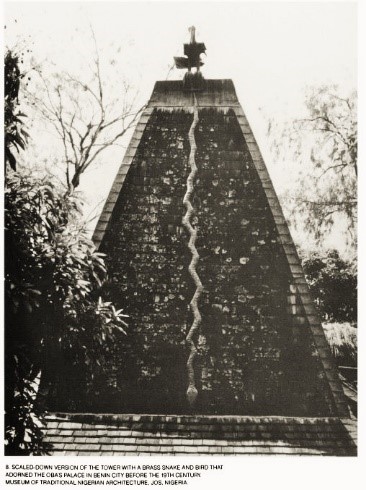
An archaeological case connecting these West African pyramids to ancient Nubia, Kush, and Kemet:
Read: Pyramids in West Africa & the Sahelian Tradition →Suggested Reading
- The Awujale of Ijebu Land has shown that the Ijebus are descended from ancient Nubia through evidence of language, body markings, scarification, and coronation ritual similarities.
- Yoruba: the Egyptian connection, by Olomu and Eyebira.
- Salim FARAJI, PH.D. The Origin of the Word Amen: Ancient Knowledge the Bible Has Never Told.
- Faraji — Earthen Pyramids of West Africa and Ancient Nubia (Journal of Ancient Egyptian Interconnection)
- The Igbo people by John Anechukwa Umeh.
- The lost Orisha, 203 pages – House of Providence; 1st edition (1996) by Conrad E Mauge.