
The Natural Insulin Management Protocol is a simple metabolic discipline practice for the first eating decision of the day.
The goal is not starvation. It is behavioral control of insulin timing.
This is not a crash diet. It is a natural insulin management protocol that uses timing, fasting, light resistance exercise, and protein sequencing to help the body handle food more intelligently.
Choose Your Version
- Practical coaching version
- Science and biochemistry version
The body wakes up after a natural overnight fast in a lower-insulin state. That state can support access to stored fuel, especially when the night has been protected long enough for the body to shift away from constant glucose processing.
The mistake many people make is eating too soon after waking, especially when the first food is sweet, refined, or carbohydrate-heavy. Even a "healthy" snack can create an insulin signal that ends the fasting state before the body has fully benefited from the overnight low-insulin window.
This protocol uses four levers:
1. Finish the last meal earlier.
2. Fast for a minimum of 14 hours.
3. Use 8 to 12 minutes of light resistance before the first meal.
4. Break the fast with 30 to 35 grams of protein before significant carbohydrates.
Why the First Morning Insulin Signal Matters
Insulin is not the enemy. Insulin is necessary. The issue is timing, sequence, and whether the first metabolic signal of the day interrupts the repair window too early.
After an overnight fast, the body has had time away from constant food intake. During that window, low insulin can support fat mobilization. A strong early insulin signal, especially from sugar or refined carbohydrates, can suppress hormone-sensitive lipase and interrupt the fat-mobilization window.
In plain language: if the body has spent the night moving toward repair and stored-fuel access, do not shut that process down accidentally with the wrong first signal.
1. Finish the Last Meal Earlier
The last meal of the night sets up the next morning.
Eating late can keep insulin elevated deeper into the night and make the body spend more of the sleep window managing digestion. A better target is to finish dinner before 7 PM when possible.
This does not necessarily mean eating less. It means moving the same food earlier, when the body is better prepared to process it.
If 7 PM is not realistic, use the principle: create as much distance as reasonable between the last meal and sleep, then protect the morning fasting window.
The dinner itself should not be weak. When dinner includes meat, fish, eggs, or Greek yogurt, a useful target is about 40 to 50 grams of protein if that fits the person's body, medical context, training demand, and digestion.
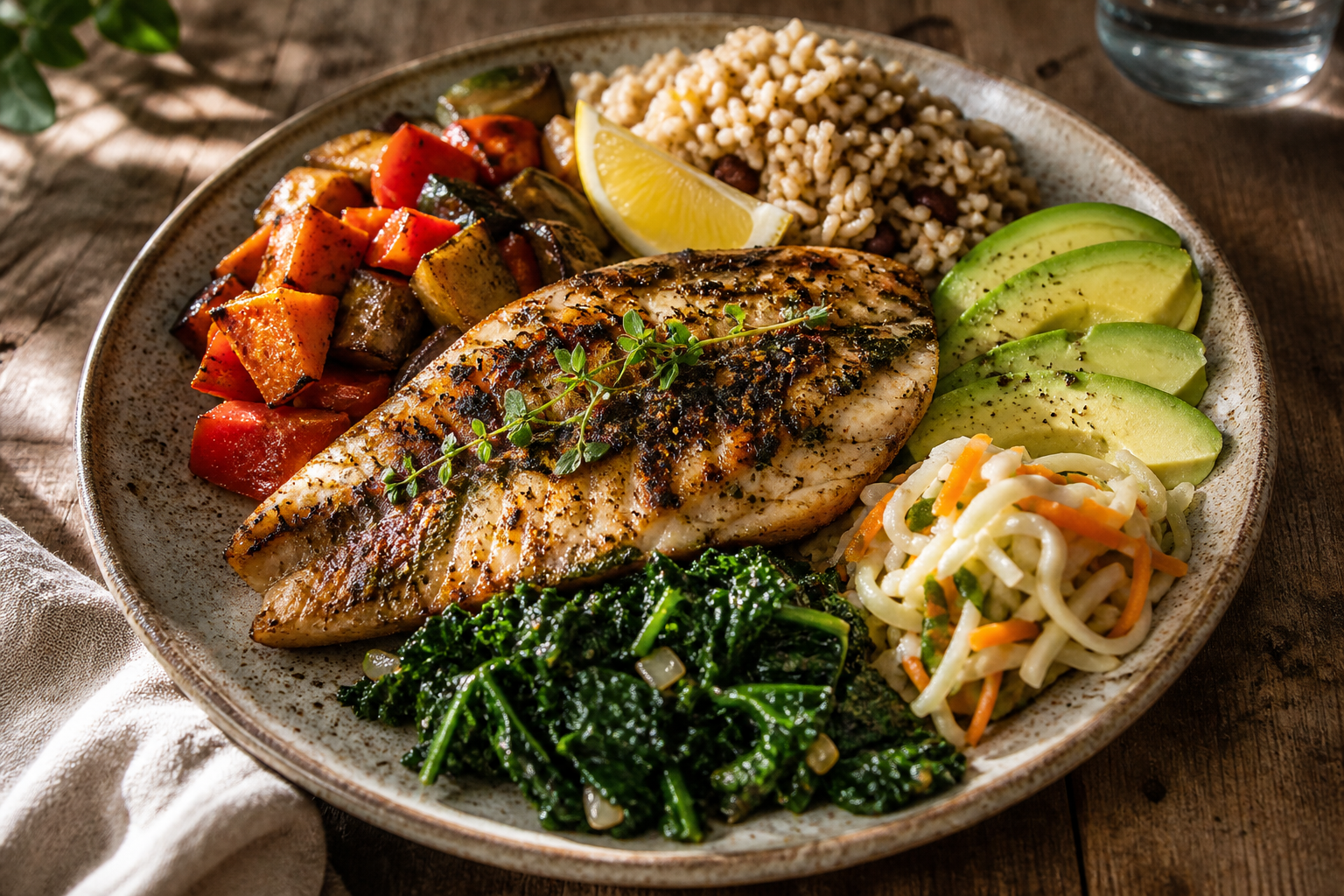
A good plate is 40 grams of protein or more when appropriate, vegetables, a controlled ancestral carbohydrate if needed, and a fat source. For example: 6 ounces of meat or fish with greens, peppers, onions, avocado or olive oil, and a small breadfruit, bean, or starch portion if it fits the day.
The goal is not to overload the night. The goal is to enter the fasting window nourished, mineral-aware, and steady enough that the next morning does not begin with desperation.
2. Fast for a Minimum of 14 Hours
A 14-hour fast gives the body a cleaner overnight low-insulin window.
For example:
- If dinner ends at 7 PM, the first meal comes no earlier than 9 AM.
- If dinner ends at 8 PM, the first meal comes no earlier than 10 AM.
This is the foundation of the protocol: do not collapse the morning fat-burning window too early.
This belongs beside the Wednesday Fasting Practice because both practices teach timing, restraint, and digestive rhythm. The Natural Insulin Management Protocol is the everyday morning version. Wednesday fasting is the weekly discipline anchor.
3. Use Light Resistance Before Breaking the Fast
Before the first meal, perform 8 to 12 minutes of light resistance exercise.
This is not a full workout. The goal is to prime the muscles before food arrives.
Good options include:
- Bodyweight squats
- Wall push-ups
- Resistance band rows
- Sink push-outs
- Light kettlebell or dumbbell movements
- Slow knee raises or controlled core work
The principle is simple: move the muscles first, then feed them.
Muscle is a major glucose sink. When muscle has been activated, the first meal has a better place to go. This supports the same logic as the Visceral Fat Intervention Map: before reaching for complicated tools, begin with movement, sleep protection, protein, timing, and stress regulation.
4. Break the Fast With Protein First
The first meal should begin with protein, ideally around 30 to 35 grams.
This is especially important for adults over 50, because preserving muscle mass becomes central to metabolism, strength, blood sugar control, and long-term vitality.
Better first-meal options include eggs, fish, chicken, Greek yogurt, protein powder, lean meat, tofu, tempeh, or another clean protein source that fits the person's body and food culture.
Carbohydrates can come after the protein, but they should not lead the meal.
Avoid breaking the fast with fruit juice, sweet smoothies, cereal, bread, pastries, or oatmeal alone. Those foods may be acceptable later or paired intelligently, but they are not ideal as the first metabolic signal of the day.
The Simple Morning Sequence
1. Finish dinner earlier the night before.
2. Wake and do not rush into sugar, snacks, or the phone.
3. Complete the 14-hour fasting minimum when medically appropriate.
4. Do 8 to 12 minutes of light resistance.
5. Drink water.
6. Break the fast with 30 to 35 grams of protein.
7. Add carbohydrates after protein, not before.
How This Fits the Health Sovereignty Sequence
The Natural Insulin Management Protocol does not replace the Morning Break-Fast Protocol. It adds the insulin-timing and muscle-activation layer.
The morning break-fast protocol asks what the stomach should receive first: water, timing, fiber, protein, and gut rhythm.
The Natural Insulin Management Protocol asks what metabolic signal should come first: finish dinner earlier, protect the 14-hour fast, activate muscle, then lead with protein before carbohydrates.
Together, they create a stronger morning return from the night fast.
Health Disclaimer
This page is educational coaching content only. It is not medical advice, diagnosis, treatment, nutrition therapy, or a fasting prescription.
People with diabetes, hypoglycemia, eating disorder history, pregnancy concerns, kidney disease, liver disease, reflux, ulcers, medication interactions, frailty, or any condition requiring medical supervision should speak with a qualified health professional before changing fasting windows, exercise timing, carbohydrate intake, protein intake, or meal timing.
Stop any practice that causes dizziness, faintness, chest pain, severe weakness, unsafe blood sugar symptoms, severe stomach pain, vomiting, panic symptoms, or anything that feels medically unsafe.
Bottom Line
This protocol works because it protects the body's most valuable morning metabolic window: the low-insulin state created overnight.
Eat earlier. Fast at least 14 hours when safe. Move before eating. Protein first.