
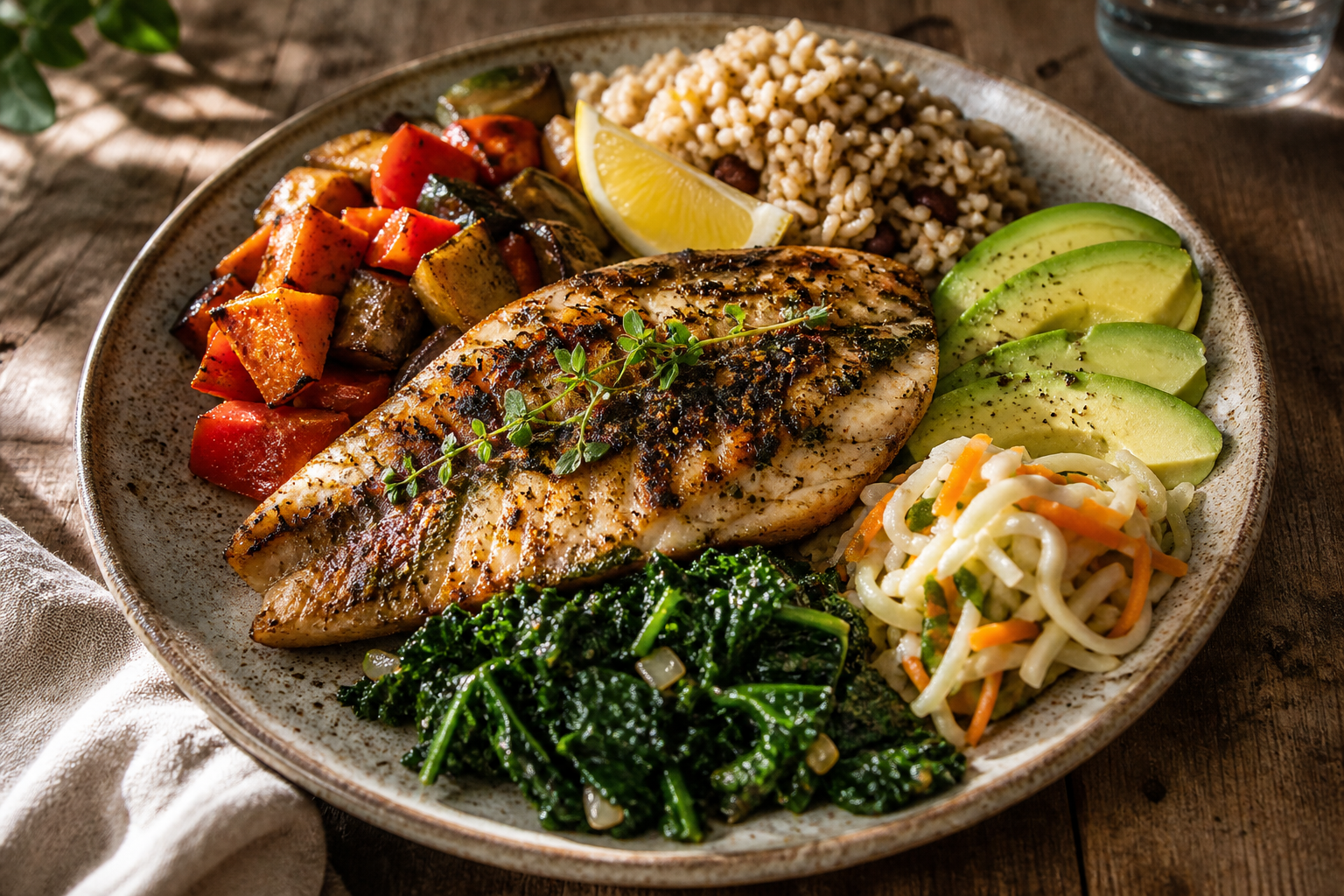
This is the science-forward version of the Natural Insulin Management Protocol. It is the optional pathway for readers who do not only want the instruction, but want the mechanism.
Choose Your Version
- Practical coaching version
- Science and biochemistry version
The Morning Biochemistry of Fat Mobilization, Glucose Control, and Metabolic Timing
Most diet advice begins with food selection: what to eat, what not to eat, which foods are clean, which foods are bad, and how many calories should be consumed. That matters, but it is not the whole system. A more precise way to understand metabolism is through insulin timing.
The first meal of the day is not just breakfast. It is the first major hormonal signal that tells the body whether to continue mobilizing stored fuel or shift back into fed-state processing.
This protocol is built around a simple principle:
Protect the low-insulin morning window long enough for fat mobilization, cellular repair, and glucose-handling efficiency to matter.
The morning protocol has four practical levers:
1. Fast at least 14 hours from the previous night's last meal.
2. Finish the last meal ideally before 7 PM.
3. Perform 8 to 12 minutes of light resistance exercise before the first meal.
4. Begin the first meal with about 30 to 35 grams of protein before major carbohydrates.
The practical page teaches the behavior. This page explains why the behavior matters.
1. The Morning Low-Insulin Window
After the last meal of the night, insulin gradually falls. As insulin falls, the body shifts from the fed state into the post-absorptive and fasting states.
In the fed state, insulin is dominant. Glucose is being processed, glycogen is being restored, and fat storage pathways are more active. In the fasting state, insulin is lower, glucagon rises, liver glycogen is drawn down, and fatty acids become more available as fuel.
This is why the morning matters. By the time a person wakes, the body has spent the night building a low-insulin environment. That state is not accidental. It is the product of hours without caloric intake.
The key mistake is collapsing that state too early.
A handful of nuts, fruit, juice, sweetened coffee, oat milk, a protein bar, or a healthy smoothie can still create an insulin signal. The issue is not moral purity around food. The issue is that the first caloric signal of the day tells the body: the fast is over; shift back toward fed-state metabolism.
2. Insulin and Hormone-Sensitive Lipase
The core enzyme in this discussion is hormone-sensitive lipase, commonly abbreviated as HSL.
HSL helps break stored triglycerides inside fat cells into free fatty acids and glycerol. Those fatty acids can then leave the fat cell and enter circulation, where they can be used by tissues such as muscle, liver, and heart.
When insulin is low, HSL activity is less suppressed. When insulin rises, HSL is inhibited. This is one of the central biochemical reasons insulin is considered an anti-lipolytic hormone: it does not merely help move glucose into cells; it also signals fat cells to reduce fat release.
That is the punch of the morning protocol.
The first insulin signal of the day does not merely add calories. It can suppress the enzyme system that was helping release stored fat during the overnight fast.
So the question becomes: how long can we protect the low-insulin window before we intentionally break the fast?
This is why the protocol uses a 14-hour minimum rather than vague advice like "skip breakfast sometimes."
3. Why Visceral Fat Is Central
Not all fat behaves the same way. Subcutaneous fat sits under the skin. Visceral fat surrounds internal organs such as the liver, intestines, kidneys, and pancreas. Visceral fat is more closely associated with insulin resistance, cardiovascular risk, fatty liver risk, and inflammatory metabolic dysfunction.
Visceral fat is especially relevant because deep abdominal adipose tissue is highly metabolically active and sensitive to hormonal signals. When insulin is elevated, fat release is reduced. When insulin remains low long enough, the body has a better opportunity to mobilize fatty acids.
That does not mean a 14-hour fast magically melts belly fat in one morning. That would be marketing nonsense.
The more accurate statement is:
A consistent low-insulin morning window creates a more favorable hormonal environment for fat mobilization, especially when combined with earlier meal timing, resistance exercise, and protein-first feeding.
This is a protocol of metabolic conditions, not magic.
4. Circadian Metabolism: Why Dinner Timing Matters
The body is not metabolically identical at every hour of the day. Insulin sensitivity, pancreatic beta-cell function, liver glucose handling, digestive readiness, and hormonal rhythms all follow circadian patterns.
This is why the last meal matters as much as the first meal.
Eating late at night can keep insulin elevated deeper into the sleeping period. That delays the shift into a low-insulin fasting state. If dinner is at 10 PM and breakfast is at 7 AM, the person may technically have gone nine hours without eating, but hormonally the body may not have spent enough time in a useful low-insulin state.
The point is not only eating less. It is aligning the feeding window with the body's circadian metabolic rhythm.
The final meal also needs enough structure. A dinner with 40 to 50 grams of protein, vegetables, a controlled ancestral carbohydrate if needed, and a fat source can create a steadier entry into the fast than a low-protein snack meal or a carbohydrate-heavy late meal. The exact foods depend on tolerance, allergies, kidney status, medication, digestion, and cultural food access.
So the principle of finishing dinner before 7 PM is not arbitrary. It gives the body enough runway to lower insulin, shift fuel use, protect sleep-related hormonal repair, and wake up in a cleaner fasting state.
5. The 14-Hour Minimum: What It Does and Does Not Mean
A 14-hour fast is a practical minimum. It is not a universal guarantee of deep ketosis.
This distinction matters.
Fourteen hours protects and extends the low-insulin window. It may begin moving the body toward greater fat oxidation, but deeper ketosis varies by person.
The goal of this protocol is not to chase ketone numbers. The goal is to create a repeatable metabolic pattern:
- Lower insulin overnight
- Extend the low-insulin morning window
- Mobilize fatty acids more effectively
- Prime muscle before feeding
- Break the fast without a harsh glucose and insulin surge
That is the system.
6. Resistance Before Feeding: GLUT4 and Muscle Glucose Uptake
The resistance exercise component is not included for calorie burning.
Eight to twelve minutes is not enough to create a major calorie deficit. That is not the point. The point is glucose disposal preparation.
Skeletal muscle is one of the body's largest glucose sinks. When muscle contracts, it increases glucose uptake. One major mechanism involves GLUT4, a glucose transporter that moves to the muscle cell surface and helps pull glucose from the bloodstream into the cell.
Importantly, muscle contraction can stimulate GLUT4 movement through pathways that are not fully dependent on insulin. Exercise and contraction-related pathways, including AMPK-related signaling, help improve glucose uptake and insulin action.
This is why resistance before the first meal is so elegant.
Before food arrives, the muscles are activated. When food arrives, glucose has a better place to go.
In plain language:
Move the muscles first. Then feed the muscles.
This can reduce the burden on insulin because glucose disposal is improved at the tissue level. The meal still raises insulin. That is normal. But the body may need a smaller or cleaner insulin response when muscle tissue has already been primed.
Good options include bodyweight squats, wall push-ups, resistance band rows, sink push-outs, slow lunges, light kettlebell deadlifts, controlled knee raises, pike shoulder presses, and chair squats.
This is not a workout. It is a metabolic primer.
7. Protein First: Glucagon, Muscle Preservation, and Glycemic Control
Breaking a fast with carbohydrates alone can create a sharp glucose and insulin rise, especially when the carbohydrates are rapidly digesting: fruit juice, sweet smoothies, cereal, bread, pastries, sweetened oatmeal, or refined starches.
Protein changes the first-meal chemistry.
Protein stimulates insulin, but it also stimulates glucagon, which helps balance the metabolic response. Protein also provides amino acids for muscle protein synthesis, which becomes increasingly important with age.
This is especially relevant for adults over 40 and 50 because muscle is not only a movement organ. It is a glucose-disposal organ, a metabolic reserve, and a major factor in long-term insulin sensitivity.
Food-order research also supports the idea that eating protein and vegetables before carbohydrates can lower post-meal glucose and insulin responses compared with eating carbohydrates first, especially in people with impaired glucose control.
So the protein-first instruction is not just bodybuilding advice. It is insulin management.
The target of 30 to 35 grams of protein is practical because many older adults underdose protein at the first meal. A weak protein meal does not deliver the same muscle-preserving signal. The goal is to break the fast with enough protein to support lean tissue before introducing significant carbohydrates.
The rule is simple:
Protein first. Carbs second.
8. mTOR, Autophagy, and the Feeding Switch
Fasting is not only about fat. It also affects cellular maintenance.
One major pathway involved is mTOR, a nutrient-sensing pathway that responds strongly to amino acids, insulin, glucose availability, and the fed state. When nutrients are abundant, mTOR activity rises and the body shifts toward growth, synthesis, and storage. When nutrients are absent long enough, mTOR activity quiets and cellular cleanup processes such as autophagy become more active.
Autophagy is the process by which cells recycle damaged proteins, worn cellular parts, and internal debris. This should not be overstated. Autophagy is complex, tissue-specific, and hard to measure directly in humans.
The practical point remains valid:
Feeding turns on fed-state growth and storage signals. Fasting allows more repair-oriented and fuel-mobilizing signals to operate.
The protocol does not require extreme fasting. It simply asks for a clean morning window before the first meal.
9. Growth Hormone and the Fasted Morning
Growth hormone rises during sleep and fasting. It supports fat mobilization and helps preserve lean tissue during periods without food. Insulin and growth hormone have a complex relationship, but elevated insulin is not the same hormonal environment as fasting-supported fat mobilization.
This matters because the morning fasted state can be metabolically valuable. If the first meal is carbohydrate-heavy and fast-digesting, insulin rises sharply and the body exits that state quickly.
If the first meal begins with protein after a brief resistance primer, the transition from fasting to feeding is more controlled.
The goal is not to stay fasted forever. The goal is to exit the fast intelligently.
10. The CORE Protocol: Science Version
C - Compress the morning to a 14-hour fast.
Fast at least 14 hours from the previous night's final caloric intake. During this window, insulin remains lower, glucagon is more active, fatty-acid release is better supported, and the body spends more time away from constant glucose processing.
O - Offset the last meal before 7 PM.
The earlier dinner is the setup. The morning protocol succeeds or fails the night before. Late eating delays the insulin drop, shortens the true low-insulin window, and may reduce the quality of the fasting state on waking.
R - Reset with resistance before eating.
In the final 30 minutes before the first meal, perform 8 to 12 minutes of light resistance. The goal is not fatigue. The goal is to activate skeletal muscle before glucose arrives.
E - Eat protein first.
Break the fast with 30 to 35 grams of protein before significant carbohydrates. Protein supports muscle protein synthesis, steadier appetite, and a cleaner transition out of the fasted state.
This is not anti-carbohydrate. It is carbohydrate sequencing.
11. The Biochemical Flow
Here is the simplified biochemical chain:
- Late fed state: insulin is elevated, and glucose processing and storage dominate.
- Overnight fast: insulin falls, glucagon rises, and liver glycogen supports blood glucose.
- Extended fasting window: HSL is less suppressed, and fatty acids become more available.
- Morning low-insulin state: fat oxidation increases, and the body is positioned to use stored fuel.
- Resistance before meal: GLUT4 translocation increases, and muscle becomes better prepared for glucose uptake.
- Protein-first meal: the glucose rise is moderated, and feeding begins without a harsh carb-first spike.
- Carbs after protein: glucose handling improves because the body is better prepared to receive carbohydrates.
12. Why Consistency Matters
The body entrains to repeated signals. Light, sleep timing, food timing, training timing, and stress rhythms all influence the biological clock.
A person who follows the protocol Monday through Friday but radically changes the eating window every weekend creates metabolic confusion. The body does not receive a stable rhythm long enough to adapt.
The target is not perfection.
A practical standard is to follow the protocol at least five days per week and keep weekend timing within roughly one hour when possible.
Professional-Level Summary
This protocol works through five overlapping mechanisms:
- Lower morning insulin reduces suppression of fat mobilization.
- Higher fasting glucagon supports liver glucose regulation and fasting metabolism.
- HSL activity allows stored triglycerides to be broken into usable fatty acids.
- GLUT4 activation through resistance exercise improves glucose uptake into muscle without relying only on insulin.
- Protein-first feeding supports muscle, moderates glycemic response, and prevents a harsh carbohydrate-first transition.
The protocol is not a crash diet. It is a metabolic timing system.
It asks:
- When does insulin rise?
- How long does insulin stay low?
- Is muscle ready to receive glucose?
- Is the first meal structured to protect glucose control?
- Is the feeding window aligned with circadian biology?
That is why this belongs under the label Natural Insulin Management.
Not because it is a cure. Not because it replaces medical care. Not because it guarantees fat loss.
But because it uses behavior - meal timing, fasting duration, resistance exercise, and food order - to influence insulin demand, glucose handling, fat mobilization, and metabolic rhythm.
Conclusion: Eat by Design, Not by Habit
Most people do not choose their first insulin signal of the day consciously. They inherit it from habit, convenience, advertising, or the old belief that breakfast must happen immediately after waking.
This protocol changes that.
The morning becomes a designed metabolic sequence:
1. Protect the fast.
2. Preserve the low-insulin window.
3. Activate muscle before feeding.
4. Break the fast with protein.
5. Introduce carbohydrates after the body is prepared to handle them.
The result is not starvation. It is metabolic discipline.
The body already builds a powerful low-insulin state overnight. The question is whether the morning routine protects that state long enough to use it, or shuts it down by accident.
Natural insulin management begins when breakfast stops being automatic and becomes strategic.
Health Disclaimer
This page is educational coaching content only. It is not medical advice, diagnosis, treatment, nutrition therapy, diabetes management, or a fasting prescription.
People with diabetes, hypoglycemia, eating disorder history, pregnancy concerns, kidney disease, liver disease, reflux, ulcers, medication interactions, frailty, or any condition requiring medical supervision should speak with a qualified health professional before changing fasting windows, exercise timing, carbohydrate intake, protein intake, or meal timing.