
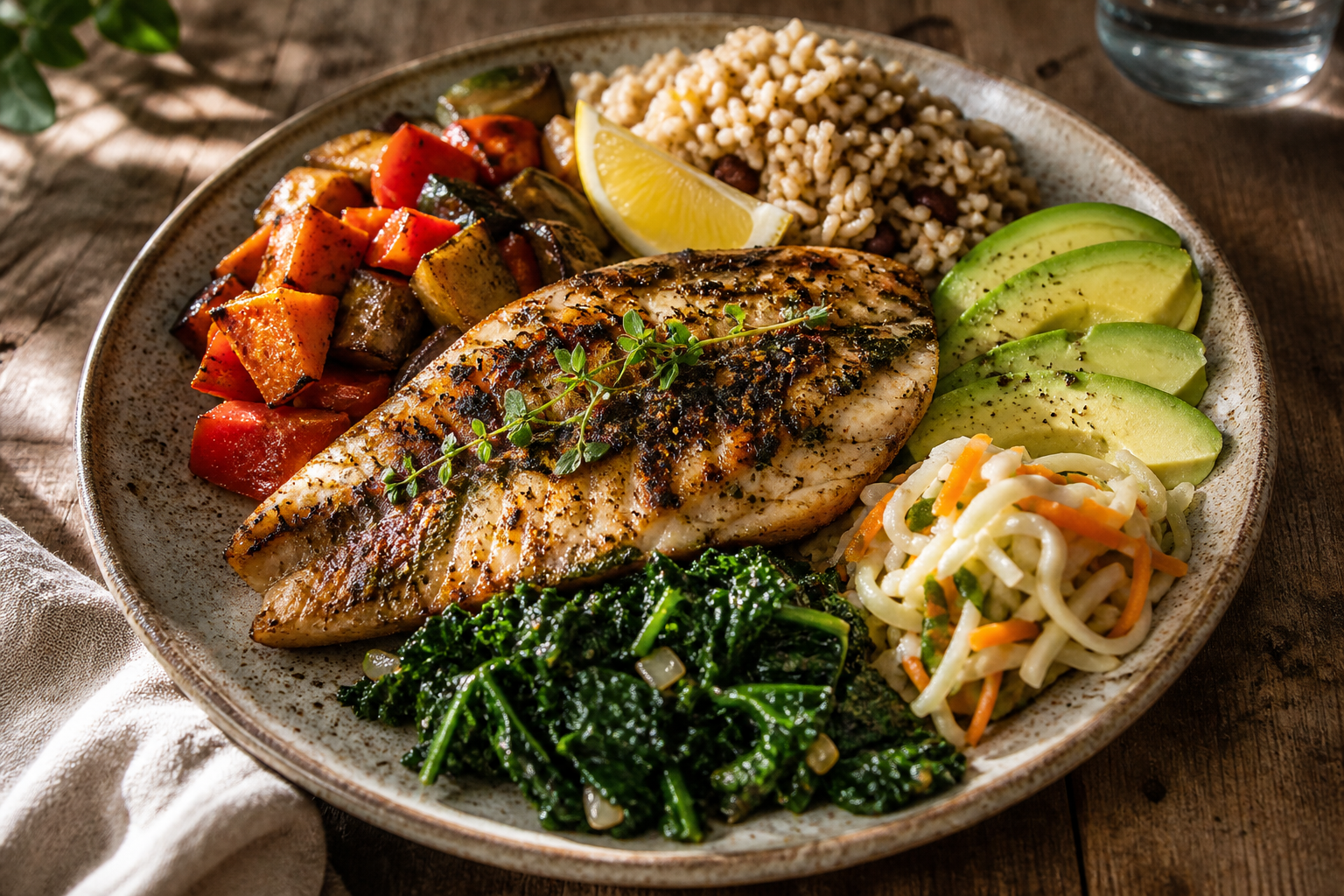
The First Bite Fast-Breaking Protocol is the practical food-order page for what happens after a long fasting window.
The fast is the setup. The first meal is the signal.
After a 16-hour fast, the body is in a more sensitive metabolic state. Insulin is low, stored fuel is being mobilized, and the body is prepared to receive nutrients. That sensitivity can work for you or against you. Break the fast with protein, healthy fat, and low-starch vegetables, and the transition back into eating can stay calm. Break it with juice, bread, cereal, sweetened yogurt, granola, or fast carbohydrates, and the day can begin with a stronger glucose-and-insulin swing.
Choose Your Version
- Procedural version
- Science and mechanism version
The Core Rule
After a long fast, begin with a protein-and-fat dominant meal.
Do not make sugar, juice, bread, cereal, oats, sweetened yogurt, granola, or fast-digesting carbohydrates the first signal.
This does not mean carbohydrates are forbidden forever. It means timing matters. A starch or fruit that may be reasonable later in the day can send a different hormonal message when it is the first bite after a long fast.
The Practical First Meal
Build the break-fast meal around three parts:
1. Complete protein: aim for roughly 30 to 40 grams when appropriate for the person.
2. Healthy fat: use eggs, olive oil, avocado, nuts, fatty fish, or similar whole-food fat sources.
3. Optional non-starchy vegetables: spinach, arugula, cucumber, zucchini, broccoli, asparagus, or similar low-starch foods.
The goal is not to turn the first meal into a feast. The goal is a controlled return to eating.
Foods That Usually Belong Later
For the first meal after the fast, avoid bread, rice, pasta, juice, sweetened yogurt, candy-like protein bars, cereal, starchy vegetables, and added sugar.
These foods can be judged in context later. They simply do not belong as the first signal when the body is coming out of a low-insulin fasting window.
The Muscle-First Breakfast Bowl
A simple model:
- 3 whole eggs.
- 2 ounces of smoked salmon or a small can of sardines.
- Half an avocado.
- 1 cup baby spinach.
- Cucumber slices.
- 1 tablespoon extra virgin olive oil.
- Sea salt, black pepper, and optional lemon.
Cook the eggs slowly. Plate the greens, cucumber, avocado, and fish. Add the eggs when they are softly set. Eat slowly.
This kind of meal provides protein, healthy fat, minerals, fiber, and a low net-carbohydrate first signal. It supports satiety without turning the fasted state into a glucose surge.
Eat the Meal Slowly
The first bite rule is also about pace.
Eat the meal over at least 15 minutes. Put the fork down between bites. Chew thoroughly. After a fast, hunger can make food feel more urgent, but fullness hormones need time to register.
Slow eating gives the gut, brain, and nervous system a cleaner message.
Coffee, Tea, Water, and Vinegar
Black coffee, plain water, sparkling water, unsweetened tea, and plain electrolytes without calories or sugar usually fit the fasting window for many people.
Green tea may add EGCG. Black coffee may preserve the fasting rhythm when tolerated. Apple cider vinegar before the meal is more nuanced, but in small typical amounts it is often used as a pre-meal support for glucose control.
Cream, sugar, butter coffee, coconut oil, sweetened electrolytes, or flavored drinks begin the eating window.
First Two Weeks
People used to carbohydrate-heavy breakfasts may feel different for the first few days. The body may be accustomed to quick glucose.
By days three to seven, many people notice steadier energy, fewer cravings, and a calmer appetite after the first meal. By the second week, the fasting window may feel easier because the first meal is no longer training the day toward urgency and snacking.
Three Common Mistakes
Mistake 1: Overcompensating with a massive meal. Keep the first meal moderate enough to digest well.
Mistake 2: Adding carbohydrates too soon. Starting with protein and then adding juice, toast, or fruit ten minutes later still weakens the protocol.
Mistake 3: Eating immediately after waking. Waiting 60 to 90 minutes after waking may create a calmer hormonal environment for the first meal, especially when morning cortisol and glucose are already elevated.
How This Fits the Health Sovereignty Sequence
This protocol follows the Wednesday Fasting Practice, the Morning Break-Fast Protocol, and the Natural Insulin Management Protocol.
The larger logic is simple: protect the evening, sleep well, fast when appropriate, return to food with order, and make the first bite a disciplined metabolic signal.
Health Disclaimer
This page is educational coaching content only. It is not medical advice, diagnosis, treatment, nutrition therapy, fasting prescription, or disease-management guidance.
People with diabetes, hypoglycemia, pregnancy concerns, kidney disease, liver disease, eating disorder history, medication interactions, cardiovascular disease, digestive disorders, or any condition requiring medical supervision should speak with a qualified health professional before changing fasting, meal timing, carbohydrate intake, protein intake, caffeine, vinegar use, or exercise.