
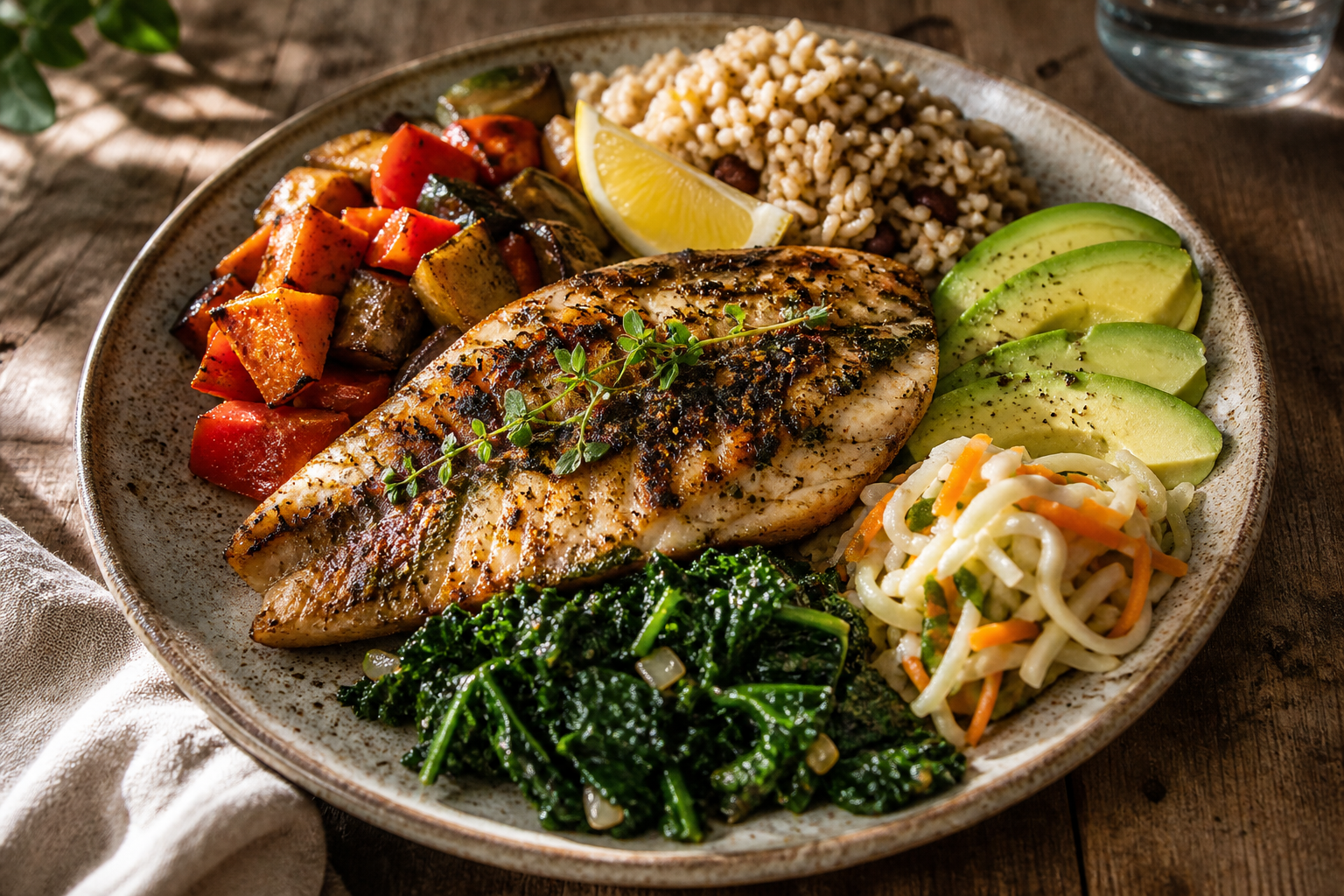
This is the science-forward version of the First Bite Fast-Breaking Protocol. It explains why the first meal after a 16-hour fast should usually begin with protein, healthy fat, and low-starch foods before fast-digesting carbohydrates.
Choose Your Version
- Procedural version
- Science and mechanism version
The Fast Is a Hormonal Setup
After roughly 10 to 12 hours without food, the liver begins running down stored glycogen. As that reserve drops, the body leans more heavily on stored fuel.
Insulin falls. When insulin is low, hormone-sensitive lipase becomes more active, allowing stored body fat to be released as free fatty acids. Those fatty acids can travel to the liver and muscles to be burned for energy.
Later in the fasting window, cellular repair processes such as autophagy become more relevant. Growth hormone can rise during fasting, helping the body preserve lean tissue while stored fuel is mobilized.
By hour 16, the body is usually more sensitive to incoming nutrients. That sensitivity is useful, but it also makes the first meal important.
Why Fast Carbohydrates Can Backfire First
In the fasted state, muscle cells and fat cells are highly responsive to glucose. Their receptors are ready.
If the fast is broken with juice, cereal, toast, sweetened yogurt, granola, bananas, or a large bowl of oats, glucose can arrive quickly. Even ordinary breakfast foods can create a stronger insulin response when they are the first food after a long fast.
Insulin helps move glucose into cells, but it also suppresses fat release. That means a high-insulin first meal can shut down the fat-mobilizing state that the fast helped create.
The issue is not that every carbohydrate is bad. The issue is timing and sequence.
Why Protein and Fat Work Better First
Protein raises insulin modestly, but it does so in a different context than refined carbohydrate or sugar. That modest insulin signal helps move amino acids toward muscle repair and rebuilding.
Protein also stimulates glucagon, the counter-hormone to insulin. Glucagon helps the body maintain controlled glucose release from the liver. This is one reason a protein-and-fat first meal often produces steadier energy than a sugar-first breakfast.
Fat from whole foods such as eggs, avocado, olive oil, nuts, and fatty fish produces little to no direct insulin response. It slows gastric emptying, supports satiety, and makes the transition out of fasting less abrupt.
Leucine, Muscle Protein Synthesis, and the First Meal
The first meal after a fast is also a rebuilding opportunity.
Leucine is one of the key amino acid triggers for muscle protein synthesis. A first meal with enough complete protein can help move the body from fasting and mobilization into repair without leading with glucose.
For many adults, 30 to 40 grams of complete protein is a practical target, though individual needs vary by body size, age, training, medical history, and professional guidance.
Ghrelin, Satiety, and the Rest of the Day
Protein tends to suppress ghrelin, the hunger hormone, more effectively and for longer than a high-carbohydrate first meal.
This matters because the first meal shapes appetite rhythm. A high-sugar or high-starch first meal can lead to hunger, cravings, and snacking sooner. A protein-and-fat first meal often creates a calmer appetite curve.
Why Food Order Is Metabolic Communication
Food is not only calories. Food is information.
Insulin says store. Glucagon says release. Growth hormone says repair and preserve. Cortisol says mobilize. The meaning of a meal depends on the hormonal context in which it arrives.
After a 16-hour fast, that context is unusually sensitive. Protein, fat, and low-starch vegetables communicate one kind of transition. Juice, cereal, bread, and sugar communicate another.
What About Coffee, Tea, Electrolytes, and Apple Cider Vinegar?
Black coffee and unsweetened tea generally do not create the same fed-state signal as food. Green tea contributes EGCG, a catechin associated with fat oxidation and autophagy-supportive pathways. Coffee contains chlorogenic acid and can fit beside the fasting window when tolerated.
Plain electrolytes without sugar or calories can be useful because low insulin increases water and electrolyte loss.
Apple cider vinegar contains a small number of calories, so it is not identical to water. In common small pre-meal amounts, it is often treated as non-disruptive and may support glucose handling for some people. It should still be used carefully by people with reflux, medication issues, dental enamel concerns, or medical conditions.
Science-Honest Summary
The first bite does not erase or perfect health by itself. But after a fast, it has leverage.
The strongest Health Sovereignty model is sequence: evening discipline, sleep repair, fasting when appropriate, low-insulin morning rhythm, deliberate first meal, and carbohydrates placed after the body has re-entered eating with order.
Health Disclaimer
This page is educational coaching content only. It is not medical advice, diagnosis, treatment, nutrition therapy, fasting prescription, glucose-management care, or disease-prevention guidance.
People with diabetes, hypoglycemia, pregnancy concerns, kidney disease, liver disease, eating disorder history, medication interactions, cardiovascular disease, digestive disorders, or any condition requiring medical supervision should speak with a qualified health professional before changing fasting, meal timing, carbohydrate intake, protein intake, caffeine, vinegar use, or exercise.