Diagnosis
The work begins by identifying whether the issue is truly Egbe-related. Not every blockage belongs to Egbe, so the first task is discernment.

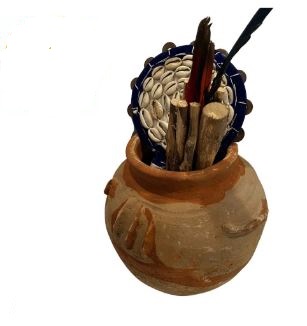
Egbe Service
A special service for making peace with the spiritual companion aspect of self when Egbe is in conflict, neglected, or asking for correction.
Usually starts at $120. Offerings vary by diagnosis.
Start Here
A focused service for identifying and correcting conflict with Egbe, the spiritual companion or partner aspect tied to the person before birth.
People whose divination, dreams, relationship patterns, or spiritual condition suggest unresolved Egbe conflict, neglected agreements, or disharmony with the companion current.
Internal spiritual conflict that can feel like being divided against oneself, similar to a covenantal or marital disagreement with a spiritual partner.
Egbe layer: after diagnosis, alongside Egbe Manual, Egbe Shrine, and deeper contract-level correction when the relationship needs repair.
Begin with a reading or consultation so the offering, correction, and appeasement are matched to the actual condition.
Decision Box
Choose Egbe Appeasement when the issue is not simply learning about Egbe, but restoring peace with Egbe after conflict, neglect, broken agreement, or repeated signs of disharmony.
Ori, Egungun, and Egbe are not random spiritual categories. They speak to real components of the human spiritual complex. Ori concerns consciousness, destiny, and the inner head. Egungun concerns the ancestral current. Egbe concerns the spiritual companions, heavenly peers, and pre-birth community tied to the soul before life.
Because Egbe is relational, the problem can also be relational. A person can be in conflict with Egbe the way a person can be in conflict with a spouse, covenant partner, or neglected part of self. The traditional language of Egbe husband and Egbe wife points to this deeper bond.
In this frame, Egbe Orun is the heavenly group or spiritual double-current connected to the person before birth. The soul does not enter life as an isolated unit; it enters with agreements, companions, and spiritual expectations that may require attention when the earthly life moves out of harmony.
Many forces can be appeased, but most of those forces are external. Egbe Appeasement is different. Egbe is semi-external: it may appear as a companion, spouse, group, or spiritual partner, yet it is also bound to the person's own destiny structure.
This is why the service is not framed as fear-based spirit management. It is a peace-making rite with a specific companion current tied to the person. The goal is restored cooperation.
Egbe conflict should be diagnosed, not assumed. These signs may point toward the need for inquiry, especially when they repeat across time or appear with strong dream and divination evidence.
The work begins by identifying whether the issue is truly Egbe-related. Not every blockage belongs to Egbe, so the first task is discernment.
The reading clarifies the kind of conflict, the nature of the neglected agreement, and what the Egbe aspect needs in order to be settled.
Offerings, prayers, ritual attention, and corrective actions are directed toward restoring peace with the spiritual companion current.
After the rite, the person receives guidance for maintaining the relationship through rhythm, respect, dreams, and practical life choices.
Egbe Appeasement should not be guessed. Different Egbe conditions may call for different forms of prayer, offering, coolness, sweetness, discipline, or correction. Some traditions name categories of Egbe such as Iyalode, Jagunjagun, Baale, or water-related Egbe expressions, and each requires discernment rather than a one-size-fits-all ritual.
The point is not to impress the unseen world with excess. The point is to identify what the relationship needs, offer it correctly, and bring the person back into cooperation with their earthly destiny.
When indicated, the service often includes items such as:
The Egbe Manual teaches relationship and weekly rhythm. Egbe Shrine establishes a working point of contact. Egbe Appeasement is used when the relationship itself needs peace, repair, or specific correction.
Because Egbe Appeasement is specific, the offering and correction should be matched to the condition. Start with contact, consultation, or divination so the work is clean, targeted, and respectful.
No. Egbe can feel partly outside the person, but it is tied to the person through pre-birth relationship and destiny. The work is closer to making peace with a companion aspect of self than bargaining with a random external force.
In many traditions, the language of Egbe husband or Egbe wife points to covenant, loyalty, and relationship. When that bond is neglected or offended, the imbalance can resemble a spiritual partnership dispute.
A reading is strongly recommended. Egbe work should be specific. The rite should answer the actual conflict rather than applying generic offerings to a condition that has not been confirmed.
Egbe Shrine establishes or strengthens a point of relationship. Egbe Appeasement is focused on resolving disharmony, neglected agreements, or conflict within that relationship. Some people need one, some need both.