
The Autophagy Food Support Protocol is a practical overlay for supporting cellular cleanup through food, sleep, exercise, meal timing, and fasting when fasting is appropriate.
Fasting is a strong autophagy lever, but it is not the only lever. Not everybody can fast safely, comfortably, or consistently. This protocol gives people a food-based overlay they can use whether they are fasting, easing into fasting, or simply trying to support cellular repair through daily habits.
This page does not replace the Wednesday Fasting Practice. It sits on top of the whole Health Sovereignty system: sleep, meal timing, protein-first eating, movement, strength training, and recovery.
Choose Your Version
- Procedural version
- Science and mechanism version
The goal is simple: use daily food choices to support autophagy pathways while keeping the larger lifestyle structure intact.
The Five Food Levers
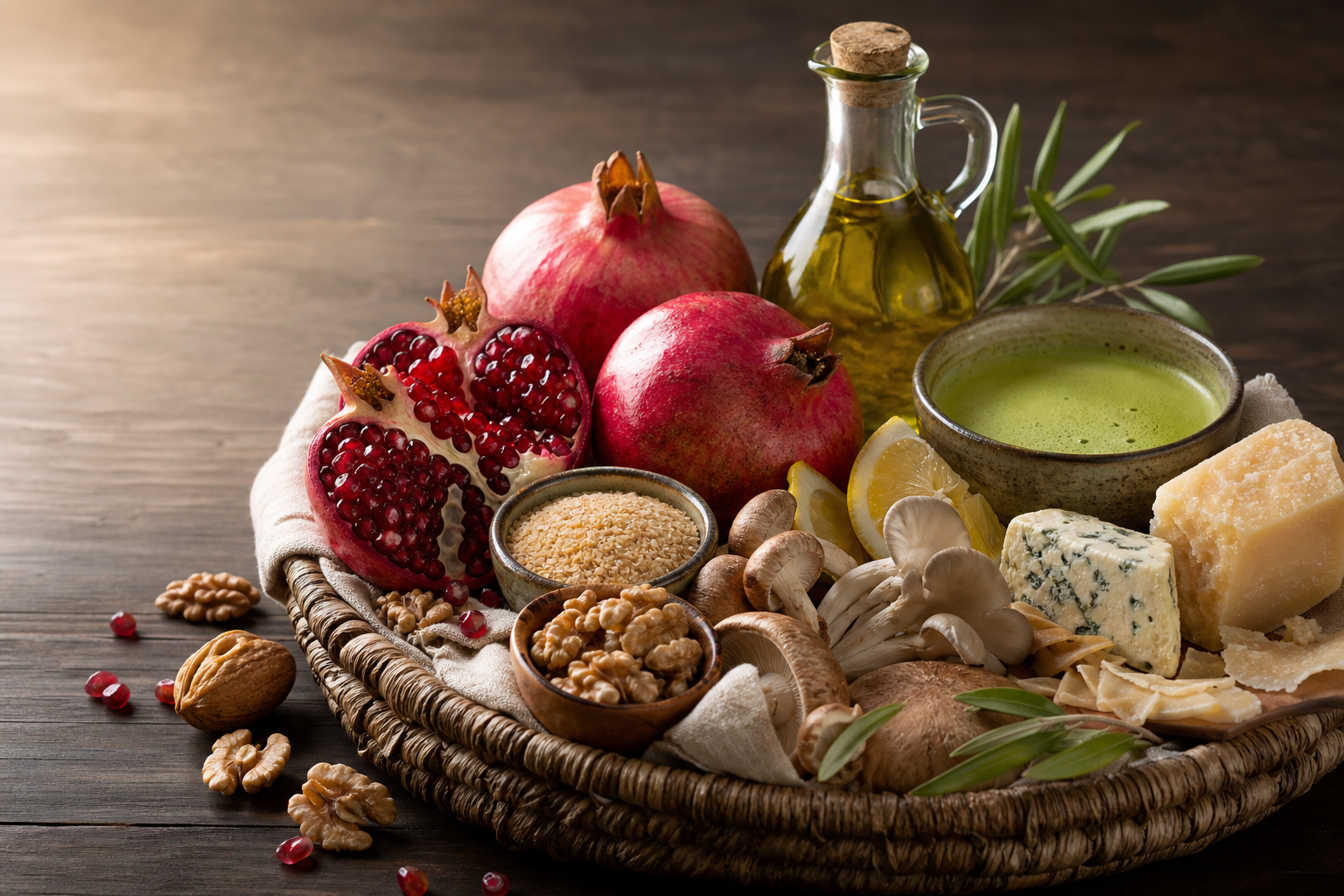
1. Pomegranate and walnuts support the urolithin A pathway through ellagitannins and gut-bacteria conversion. This is especially relevant for mitophagy, the cleanup of damaged mitochondria.
2. Extra virgin olive oil supports autophagy-related pathways through oleocanthal and other phenolic compounds. The peppery throat sting is a practical quality signal for higher phenolic activity.
3. Green tea and matcha support AMPK and Beclin-1 related autophagy pathways through EGCG. Lemon can improve catechin stability and absorption.
4. Wheat germ, mushrooms, and aged cheeses provide spermidine, a polyamine associated with autophagy regulation and cellular maintenance.
5. Coffee supports autophagy-relevant pathways through chlorogenic acid, not only caffeine. Black coffee may stack especially well with the morning fasting window when tolerated.
Daily Stack
Morning:
- Water first.
- Black coffee if tolerated.
- Green tea or matcha if coffee is not appropriate.
- Light movement or exercise when possible.
First meal:
- Protein first.
- Add wheat germ, mushrooms, or another spermidine-rich food.
- Add pomegranate, walnuts, or berries if appropriate.
Lunch or dinner:
- Vegetables with fresh extra virgin olive oil.
- Protein and fiber.
- Carbohydrates placed intelligently, not as the first signal.
Exercise support:
- Green tea or black coffee before exercise can pair well with movement.
- Regular exercise remains one of the strongest autophagy-supporting behaviors.
Evening:
- Stop eating early enough to protect the sleep and fasting window.
- Use the sleep protocols to protect deep repair.
How It Integrates With Existing Protocols
With fasting: use these foods in the eating window before and after the fast. Keep coffee plain during fasting if tolerated. Break the fast intelligently rather than randomly.
With natural insulin management: keep the 14-hour fasting window when safe, use black coffee or tea before the first meal, break the fast with protein first, then add autophagy-supporting foods after the metabolic sequence is protected.
With sleep repair: avoid heavy late food, finish eating early enough to support deep sleep, and remember that autophagy and repair depend on sleep quality.
With after-50 cellular repair: combine protein thresholds, strength training, movement breaks, and recovery practices with these food signals.
What This Is Not
This is not a claim that food equals a 24-hour fast.
This is not a shortcut around sleep, movement, strength training, or medical care.
This is not an excuse to ignore fasting if fasting is safe and appropriate for the person.
This is a gentler daily repair-support layer for people who need practical, repeatable signals.
Bottom Line
Autophagy support does not have to be all-or-nothing.
Fasting is one tool. Food compounds are another tool. Exercise is another. Sleep is another. Meal timing is another.
The Health Sovereignty approach is to stack the tools intelligently: eat with purpose, move with rhythm, sleep with structure, fast when appropriate, and support cellular cleanup every day.
Health Disclaimer
This page is educational coaching content only. It is not medical advice, diagnosis, treatment, nutrition therapy, disease prevention, supplement advice, or a fasting prescription.
People with diabetes, kidney disease, liver disease, pregnancy concerns, eating disorder history, medication interactions, caffeine sensitivity, reflux, gallbladder issues, food allergies, bleeding-risk medication use, or any condition requiring medical supervision should speak with a qualified health professional before changing fasting, caffeine, supplements, oil intake, or diet.