
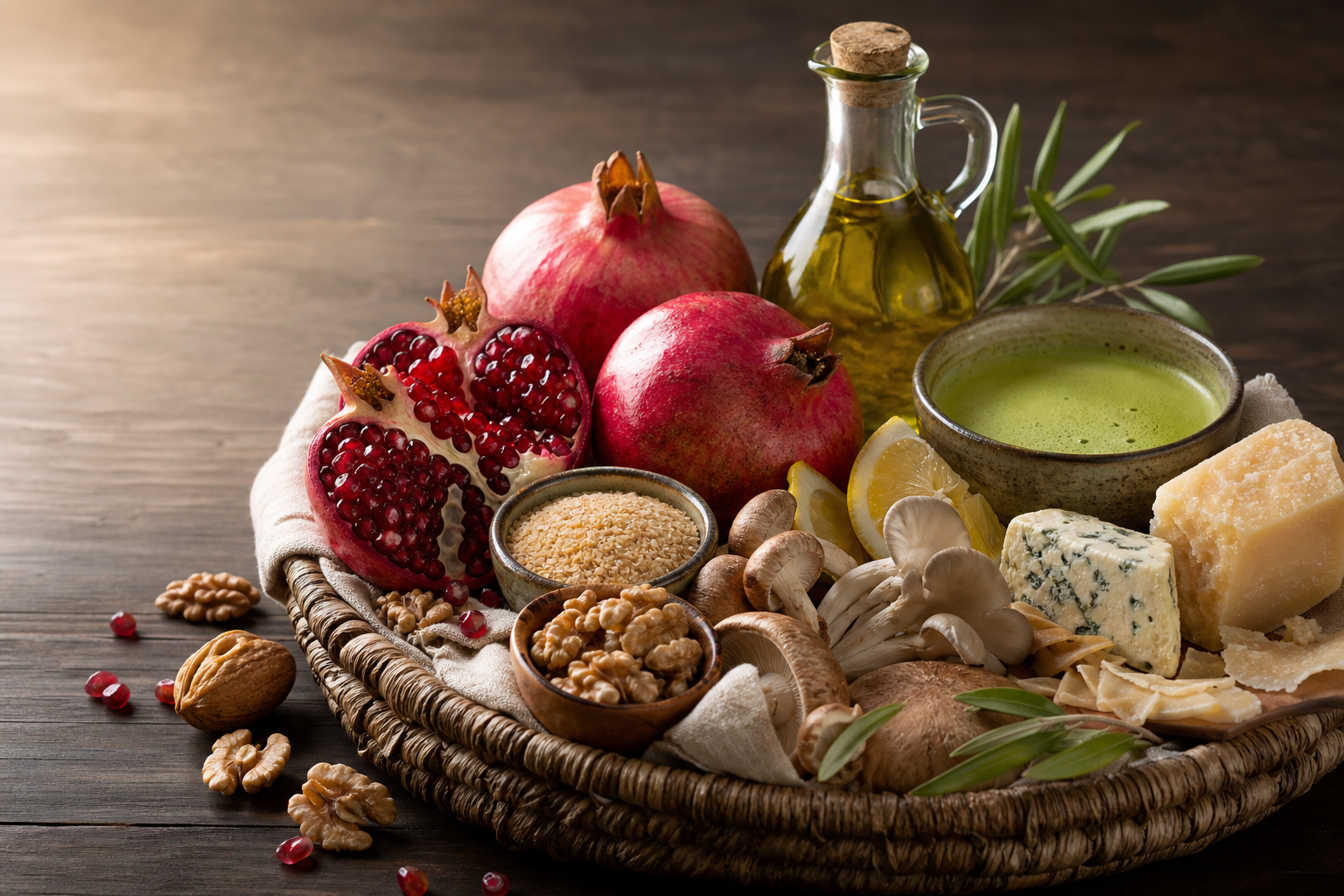
This is the science-forward version of the Autophagy Food Support Protocol. It explains how specific foods can support autophagy-related pathways alongside fasting, exercise, sleep, and metabolic timing.
Choose Your Version
- Procedural version
- Science and mechanism version
Autophagy is the body's cellular cleanup and recycling system. It identifies damaged proteins, worn-out organelles, and cellular debris, packages them for processing, and helps the cell maintain function over time.
Fasting is one of the best-known autophagy triggers because nutrient withdrawal suppresses mTOR and changes the cell's energy state. But fasting is not the only relevant signal. Certain food compounds can influence autophagy-related pathways through AMPK, mTOR, Beclin-1, mitophagy signaling, lysosomal activity, and epigenetic regulation.
Autophagy in Plain Language
Cells accumulate damage. Proteins misfold. Mitochondria become inefficient. Cellular debris builds up.
Autophagy is the internal cleanup process that helps identify what is damaged, recycle what can be reused, and remove what cannot be salvaged.
When autophagy runs well, cellular clutter is managed. When it declines, damage accumulates and inflammation, metabolic dysfunction, and age-related decline become easier to sustain.
The mTOR and AMPK Frame
mTOR is a nutrient-sensing pathway. When nutrients, amino acids, insulin, and energy availability are high, mTOR tends to rise and the body shifts toward growth, storage, and fed-state activity.
AMPK is an energy-sensing pathway. When energy is low or cellular stress is present, AMPK rises and can suppress mTOR, allowing repair and cleanup pathways to become more active.
Fasting works partly because it lowers nutrient signaling. Exercise works partly because it changes the cell's energy demand. Some food compounds matter because they influence related pathways without requiring full fasting.
Food 1: Pomegranate, Walnuts, and Urolithin A
Pomegranate, walnuts, and some berries contain ellagitannins. These compounds can be metabolized by specific gut bacteria into urolithin A.
Urolithin A is important because it is associated with mitophagy, the selective cleanup of damaged mitochondria.
Mitochondria are the energy-producing structures in the cell. When they become damaged, they can produce more oxidative stress and less efficient energy. Mitophagy helps remove damaged mitochondria so healthier mitochondrial function can be preserved.
Food 2: Extra Virgin Olive Oil and Oleocanthal
Fresh, high-quality extra virgin olive oil contains phenolic compounds, including oleocanthal.
Oleocanthal is associated with anti-inflammatory activity and autophagy-related mechanisms, including pathways connected to lysosomal function, Beclin-1, and clearance of damaged proteins in experimental models.
The practical quality marker is the peppery sting in the throat. That sting is not a flaw. It often signals higher phenolic activity.
Food 3: Green Tea, Matcha, and EGCG
Green tea contains EGCG, one of the most studied catechins in nutritional biochemistry.
EGCG can support autophagy-related signaling through AMPK activation and Beclin-1 related pathways. It is also studied for effects on mitochondrial function, neuroprotection, and protein aggregate clearance in experimental models.
Green tea has more EGCG than black tea. Matcha often delivers more catechins because the whole leaf is consumed. Lemon or vitamin C may help stabilize catechins, while milk may reduce catechin bioavailability.
Food 4: Wheat Germ, Mushrooms, Aged Cheese, and Spermidine
Spermidine is a polyamine found in many living organisms and in certain foods. It is associated with autophagy regulation and cellular maintenance.
The science interest comes from spermidine's relationship to autophagy gene expression and lifespan findings in model organisms. Human data is still developing, but dietary spermidine has become one of the more serious nutrition-autophagy topics.
Food sources include wheat germ, mushrooms, aged cheese, soy foods, legumes, and whole grains.
Food 5: Coffee and Chlorogenic Acid
Coffee's autophagy relevance is not only caffeine.
Coffee contains chlorogenic acid and other polyphenols. Chlorogenic acid is associated with AMPK-related signaling, liver metabolism, mitochondrial function, and autophagy-related effects in experimental research.
Black coffee may be especially relevant during a fasting window because it can preserve the fasting state while adding polyphenol signaling. Decaf coffee can still retain chlorogenic acid.
Why These Foods Are an Overlay, Not a Replacement
Fasting has a deeper and more established evidence base for autophagy signaling. A 24-hour fast is not the same as eating a handful of walnuts or drinking green tea.
But the food signals are not meaningless. They may activate related pathways in smaller, more accessible, and more repeatable ways.
This matters because many people cannot fast safely, are not ready to fast, have medical or medication concerns, have a history of disordered eating, or want to enhance fasting without becoming extreme.
How It Stacks With Exercise
Exercise is one of the strongest autophagy-supporting behaviors.
Zone 2 aerobic work can activate AMPK through energy demand. Higher-intensity exercise can activate stress-response pathways. Resistance training supports autophagy as part of muscle repair and remodeling.
Food compounds such as EGCG and chlorogenic acid may support overlapping upstream pathways. This means the food layer and exercise layer can reinforce the same repair biology from different directions.
How It Stacks With Fasting
These foods do not cancel fasting. Used correctly, they can support the eating window around fasting.
Examples include black coffee during a fasting window if tolerated, olive oil and vegetables when breaking the fast, protein-first meals with wheat germ or mushrooms, pomegranate or walnuts in the feeding window, and green tea as a non-sugar beverage.
Science-Honest Summary
Can food trigger autophagy without fasting? Yes, to a meaningful but likely smaller degree than prolonged fasting.
These foods influence real molecular pathways, but they should not be oversold as replacements for fasting, exercise, sleep, or medical care.
The strongest Health Sovereignty position is that fasting is powerful when safe, exercise is broadly useful, sleep is foundational for repair, meal timing shapes metabolic state, and food compounds can support cellular cleanup pathways.
Health Disclaimer
This page is educational coaching content only. It is not medical advice, diagnosis, treatment, nutrition therapy, disease prevention, supplement advice, or a fasting prescription.
People with diabetes, kidney disease, liver disease, pregnancy concerns, eating disorder history, medication interactions, caffeine sensitivity, reflux, gallbladder issues, food allergies, bleeding-risk medication use, or any condition requiring medical supervision should speak with a qualified health professional before changing fasting, caffeine, supplements, oil intake, or diet.