What is sacred?
If the movement does not know what is sacred, it will eventually sacrifice the wrong things.
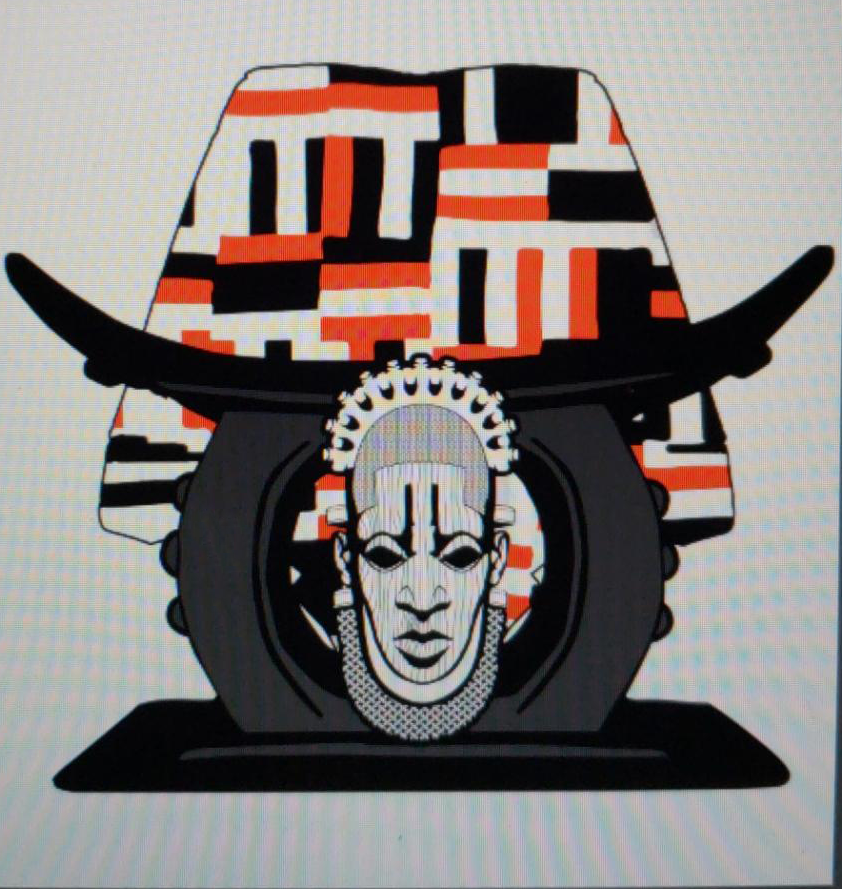
Afrofuturism and Liberation Imagination
World-building is not only for fantasy novels, science fiction films, role-playing games, or comic books. At its deepest level, world-building is the sacred and political act of asking: what kind of world are we trying to live in?
Every community lives inside a story. That story tells people who they are, where they came from, what power is, what is possible, what is sacred, who belongs, who rules, what must be feared, and what future can be imagined.
Oppression works by controlling that story. Colonialism did not only take land; it took imagination. Slavery did not only take labor; it attacked memory. Religious domination did not only convert people; it redefined the sacred. Racism did not only create social hierarchy; it created false worlds where African people were written as inferior, primitive, cursed, dependent, or outside history.
When African-descended people build new worlds through story, myth, fiction, ritual, art, speculative imagination, and spiritual philosophy, they are not merely entertaining themselves. They are practicing liberation.
Narrative world-building is the process of creating a complete imagined world for a story. It includes geography, history, culture, spirituality, politics, technology, economics, gender relations, family systems, conflicts, sacred laws, and the moral structure of the universe.
Most people think world-building means inventing maps, kingdoms, magic systems, alien species, or future cities. That is part of it. But true world-building asks what a society believes, worships, protects, fears, teaches, and makes possible.
Every fictional world carries a philosophy. A story world can reproduce domination, or it can rehearse freedom.
Every political system begins as an imagined order. A nation is a story. A border is a story. A race is a story. A legal system is a story. An economy is a story. A school system is a story about what knowledge matters. A prison system is a story about who is disposable.
When people say, “That is just the way the world is,” what they usually mean is, “That is the story we have been trained to accept.” World-building challenges that. It says the present world is not the only possible world.
A people who cannot imagine a different world will keep decorating the cage. A people who can imagine a different world can begin building exits.
World-building is also spiritual because every world is organized around a sacred center. Even secular worlds have gods. They may worship money, technology, whiteness, empire, war, surveillance, celebrity, consumption, or domination over nature.
A spiritually serious world-builder must ask what the world places at the center. If the center is conquest, the world produces conquest. If the center is profit, the world sacrifices life for profit. If the center is ancestors, Earth, balance, truth, and sacred order, the world produces a different kind of human being.
Liberation requires a new sacred imagination.
Colonization damages the imagination. It teaches the colonized person to think inside the limits of the colonizer's world. The colonized imagination asks for permission. The liberated imagination asks what is true.
The colonized imagination imitates Europe. The liberated imagination retrieves Africa. The colonized imagination sees African spirituality as backward. The liberated imagination sees ancestral systems as sacred technologies.
World-building becomes liberation when it breaks the mental architecture of colonial reality. It does not merely ask for better representation inside the old world. It asks whether the old world deserves to survive.
Afrofuturism is one of the clearest examples of world-building as liberation. At its best, Afrofuturism is not just Black people in spaceships, African jewelry in neon light, or beautiful futuristic fashion. Those images matter, but they are the doorway, not the destination.
The deeper work of Afrofuturism is to imagine African-descended people outside the historical script of slavery, colonization, poverty, police violence, religious shame, cultural theft, and technological exclusion.
It asks what happens when African science develops from its own center, ancestral wisdom and artificial intelligence are not enemies, Earth Mother returns to the center of civilization, the diaspora heals its relationship to the continent, and the future is African in structure rather than European with Black decoration.
Sankofa teaches that it is not wrong to return to the past to retrieve what was lost. A shallow futurism says, “Forget the past and move forward.” An African-centered futurism says, “Return to the original principles, recover what was stolen, correct what was broken, and build the future from restored memory.”
This is not nostalgia. Sankofa is not about copying the past. It is about recovering the wisdom necessary to design a better future: ancestor veneration, Earth-centered spirituality, rites of passage, sacred ecology, divine masculine and feminine balance, communal responsibility, African languages, indigenous medicine, lineage memory, ritual ethics, cosmology, and Pan-African historical consciousness.
Not escape from the past. Correction of the past.
A story allows a community to rehearse possibilities before they become institutions. Before people build a school, they must imagine what education should do. Before people build a family system, they must imagine what manhood, womanhood, childhood, and elderhood mean. Before people build spiritual community, they must imagine how the living and dead relate.
This is why oppressive systems control stories. They know that imagination comes before organization. If people can imagine a world without the oppressor, they may eventually learn to live without the oppressor.
World-building is connected to ancestral healing because trauma limits imagination. A traumatized people often cannot imagine beyond survival. They can imagine escape, but not order; revenge, but not restoration; wealth, but not sovereignty; visibility, but not maturity; power, but not sacred responsibility.
If the wound is not healed, the future becomes a projection of the wound. A people damaged by colonialism may imagine the future as Black empire, but still copy colonial hierarchy. A people damaged by religious domination may imagine spiritual freedom, but still fear their own ancestors.
Are we imagining freedom, or are we repainting the plantation?
Spiritual sovereignty means the right and responsibility of a people to define the sacred from their own center. Many African people have been trained to see their ancestral systems through hostile foreign categories: Orisha as demons, ancestors as evil spirits, divination as witchcraft, initiation as paganism, and ritual as superstition. That is not neutral theology. That is spiritual conquest.
Cultural sovereignty means a people have control over their own memory, symbols, education, rituals, values, and future direction. Without cultural sovereignty, political freedom becomes weak. A flag does not free the mind. A passport does not restore memory. A vote does not heal self-hate. A degree does not decolonize the imagination.
In the world of Kemelot the Return, world-building functions as liberation technology. The story does not simply ask, “What if African heroes had powers?” It asks what happens if old spiritual control systems must be broken, Earth Mother must return to the center, African ancestral science is real, and the diaspora must recover Africa not as fantasy, but as responsibility.
This is the difference between entertainment and mythic architecture. Entertainment distracts the people from reality. Mythic world-building reorganizes reality.
Empire builds worlds too. Empire builds worlds where the colonizer is civilized and the colonized are savage; where police are order and resistance is crime; where European religion is universal and African religion is demonic; where technology is progress even when it destroys land, labor, and spirit.
Liberatory world-building must expose these false worlds. Then it must build alternatives. Not just criticism. Not just complaint. Not just deconstruction. Construction.
A new world requires new people. This is where many political movements fail. They imagine new institutions but keep the same wounded human beings operating them.
A liberated world requires transformed character: rites of passage, emotional maturity, spiritual discipline, ethical leadership, gender healing, economic responsibility, ancestral accountability, ecological humility, conflict resolution, community service, elder-youth continuity, healthy sexuality, and sacred relationship to power.
A healed world must include a healed model of masculine and feminine power. Liberatory world-building must ask how boys are initiated into responsible manhood, how girls are initiated into powerful womanhood, how families form without reproducing oppression, and how Earth Mother spirituality reshapes civilization.
Any future that destroys the Earth is not liberation. African-centered world-building must imagine technology when rivers are sacred, agriculture when soil is ancestral, architecture when climate and ritual matter, and medicine when plants, spirit, and science are allowed to speak.
World-building should not remain only in the hands of authors. A family can ask what kind of household it is building. A spiritual house can ask what kind of priesthood it is building. A school can ask what kind of human being it is educating. A movement can ask what victory looks like after protest ends.
When communities answer these questions seriously, imagination becomes planning. Planning becomes practice. Practice becomes culture. Culture becomes reality.
If the movement does not know what is sacred, it will eventually sacrifice the wrong things.
Every world produces a human type: consumer, warrior, priest, worker, citizen, ancestor, servant, rebel, healer, tyrant, or balanced person.
A people without ancestral relationship becomes easy to manipulate.
The future is not real if it does not protect the child.
A landless imagination easily becomes abstract and rootless.
Technology must serve life, not replace spirit.
Power without initiation becomes corruption.
A world without conflict resolution will collapse into factionalism.
No civilization can rise while men and women are spiritually at war.
If liberation is not defined, people will mistake visibility, money, revenge, or access for freedom.
World-building can be used in real life. It can shape:
For example, an African-centered school can use world-building to ask what kind of graduate it wants to produce. A spiritual community can use it to imagine ethical priesthood standards. A family can use it to break generational trauma and create new household culture. A coach can use it to help a client imagine a life beyond survival.
Some people dismiss fantasy, science fiction, and mythic storytelling as escapism. Sometimes they are right. Some stories are designed only to distract. But not all escape is cowardice.
For oppressed people, imagination can be a temporary exit from the psychological prison of domination. The question is whether the person returns with tools. Escapism runs away and stays gone. Liberatory world-building goes into the imaginal realm, retrieves a blueprint, and brings it back.
Go back. Go inward. Go beyond. Return with medicine.
Every world begins in imagination. The current world was imagined by someone. Its borders, laws, markets, schools, prisons, religions, technologies, and hierarchies were designed. Some of those designs were violent. Some were useful. Some must be destroyed. Some must be repaired. Some must be replaced.
World-building is how a people practice freedom before freedom becomes visible. It is how the traumatized remember possibility, how the colonized recover authority, how the spiritually displaced rebuild sacred order, how writers become architects, how communities rehearse futures, how ancestors speak through imagination, and how children inherit more than survival.
World-building is the process of creating an imagined world with its own history, culture, geography, politics, spirituality, technology, social rules, and conflicts. It is common in fantasy and science fiction, but it can also be used as a tool for cultural, political, and spiritual imagination.
It means using storytelling and imagination to create alternative futures beyond oppression, colonization, racism, spiritual domination, ecological destruction, and inherited trauma.
World-building is spiritual because every world has a sacred center. It reveals what a society honors, fears, worships, protects, and sacrifices. For African-centered storytelling, it can restore ancestors, Earth Mother, divine balance, Ori, Egungun, and sacred ecology to the center of imagination.
No. Writers use world-building in fiction, but families, communities, spiritual houses, schools, organizations, and political movements can also use world-building to clarify what kind of future they are trying to create.
© 2026 HM NebShakara. This article is licensed under the Creative Commons Attribution-NonCommercial-NoDerivatives 4.0 International License. You may share it for non-commercial purposes with proper attribution, a direct link to the original article, and identification of any changes. You may not distribute an adaptation or other modified version without permission.
Preferred citation: HM NebShakara, “World-Building as Liberation,” Ancestral Egbé, [publication date], https://ancestral-egbe.org/articles/world-building-as-liberation/.